




























AI Medical Scribes Are Moving Beyond Note-Taking
AI medical scribes, ambient AI healthcare, Microsoft Dragon Copilot, Abridge, Nabla, clinical documentation AI, healthcare AI
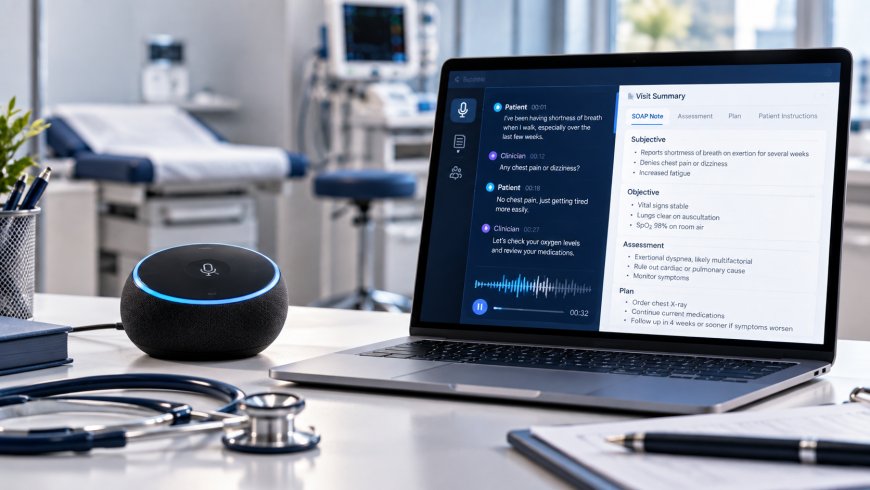
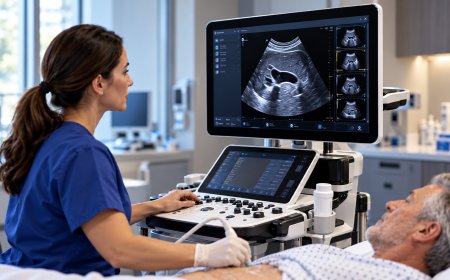
AI medical scribes started with a simple promise: listen to the conversation between a doctor and patient, then turn it into a clinical note.
That description is already becoming outdated.
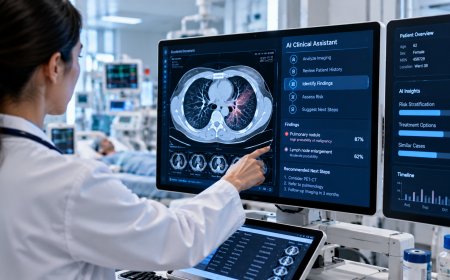
Microsoft, Abridge, Nabla and other healthcare AI companies are expanding ambient documentation tools into broader clinical assistants that can work with electronic health records, surface patient context, structure nursing documentation and support parts of the administrative workflow.
This shift matters because clinical documentation has become one of the clearest real-world uses of generative AI in healthcare. Rather than asking clinicians to open a separate chatbot, ambient systems are being integrated directly into the work they already do.
Research is also beginning to provide a more realistic picture of the benefits. A 2026 multisite study published in JAMA found that clinicians using AI scribes spent less time on documentation and in electronic health records. However, the savings were more modest than some early expectations suggested. Read the JAMA study.
The next phase of the market is now moving beyond note generation.
Microsoft Is Turning Dragon Copilot Into a Broader Clinical Assistant
Microsoft has been expanding Dragon Copilot across several healthcare roles rather than treating it only as a physician documentation tool.
For nurses, Dragon Copilot can capture spoken patient observations and turn them into draft structured flowsheet entries. Nurses can review the information before transferring it into the electronic health record.
The system can also generate nursing notes, summarise recorded interactions and allow users to query transcripts for relevant patient information. Microsoft Dragon Copilot for nurses
Microsoft has also developed a Dragon Copilot experience for radiologists. In its June 2026 update, the company added patient context-aware chat that can use a patient’s previous imaging reports when responding to questions during the reading workflow. The radiology version remained in public preview at the time of the update. Microsoft’s Dragon Copilot radiology update
That is a noticeable expansion from the original idea of ambient documentation.
The system is increasingly being positioned as an AI layer around the clinical workflow, combining documentation with patient context and role-specific assistance.
TechAmerica.ai has covered a similar movement elsewhere in healthcare software, including Health’s integration with Epic, which brings AI closer to patient records and existing electronic health record workflows.
Abridge Is Expanding From Documentation Into Clinical Intelligence
Abridge is following a similar path.
Its ambient AI platform captures conversations during patient visits and generates draft clinical documentation for clinicians to review.
The company has continued to expand across large U.S. healthcare systems. In February 2026, UCHealth said more than one-third of roughly 6,000 physicians, nurse practitioners and physician assistants across its system were already using Abridge following an earlier pilot. UCHealth’s Abridge deployment
Abridge has since been pushing beyond the basic medical-scribe model.
The company describes its newer platform as context-aware clinical intelligence, aiming to connect information from the patient record to what is discussed during a medical encounter.
That strategy received another significant boost in September 2026 when Abridge was selected under a U.S. Department of Veterans Affairs enterprise ambient AI contract.
Abridge said its platform was already operating on both of the VA’s electronic health record systems through a nationwide pilot. The contract allows VA medical centres and regions to procure ambient AI services from participating vendors. Abridge’s VA contract announcement
The development shows how quickly ambient AI has moved from individual physician tools to enterprise healthcare infrastructure.
Nabla Is Competing for the Same Clinical Workflow
Nabla is another major competitor in the ambient documentation market.
The company offers AI-assisted clinical documentation and dictation tools designed to fit into hospital and physician workflows.
In 2026, Nabla announced deployments across healthcare organisations including University of Toledo Health, M Health Fairview, and Aultman Health System. Nabla’s 2026 healthcare deployments
At University of Toledo Health, the company said it was expanding its platform to hundreds of physicians and advanced practice providers after an earlier implementation. University of Toledo Health’s Nabla rollout
M Health Fairview has taken a broader approach, using Nabla to combine ambient documentation and traditional medical dictation on a single platform across an organisation with thousands of providers. M Health Fairview’s Nabla implementation
The competition between Microsoft, Abridge and Nabla is therefore becoming less about who can produce the best transcript.
The more valuable question is which platform can fit most naturally into the clinical systems hospitals already depend on.
The Evidence Shows Benefits, but Not Magic
The appeal of AI scribes is easy to understand.
Doctors and other healthcare professionals can spend substantial time documenting visits, reviewing records and completing work inside electronic health record systems.
An AI system that generates the first draft of a clinical note can reduce some of that burden.
But the available evidence suggests describing the gains carefully.
The JAMA multisite study published in April 2026 examined AI-scribe adoption among clinicians at five academic medical centres.
Researchers found that adoption was associated with a reduction of about 16 minutes in documentation time and 13.4 minutes in total EHR time per eight hours of scheduled patient care.
The study also found an increase of approximately 0.49 patient visits per week.
Benefits varied across groups, and the research did not support the idea that AI scribes eliminate documentation work.
That distinction matters.
Ambient AI can speed up parts of documentation. However, clinicians still need to review the generated note, correct errors, and ensure the medical record accurately reflects what happened during the encounter.
AI Documentation Is Expanding to Patients
AI-generated medical notes are also moving beyond healthcare providers.
TechAmerica.ai previously reported on Kin Health’s $9 million funding round for an AI-powered patient note-taking platform.
Kin Health takes a different approach from physician-focused ambient systems. Its platform is designed for patients who want to record a medical appointment and receive a structured summary of the conversation, including follow-up information and suggested next steps.
That creates a second market around the same underlying technology.
A clinician may use AI to create the formal medical record, while a patient may use a separate AI system to understand better and remember what was discussed.
The two products serve different purposes, but both depend on accurately converting complex medical conversations into useful written information.
Healthcare AI Is Targeting Administrative Work
The rapid growth of AI scribes also reflects a broader pattern in healthcare technology.
Many of the most commercially practical AI applications are not attempting to diagnose disease independently. They target paperwork, records, billing, coding, and other administrative processes surrounding clinical care.
Anthropic has taken a similar direction with Claude for Healthcare, which includes tools aimed at provider and payer workflows such as prior authorisation and healthcare data access. TechAmerica.ai has previously covered Anthropic’s launch of Claude for Healthcare.
The attraction is understandable.
Administrative work is expensive, repetitive and deeply embedded in U.S. healthcare. That makes it an obvious target for automation.
It also creates new risks.
TechAmerica.ai recently reported that insurers blamed AI-assisted medical coding tools for adding an estimated $942 million to healthcare spending over two years, according to an analysis from the Blue Cross Blue Shield Association.
That dispute involved medical coding rather than ambient scribes, but it illustrates a larger point: automating administrative healthcare work does not automatically make the system cheaper or more accurate.
The effect depends on how the technology is designed, deployed and monitored.
AI-Generated Clinical Notes Still Need Human Review
Ambient documentation systems can create polished clinical text very quickly.
That does not guarantee that every detail is correct.
A model may misunderstand speech, miss context, place information in the wrong section of a note or generate wording that a clinician would not have chosen.
Microsoft’s nursing workflow explicitly requires users to review AI-generated information before transferring it into the electronic health record.
Patient consent is another important issue.
Microsoft’s guidance states that organisations should obtain appropriate patient consent before recording encounters with Dragon Copilot and follow applicable laws and internal policies.
Healthcare providers also need to consider how recordings, transcripts and protected health information are processed and stored.
Those requirements make ambient healthcare AI different from an ordinary consumer transcription app.
A mistake in a meeting summary may be inconvenient. A mistake in a medical record can follow a patient through future care.
The AI Scribe Is Becoming an AI Clinical Workspace
The term “AI scribe” may eventually become too narrow for the category.
Microsoft is extending Dragon Copilot across physicians, nurses and radiologists. Abridge is adding context-aware clinical intelligence. Nabla is combining ambient documentation with medical dictation and enterprise workflows.
At the same time, companies including OpenAI and Anthropic are connecting generative AI to healthcare records, clinical information and administrative systems.
The common direction is clear.
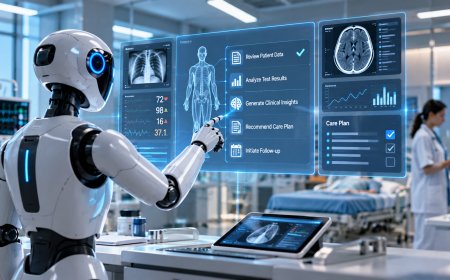
AI is moving away from being a separate tool that clinicians deliberately open and toward becoming a background layer inside the software they already use.
The first job was writing the note.
The larger opportunity is everything that can happen once an AI system understands the conversation, has access to relevant patient context and is embedded in the clinical workflow.
What's Your Reaction?
 Like
0
Like
0
 Dislike
0
Dislike
0
 Love
0
Love
0
 Funny
0
Funny
0
 Angry
0
Angry
0
 Sad
0
Sad
0
 Wow
0
Wow
0