




































Apple’s 2026 Product Lineup Review: Affordable Macs, Extreme Pros and a New iPhone Strategy
Apple’s 2026 lineup widens the gap between affordable and professional devices, featuring the MacBook Neo, M5-powered Macs, Studio Display XDR, and iPhone 17E.

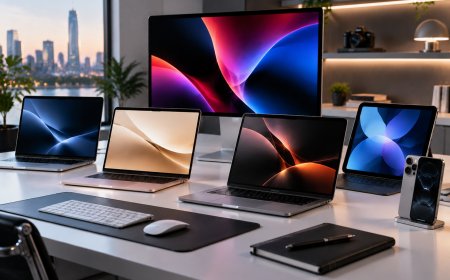
Apple’s 2026 hardware lineup feels different from the company’s usual approach. Instead of pushing every product toward the premium market, Apple appears to be creating a wider gap between affordable devices and professional machines. The new MacBook Neo brings Apple’s laptop experience to a much lower price point, while the MacBook Pro and Studio Display XDR push toward users who need maximum performance.
The result is a lineup that feels less focused on one perfect device and more focused on giving different types of users a clearer choice.
MacBook Neo Brings Apple’s Laptop Experience to a Lower Price
The biggest surprise in Apple’s 2026 lineup is the $599 MacBook Neo, which becomes the company’s most affordable laptop. Despite the lower price, Apple has not significantly compromised the physical design. The device still uses an aluminium body, a solid hinge, a comfortable keyboard and a trackpad experience similar to higher-end MacBooks.
The display is also better than expected for the price. It offers a sharp, colourful experience with up to 500 nits of brightness, matching the brightness of the more expensive MacBook Air. However, Apple has removed some premium features, including Touch ID on the base storage model and MagSafe charging.
The biggest compromises are found in everyday usability. The MacBook Neo lacks a backlit keyboard, which may be noticeable in darker environments. It also uses the A18 Pro chip from the iPhone 16 Pro instead of a laptop-focused M-series processor. Combined with slower storage and 8GB of RAM, the Neo is clearly designed for lighter tasks such as browsing, documents, streaming and basic productivity.
For students and casual users, the MacBook Neo makes sense because many people do not need the power offered by modern MacBook Air models. Apple has created a cheaper entry point while allowing the MacBook Air to move further into a higher-performance category.
MacBook Air Becomes Apple’s Mainstream Laptop
With the MacBook Neo filling the entry-level space, the MacBook Air has moved into a stronger position. The new MacBook Air starts at $1,099 and features the M5 chip, Apple’s N1 networking technology and double the starting storage compared with previous models.
The performance upgrade from M4 to M5 isn’t revolutionary, but faster storage, improved connectivity, and more base storage make the Air a more complete package. For most users, including students, professionals and creators, it remains the most balanced laptop in Apple’s lineup.
The biggest change is not necessarily what Apple added, but how the product lineup now works. The Air no longer needs to compete with cheaper laptops because the MacBook Neo handles that market.
MacBook Pro Focuses on Power Users
At the top of Apple’s laptop range, the MacBook Pro receives a more extreme upgrade. The new models feature M5 Pro and M5 Max chips, offering major improvements for professional workloads, including video editing, 3D work and local AI processing.
Apple claims significant performance improvements, including stronger graphics and AI capabilities. However, many of these numbers are “up to” figures, meaning real-world improvements will depend heavily on the specific workload. The biggest gains are likely to matter most for professionals running demanding applications rather than everyday users.
The new MacBook Pro lineup also starts with more storage, moving to 1TB as the minimum option. While the higher prices may be difficult for regular buyers to justify, professionals who already depend on MacBook Pro hardware may see the additional performance as valuable.
One drawback is that some regions, including parts of Europe, no longer include a power adapter with the laptop. For expensive professional machines, this may feel inconvenient for buyers who don’t already own a compatible charger.
iPad Air Gets More Power, But Not More Excitement
Apple’s updated iPad Air receives the M4 chip, 12GB of RAM and the new N1 networking chip while keeping the same $599 starting price. The upgrade gives the tablet impressive performance for its category.
However, the changes may not address what many users wanted most. More base-level storage would likely have made a bigger difference for many iPad Air owners than extra processing power.
The iPad Air remains a powerful mid-range tablet, but the update feels more like a technical refresh rather than a major redesign.
Studio Display XDR Brings Professional Features at a Lower Price
Apple has updated its Studio Display lineup with two new monitors, including the Studio Display XDR. The new professional display costs $3,299, replacing the much more expensive $5,000 Pro Display XDR.
The Studio Display XDR introduces a 120Hz refresh rate, mini LED technology, improved brightness, built-in speakers, a microphone and a webcam. It also includes an adjustable stand, removing one of the biggest complaints about Apple’s previous professional display accessories.
However, the display size remains a question mark. At 27 inches, it may feel small for professionals used to larger monitors. Users who want a larger workspace may still prefer bigger alternatives.
iPhone 17E Brings Affordable Apple Hardware
The iPhone 17E continues Apple’s affordable iPhone strategy, starting at $599. The biggest improvement is the base storage bump to 256GB without raising the price.
The device also receives the A19 chip, N1 networking technology, Ceramic Shield 2 protection, MagSafe support and faster Qi2 wireless charging. These changes make it a more complete phone compared with previous affordable iPhones.
However, the compromises are obvious. The iPhone 17E keeps a dated design with thicker bezels and a notch, while missing features found on higher-end models. The display remains 60Hz, and the camera system lacks an ultra-wide lens and newer selfie camera technology.
For businesses and users who prioritise battery life, reliability and storage over premium features, the iPhone 17E makes sense. But individual buyers may find better value by spending slightly more on the standard iPhone 17.
Apple’s 2026 Strategy Shows a Wider Product Gap
Apple’s 2026 lineup reveals a clearer split between customer types. Affordable devices like the MacBook Neo and iPhone 17E focus on accessibility, while products like the MacBook Pro and Studio Display XDR target professionals who need maximum capability.
The company is no longer trying to make every product feel equally premium. Instead, Apple appears to be building a wider ecosystem where each device has a specific purpose, from basic everyday use to demanding professional workloads.
For buyers, that means the biggest question is no longer whether Apple makes a good product. It is whether the extra features and performance of higher-end models are actually worth paying for.
What's Your Reaction?
 Like
0
Like
0
 Dislike
0
Dislike
0
 Love
0
Love
0
 Funny
0
Funny
0
 Angry
0
Angry
0
 Sad
0
Sad
0
 Wow
0
Wow
0