

















How Apple’s AI Strategy Could Be Different From Everyone Else’s
Apple’s AI strategy focuses on ecosystem integration, device intelligence, privacy, and controlling the user experience, rather than competing solely to build the largest AI models.
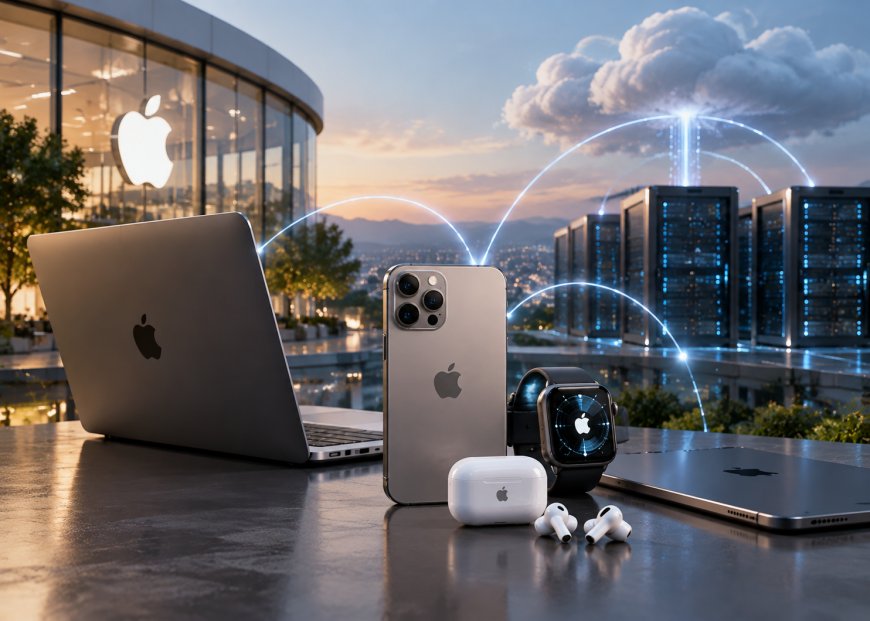
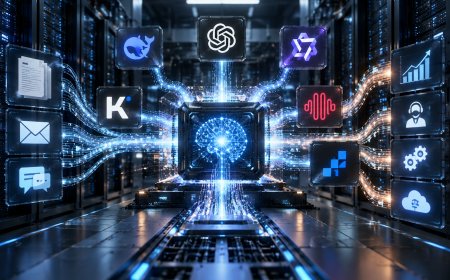
The artificial intelligence race has become one of the biggest technology battles in history. Companies are spending hundreds of billions of dollars building massive data centres, training increasingly powerful models, and competing to create the next generation of AI systems.
But while companies like Microsoft, Google, Amazon, and Meta are focused on building bigger AI infrastructure, Apple appears to be taking a different approach.
Instead of trying to win by creating the largest AI model, Apple’s strategy seems to focus on something it has controlled for decades: the device, the operating system, and the relationship with the user.
The company’s recent AI decisions have raised questions across the industry. Apple has invested heavily in its own AI capabilities, while also reportedly working with external models to strengthen its products. To some observers, this looks like Apple falling behind. But another interpretation is that Apple is following a strategy it has used before: use outside technology where necessary, then integrate it deeply into its own ecosystem.
The biggest question is whether this approach can work in the AI era.
Apple’s AI Problem Started With Siri
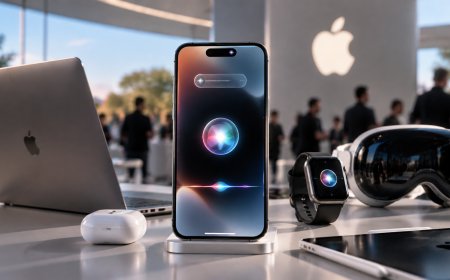
Apple’s biggest weakness in artificial intelligence has been its digital assistant, Siri.
When Apple introduced major Siri improvements, the company promised a smarter assistant that could understand personal context, interact with apps, and complete tasks for users. However, some of those ambitious features faced delays, creating a gap between expectations and what was available.
This put Apple in an unusual position.
The company that helped popularise smartphones was now competing in an AI market where rivals were rapidly improving conversational assistants, reasoning models, and generative AI tools.
Companies such as OpenAI, Google, and Anthropic gained attention with models that could write, code, analyse information, and handle complex conversations.
Apple’s challenge was not simply building a smarter model. It was figuring out how to bring AI into billions of existing devices while maintaining the privacy and user experience that define its products.
Apple Has Used This Strategy Before
Apple’s history shows a pattern of acquiring or partnering for technologies it could not develop quickly enough internally.
In the late 1990s, Apple struggled with software challenges and purchased NeXT, the company Steve Jobs founded after leaving Apple. NeXT’s technology later became the foundation for modern macOS and influenced the software architecture behind future Apple products.
Around the same time, Apple also reached an unexpected agreement with Microsoft, a company long viewed as its biggest competitor. The deal helped Apple gain valuable time and stability during a difficult period.
The lesson from those moments was not that Apple avoided competition. It was that the company understood when to build, when to buy, and when to cooperate.
Apple has repeated similar moves in other areas.
The acquisition of chip company PA Semi helped Apple develop its own silicon expertise, which eventually led to the Apple-designed processors used across its product lineup.
The Beats acquisition brought more than headphones. It also provided technology and experience that contributed to Apple Music.
The pattern is consistent: Apple often takes important technology, combines it with its hardware and software ecosystem, and turns it into a larger product experience.
The AI Model May Not Be Apple’s Only Advantage
The current AI industry is heavily focused on model intelligence.
Companies compete over benchmarks, reasoning ability, coding performance, and the size of their AI systems.
However, Apple’s advantage has historically been somewhere else.
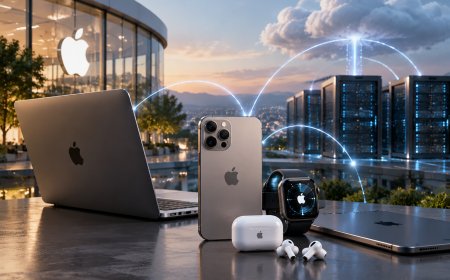
The company controls the hardware, operating system, software experience, and distribution channel used by hundreds of millions of people.
A powerful AI model is useful, but it becomes significantly more valuable when it understands the user’s environment.
A personal assistant that can access information from your calendar, messages, photos, apps, and device settings has a different role from a chatbot that only responds to questions.
This is where Apple’s ecosystem could become important.
The company has spent years building a relationship where users trust its devices with highly personal information. Privacy has become a major part of Apple’s branding, and that trust could influence how consumers view AI assistants that need access to personal data.
The Cloud Versus Device AI Battle
One of the biggest questions in AI is where intelligence should run.
Many AI companies rely on large cloud data centres filled with expensive hardware. This approach lets companies run extremely powerful models, but it also creates high costs.
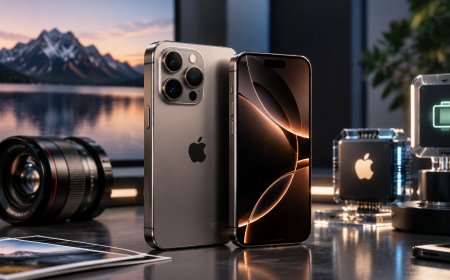
Apple has invested heavily in on-device processing through its custom chips.
Modern iPhones, Macs, and iPads already include specialised hardware designed for machine learning tasks. This allows certain AI features to run locally instead of sending every request to the cloud.
The future of AI may combine both approaches.
Complex tasks may require powerful cloud-based models, while personal and privacy-sensitive tasks could increasingly happen directly on devices.
Apple’s strategy appears focused on controlling that connection between the device and the cloud.
Why Hardware Could Become More Important in AI
The AI industry is currently dominated by companies building massive computing infrastructure.
However, hardware ownership could become a major advantage.
Apple already has billions of devices in use worldwide. Each device represents a potential AI platform with dedicated processing power.
Instead of building a completely new AI ecosystem from zero, Apple can integrate AI into products people already own.
This is different from companies trying to create entirely new consumer hardware categories.
The challenge is that Apple still needs strong AI models. Hardware alone cannot replace intelligence.
The company must continue improving its own AI systems while deciding where partnerships make sense.
A New Era for Apple Leadership
Apple’s future AI direction is also connected to its leadership transition.
Leaders with different strengths have historically shaped the company. Steve Jobs focused heavily on product vision and design, while Tim Cook built Apple’s global operations and supply chain into one of the world’s strongest business systems.
The next generation of leadership will determine how Apple balances hardware, software, and artificial intelligence.
The company’s hardware expertise has become one of its strongest assets. Apple’s custom chips, integrated operating systems, and product ecosystem provide a foundation many AI companies lack.
But AI moves faster than traditional hardware cycles.
Apple will need to move quickly while maintaining the careful approach that has defined the company for years.
Apple’s AI Strategy Is About Control
The AI race may not be won only by the company with the smartest model.
It may also be won by the company that creates the best overall experience.
Apple has always focused on controlling the complete product journey: the hardware, the software, and the user experience.
The company’s AI strategy appears to follow the same philosophy.
Rather than competing only in the race to build the largest model, Apple may be focused on making AI a natural part of devices people already use every day.
Whether this approach succeeds will depend on execution. Apple still faces serious competition from companies that are moving quickly in AI research and development.
But history shows that Apple has often entered technology markets after others have started the race, then used its ecosystem to create a different kind of advantage.
The AI era may become another test of whether that strategy can work.
Tags:
What's Your Reaction?
Like
0
Dislike
0
Love
0
Funny
0
Angry
0
Sad
0
Wow
0