






































Zipline charts drone delivery expansion with $600M in new funding
Drone delivery company Zipline has raised $600 million in new funding to expand its autonomous delivery network, scale operations, and grow commercial and healthcare partnerships worldwide.
U.S.-based autonomous drone delivery and logistics startup Zipline announced on Wednesday that it plans to launch operations in Houston and Phoenix early this year. The move is part of a broader expansion strategy that will be fueled by $600 million in new funding secured by the company.
The latest investment round values Zipline at $7.6 billion. According to the company, the capital will be used to support expansion into at least four additional U.S. states by 2026. Both existing and new backers participated in the round, including Fidelity Management & Research Company, Baillie Gifford, Valour Equity Partners, and Tiger Global.
Founded in 2014, Zipline has built its own end-to-end drone delivery ecosystem, encompassing logistics software, launch and landing infrastructure, and proprietary aircraft. The company began commercial operations in 2016, initially using autonomous drones to deliver blood supplies in Rwanda. Since then, Zipline has significantly expanded its footprint. Today, it'ss drones deliver food, retail goods, agricultural products, and medical supplies across five African countries, multiple cities in the United States, and Japan.
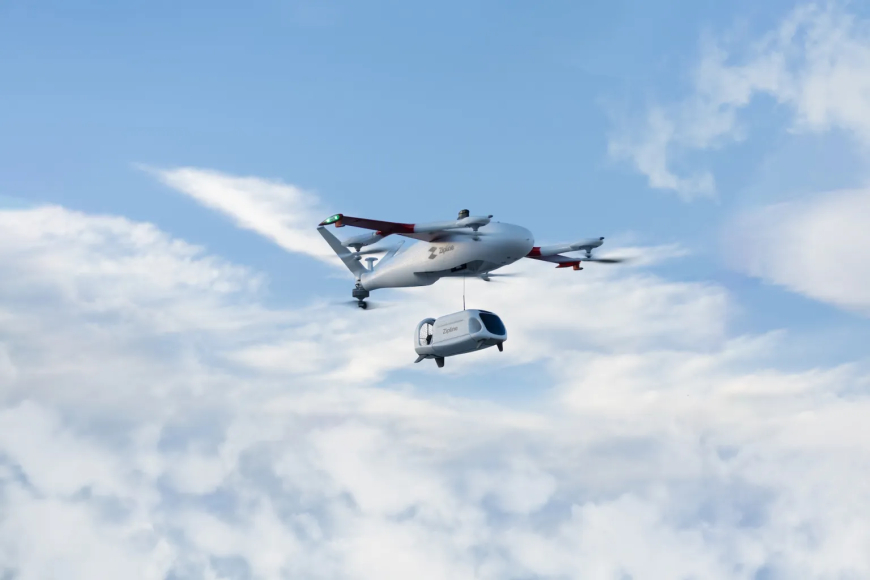
Last year marked another milestone for the company, as Zipline rolled out a home delivery service in the U.S. that allows customers to order food and retail items directly through a mobile app. This service relies on Zipline's Platform 2 drones, which can carry packages weighing up to 8 pounds and deliver within a 10-mile radius. For longer-distance needs, Zipline deploys its larger Platform 1 drones, designed for enterprise, commercial, and government use, which can complete round-trip flights of up to 120 miles.
The Platform 2 service launched first in Pea Ridge and across the Dallas-Fort Worth Metroplex in partnership with Walmart and more than a dozen restaurant brands, according to Zipline. The company has also revealed plans to expand operations to Seattle. Additional commercial partners include Panera, Chipotle, Crumbl, Blaze Pizza, Wendy's, and Little Caesars.
This steady geographic expansion across the United States has driven rapid growth in Zipline's delivery volume. In 2024, the company completed 1 million drone deliveries to customers. This week, Zipline reported surpassing the 2 million delivery mark. The company also said that its U.S. deliveries have increased by roughly 15% week over week for the past seven months.
Co-founder and CEO Keller Cliffton believes 2026 will represent a turning point for the business.
"Autonomous logistics has been maturing for more than a decade, and the last year has made it unmistakably clear that when deliveries are faster, cleaner, safer, and cheaper, demand isn't just high — it grows exponentially," Cliffton said in a statement. "In 2026, autonomous logistics will become an everyday staple for people across several U.S. states. That shift begins with Houston and my hometown of Phoenix, which we'll start serving early this year, before expanding to many more locations nationwide as the year progresses."
Zipline is not the only company operating in the still-emerging drone delivery sector. Other players in the space include Flytrex, DroneUp, Amazon Prime Air, and Wing, the latter being owned by Alphabet and also partnered with Walmart. Wing has previously announced plans to expand its drone delivery service to an additional 150 Walmart stores by 2027.
What's Your Reaction?
 Like
0
Like
0
 Dislike
0
Dislike
0
 Love
0
Love
0
 Funny
0
Funny
0
 Angry
0
Angry
0
 Sad
0
Sad
0
 Wow
0
Wow
0