






























Blue Origin’s New Glenn misplaces customer satellite in incorrect orbit on third launch
Blue Origin’s New Glenn rocket placed a customer satellite into the wrong orbit during its third launch, raising concerns about mission accuracy and reliability.
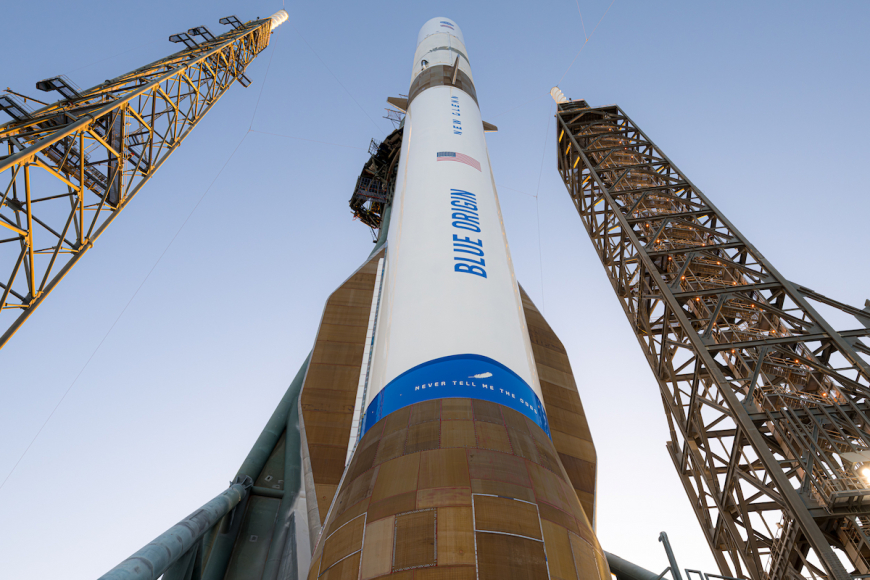
Jeff Bezos’ space company Blue Origin successfully reused one of its New Glenn rockets for the first time on Sunday, marking an important milestone for the heavy-lift launch system. However, despite the achievement in booster recovery, the mission fell short of its primary objective: placing a commercial communications satellite into the correct orbit for customer AST SpaceMobile.
In a statement issued on Sunday afternoon, AST SpaceMobile said its BlueBird 7 satellite separated successfully from the rocket and powered on as expected. However, the spacecraft was deployed into an orbit that was “lower than planned.” According to the company, the altitude is too low to support operational requirements, meaning the satellite will ultimately need to be de-orbited and allowed to burn up in Earth’s atmosphere.
On Monday, Blue Origin CEO Dave Limp addressed the issue, saying the company believes one of the upper stage engines “didn’t produce sufficient thrust to reach our target orbit.”
“While we are pleased with the nominal booster recovery, we clearly didn’t deliver the mission our customer wanted, and our team expects,” Limp wrote.
AST SpaceMobile confirmed that the loss is covered by insurance and noted that additional BlueBird satellites are already in production, with more launches planned. The company also said it expects to deploy up to 45 satellites by the end of 2026 under various launch agreements, not limited to Blue Origin.
The incident marks the first major setback for the New Glenn program, which only made its maiden flight in January 2025 after more than a decade of development. Sunday’s mission was the third overall flight of the rocket and only the second to carry a commercial payload, following a previous NASA mission that sent twin spacecraft toward Mars in November.
The apparent malfunction in the upper stage has triggered regulatory attention, with the Federal Aviation Administration requiring Blue Origin to conduct an investigation. The outcome could have implications for the company’s broader ambitions, including participation in future NASA Artemis missions to return humans to the Moon.
Blue Origin has been positioning New Glenn as a key vehicle for deep-space missions and lunar logistics. The company is also developing its own lunar lander, which recently completed early testing and could see a launch attempt later this year without crew. Earlier plans had suggested the lander might fly on New Glenn’s third mission, but the company ultimately chose to carry the AST SpaceMobile payload instead.
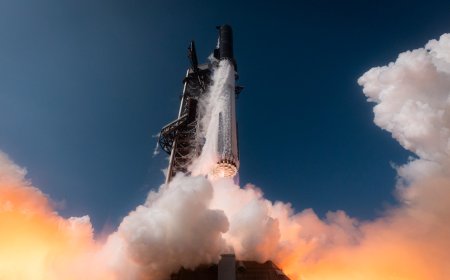
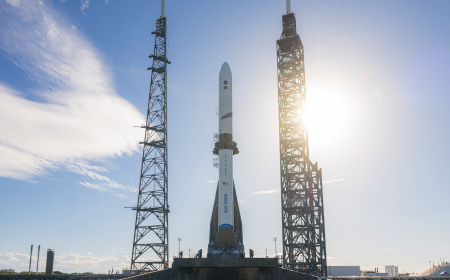
The launch itself appeared nominal in its early stages. The rocket lifted off at 7:35 a.m. local time from Cape Canaveral, Florida, and successfully executed booster recovery roughly 10 minutes after liftoff, landing on an ocean-based drone ship. Blue Origin even shared footage of the landing on X, the platform owned by rival Elon Musk, who publicly congratulated the company.
However, around two hours after launch, Blue Origin confirmed that the upper stage had placed the satellite into an “off-nominal orbit.” No further technical details have been released since.
The mission comes as Blue Origin attempts to scale New Glenn into a competitive commercial launch system. Unlike SpaceX, which has historically flown extensive test campaigns before carrying operational payloads, Blue Origin has begun launching customer missions early in the vehicle’s operational life.
While SpaceX has also experienced early-stage failures in its Falcon 9 program, including payload losses during development and launch anomalies, New Glenn’s latest issue represents a critical test for Blue Origin as it works to establish reliability in the highly competitive launch market.
What's Your Reaction?
 Like
0
Like
0
 Dislike
0
Dislike
0
 Love
0
Love
0
 Funny
0
Funny
0
 Angry
0
Angry
0
 Sad
0
Sad
0
 Wow
0
Wow
0