






































Artemis II marks NASA’s final moon mission without Silicon Valley involvement
NASA’s Artemis II mission may be the last lunar mission without major Silicon Valley involvement, highlighting a shift toward commercial space partnerships.
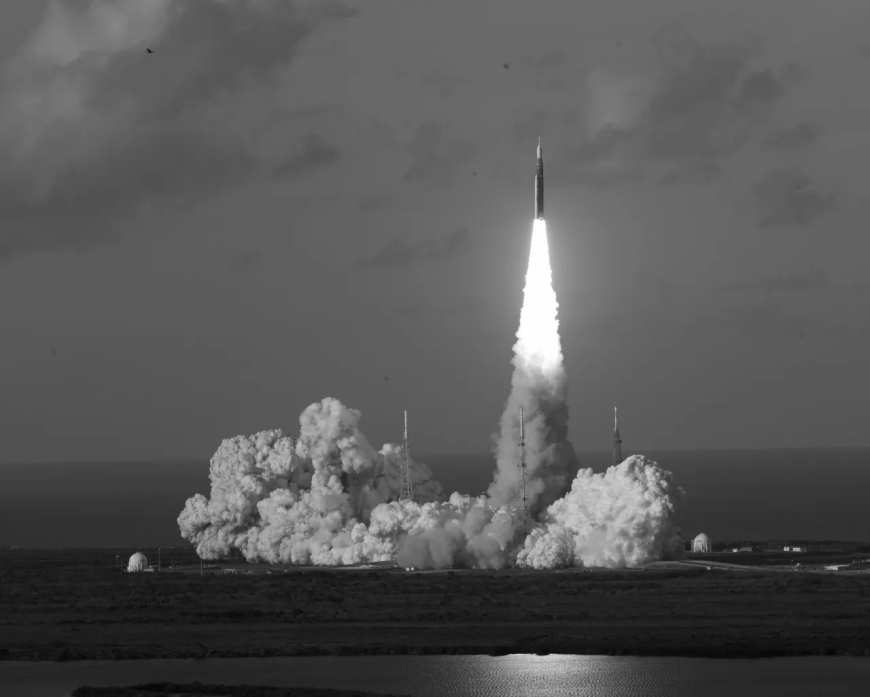
The launch of Artemis II comes at a pivotal moment for the future of space exploration. On the same day SpaceX reportedly moved forward with IPO plans, the United States sent astronauts toward the moon for the first time in more than five decades — a reminder that this mission may represent the final deep-space effort led primarily without heavy reliance on venture-backed technology firms.
NASA’s current lunar program has its roots in initiatives that date back to the early 2000s under the Bush administration. At that time, the agency began developing a massive rocket system alongside the Orion spacecraft to return humans to the moon. Over time, however, the project faced rising costs and delays, leading to restructuring in 2010. That restructuring included support for private companies developing new launch capabilities.
This shift played a crucial role in the growth of companies like SpaceX, while NASA continued development of its own heavy-lift rocket, the Space Launch System (SLS). Today, SLS is carrying a crew of three Americans and one Canadian on a mission that will orbit the moon and return to Earth.
The SLS rocket remains the most powerful operational launch system currently in use. It previously completed a single uncrewed mission, sending an Orion spacecraft around the moon as part of preparations for the current flight. Artemis II is expected to push human spaceflight farther into the solar system than any mission before it.
Future missions, however, are likely to depend much more heavily on private space companies. Firms such as SpaceX and Blue Origin are now central to NASA’s plans to land astronauts on the lunar surface, competing to deliver the systems that will ultimately enable those landings.
The SLS and Orion spacecraft were developed through partnerships with traditional aerospace contractors, including Boeing and Lockheed Martin, as well as contributions from Airbus Defence and Space in Europe. While these systems are capable, they have also faced criticism for being expensive and delayed, especially as newer private-sector players have demonstrated rapid innovation with reusable rocket technologies.
When NASA renewed its push to return to the moon in 2019, it chose to continue with SLS and Orion despite their challenges. However, one major component was missing: a system to transport astronauts from lunar orbit to the moon’s surface. NASA decided to rely on private companies for this part of the mission.
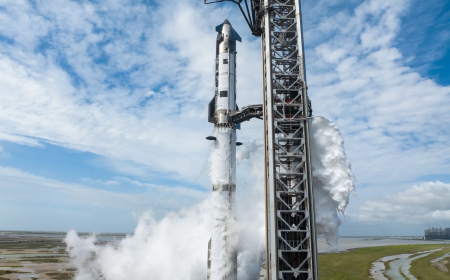
SpaceX secured the initial contract in 2021 to use its Starship vehicle as a human landing system. The plan drew attention for its complexity, including the need for multiple in-orbit launches to refuel the spacecraft. Delays in development led NASA to adjust its timeline and restructure parts of the program.
Former NASA administrator Jim Bridenstine later commented that the architecture chosen for the program was not one that agency leadership would typically have selected under different circumstances.
In 2023, Blue Origin was also selected to develop a competing lunar landing system, setting the stage for multiple approaches to be tested. NASA now plans to evaluate these systems in orbit, with a key demonstration expected around 2027. This will involve Orion docking with one or more landers ahead of potential 2028 lunar surface missions.
The program has undergone further changes under new leadership. Jared Isaacman, who took over as NASA administrator in late 2025 after a complex nomination process, has begun reshaping the agency’s strategy. In March, he cancelled plans for the Gateway lunar space station and scaled back investments in SLS upgrades, signalling a stronger shift toward private-sector involvement.
With these changes, NASA is increasingly relying on companies that emerged from the venture-backed technology ecosystem. This transition reflects a broader transformation in how space missions are developed and executed.
At the same time, global competition adds urgency. China is working toward its own goal of landing astronauts on the moon by 2030. Any delays in the U.S. program could carry geopolitical implications, placing additional pressure on NASA and its private partners.
While Silicon Valley has faced challenges competing globally in industries like electric vehicles and robotics, space exploration remains an area where companies like SpaceX are setting the pace. As NASA prepares for future lunar missions, the role of private technology firms is expected to expand significantly, marking a new era in human spaceflight.
What's Your Reaction?
 Like
0
Like
0
 Dislike
0
Dislike
0
 Love
0
Love
0
 Funny
0
Funny
0
 Angry
0
Angry
0
 Sad
0
Sad
0
 Wow
0
Wow
0