



































South Korea’s LetinAR develops advanced optics for next-generation AI glasses
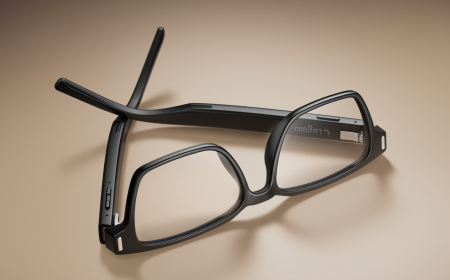
South Korean startup LetinAR is advancing AI glasses technology with innovative optical solutions designed to improve display quality, comfort, and augmented reality experiences.
Imagine travelling on a motorcycle at 160 kilometres per hour when a navigation arrow suddenly appears directly on the road ahead, guiding you toward the correct turn. There is no need to check a smartphone screen or glance at a dashboard display. Instead, the information appears seamlessly inside your helmet through a lens small enough to fit on the tip of a finger.
This is no longer a futuristic concept or promotional video. The technology is expected to reach European roads as early as this year and offers an early indication of how rapidly smart glasses and augmented reality wearables are evolving.
Over the last several years, major technology companies have increasingly focused on the AI glasses market. Meta has been selling AI-enabled Ray-Ban Meta Smart Glasses since 2023, while Google continues to develop Android XR. Meanwhile, Apple is widely expected to enter the category as well. More recently, Samsung Electronics was reportedly preparing to introduce its first AI-capable smart glasses, developed in partnership with Gentle Monster, during a Galaxy Unpacked event scheduled in London this July. Chinese technology giants, including Huawei, Alibaba, and Xiaomi, are also actively investing in the sector.
Industry data highlights the growing momentum behind AI-powered eyewear. According to Omdia, worldwide shipments of AI glasses reached 8.7 million units in 2025, representing growth of more than 300% compared with the previous year. Analysts expect that figure to surpass 15 million units this year as adoption continues to accelerate.
As demand grows, suppliers and component manufacturers are positioning themselves to become key players in the emerging AI glasses ecosystem. One company aiming to play a central role is South Korean startup LetinAR, which has spent nearly a decade developing optical technologies designed to make next-generation smart glasses practical for everyday use.
The startup, backed by LG Electronics, recently secured $18.5 million in new funding from investors including Korea Development Bank and Lotte Ventures, the investment arm of South Korean retail giant Lotte Group. The funding comes ahead of LetinAR’s planned initial public offering in South Korea in 2027.
LG Electronics, one of the company’s earlier investors, has reportedly begun developing its own AI smart glasses products, according to local media reports. That move underscores how seriously one of South Korea’s largest consumer electronics manufacturers views the emerging wearable AI market.
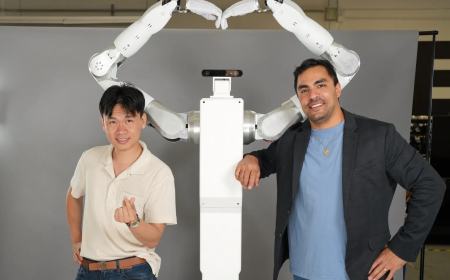
LetinAR was founded in 2016 by longtime friends Jaehyeok Kim and Jeonghun Ha, who have known each other since high school.
The lens technology is designed to make AI glasses practical.
Unlike many companies entering the smart glasses market, LetinAR does not manufacture the glasses itself. Instead, it focuses on one of the most important components inside the device: the optical module.
This tiny lens system projects digital information directly into the user’s field of vision. According to CTO Jeonghun Ha, the optical module ultimately determines whether smart glasses feel like a bulky science-fiction headset or a lightweight device suitable for everyday wear.
To succeed, the component must remain thin, lightweight, energy-efficient, and capable of producing bright, sharp images. Combining all of those characteristics into a single compact component that fits inside ordinary-looking eyeglass frames remains one of the most difficult engineering challenges facing the industry. “That’s exactly what LetinAR is trying to solve,” the company says.
“We see AI glasses as that next platform,” CEO Jaehyeok Kim explained. “And the optical module is the hardest part to get right as AI glasses makers will need a lens that is thinner, lighter, and more power-efficient than what exists today.” The co-founders said their goal is to become the supplier of choice for companies building future AI glasses products.
At the centre of LetinAR’s strategy is its proprietary optical technology, PinTILT. The system arranges microscopic optical elements within the lens so that light is directed precisely toward the user’s eye rather than dispersed across the entire lens. Ha compares the challenge to how a television works. A TV emits light throughout an entire room, but only the light that actually reaches the viewer’s eyes contributes to the image. Many existing smart-glasses lens systems operate similarly.
One of the most widely used technologies today is called waveguide optics. While waveguides allow manufacturers to create thin lenses, they distribute light across the entire lens surface to generate images. As a result, a significant portion of the light never reaches the user’s eye.
According to Ha, this inefficiency creates two major problems: reduced image brightness and increased battery consumption, both of which are critical limitations in wearable devices.
An alternative technology known as the birdbath optical system uses mirrors to direct light more efficiently toward the eye. However, birdbath designs require bulkier hardware, making it difficult to integrate them into glasses that resemble conventional eyewear. LetinAR says PinTILT eliminates that compromise.
By concentrating only on the light that can realistically enter the user’s eye and carefully controlling the angle of each optical element, the company claims it can deliver brighter images while maintaining a thinner, lighter design and reducing power consumption.
In a market where every gram of weight and every additional hour of battery life matters, solving that challenge could provide a major competitive advantage. The company operates in a highly competitive landscape alongside optical technology firms such as WaveOptics, DigiLens, and Lumus.
Existing customers and commercial deployment
LetinAR’s optical modules have already entered commercial production. Among its customers are Japan-based NTT QONOQ Devices and Dynabook, formerly known as Toshiba Client Solutions. These partnerships have allowed the company to gain valuable experience manufacturing optical systems at scale.
The startup also confirmed that it is currently engaged in research and development discussions with several major technology companies focused on future AI glasses products. However, it declined to identify those partners publicly. One of LetinAR’s most technically demanding customers is Aegis Rider, a Swiss startup that originated from the Computer Vision Lab at ETH Zurich.
Aegis Rider is developing an AI-powered augmented reality motorcycle helmet capable of displaying navigation instructions, speed information, and safety alerts directly within a rider’s field of vision. Rather than appearing as floating overlays on the helmet visor, the information appears anchored to real-world objects and road surfaces, creating the impression that digital directions are physically integrated into the environment ahead.
LetinAR’s optical module is a key component of that helmet system. Aegis Rider plans to launch the product in Switzerland and the broader European Union market during 2026. The latest funding round increases LetinAR’s total capital raised to approximately $41.7 million.
According to CEO Jaehyeok Kim, the newly secured investment will help the company expand production capacity and prepare for larger-scale manufacturing as AI glasses move beyond early adopters and enter mainstream markets.
Kim added that AI-powered hardware devices, particularly smart glasses, are expected to become one of the primary ways consumers interact with artificial intelligence in everyday life, making advanced optical technologies an increasingly important part of the future wearable computing landscape.
What's Your Reaction?
 Like
0
Like
0
 Dislike
0
Dislike
0
 Love
0
Love
0
 Funny
0
Funny
0
 Angry
0
Angry
0
 Sad
0
Sad
0
 Wow
0
Wow
0