



































Artemis II mission demonstrates scalable space-to-Earth laser communications
NASA’s Artemis II mission highlights how space-to-Earth laser communications can scale, enabling faster, more reliable data transmission for future deep space exploration.
Earlier this month, NASA’s Artemis II mission sent four astronauts into lunar orbit and used advanced laser communication systems to transmit high-resolution images back to Earth.
One of the receiving systems, however, was not operated by NASA. A low-cost terminal developed by Observable Space and Quantum Opus, and operated by the Australian National University, successfully captured data transmitted from the spacecraft on the Moon at 260 megabits per second.
The companies say this result demonstrates that high-bandwidth space-to-Earth communication can be achieved at relatively low cost.
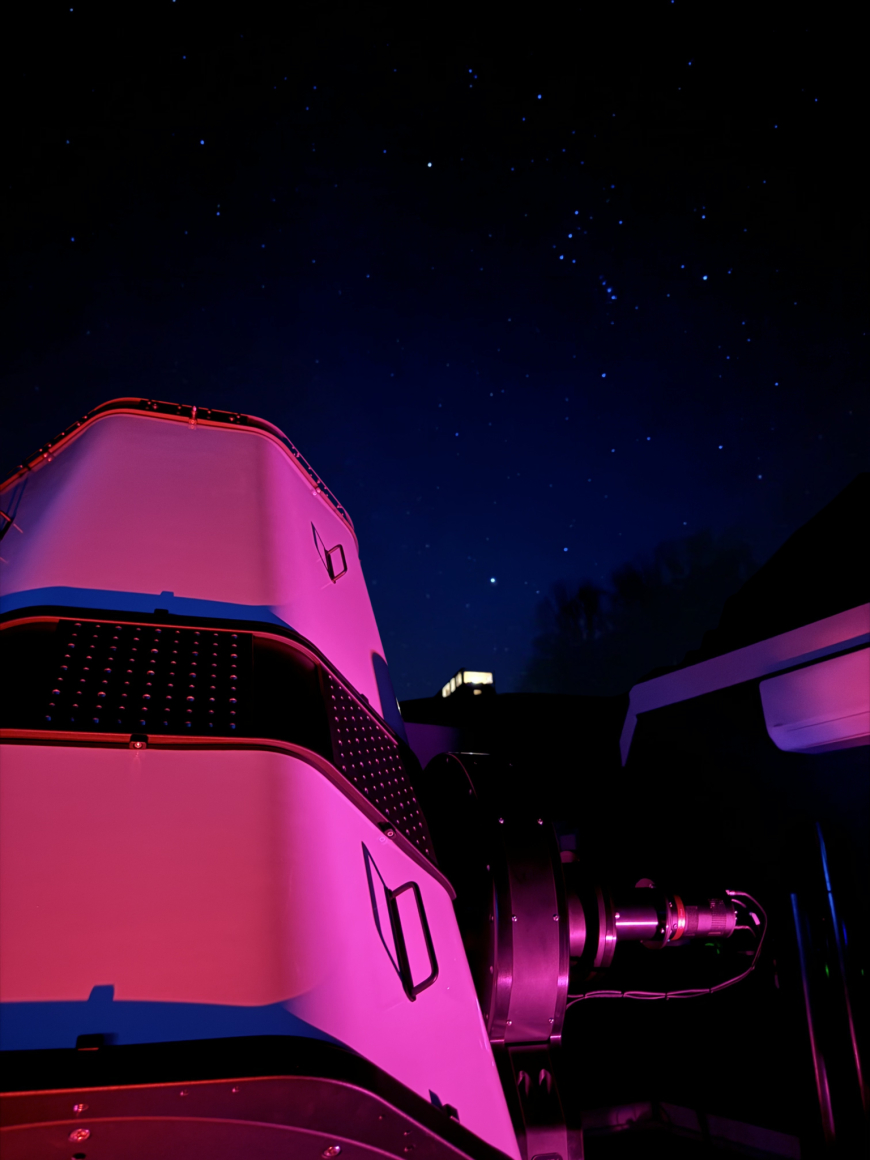
The ground terminal used Observable Space’s software and telescope system to track and lock onto signals from the Orion spacecraft. At the same time, a photonic sensor developed by Quantum Opus decoded the incoming data stream. The total cost of the system was under $5 million, significantly lower than traditional deep-space communication systems, which can cost tens of millions of dollars.
NASA has been experimenting with deep-space laser communications for several years, including prior tests involving a spacecraft 218 million miles from Earth during a mission toward an asteroid. Artemis II represented its most comprehensive demonstration so far. Alongside NASA’s main receivers in California and New Mexico, the experimental Australian terminal also received 4K video footage transmitted from the lunar mission.
Laser communications offer much higher data transfer rates than traditional radio-frequency systems, which are still widely used for space communications. However, laser systems are more sensitive to weather conditions, such as cloud cover, and require a direct line of sight between the transmitter and the receiver. This limitation highlights the importance of geographically distributed ground stations, including locations on opposite sides of the world from the United States.
Josh Cassada, a former NASA astronaut and co-founder of Quantum Opus, noted that Australia was the first continent visible in the historic Earthrise image captured during the Artemis II mission.
Observable Space CEO Dan Roelker said the demonstration shows that space-to-Earth laser downlinks are now ready to scale. While the technology is already widely used for satellite-to-satellite communication, its use for direct transmission back to Earth has been limited in the past due to high infrastructure costs. Roelker believes this could change with a global network of lower-cost receiving terminals.
“We can scale this over the next year or more,” Roelker told, though he added that the company is not yet ready to disclose its full deployment strategy.
“We will partner with a lot of people around this,” he said, “whether this is something we’re going to do ourselves, or partner with other ground station-as-a-service companies, or work with extremely large constellation providers that are going to want to own their own infrastructure.”
What's Your Reaction?
 Like
0
Like
0
 Dislike
0
Dislike
0
 Love
0
Love
0
 Funny
0
Funny
0
 Angry
0
Angry
0
 Sad
0
Sad
0
 Wow
0
Wow
0