


































Duolingo rolls out advanced learning content for users
Duolingo now offers advanced learning content, expanding beyond beginner lessons to help users improve fluency, comprehension, and real-world language skills.
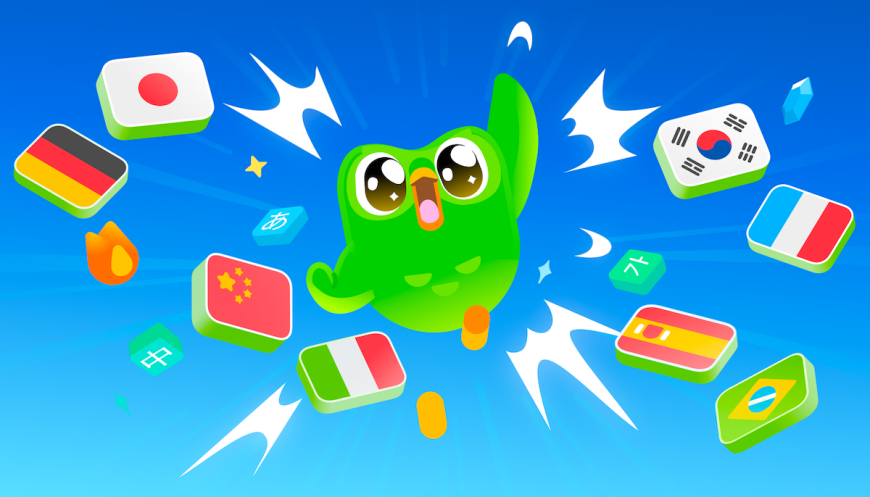
Duolingo announced on Wednesday that it is expanding its language learning platform by offering advanced-level educational content for free across nine major languages: English, Spanish, French, German, Italian, Portuguese, Japanese, Korean, and Chinese. The new material is available on the web as well as in iOS and Android applications.
The newly introduced content corresponds to the B2 level of the Common European Framework of Reference for Languages (CEFR), an internationally recognised standard used by schools, universities, and employers to assess language proficiency. At this level, learners are expected to understand complex language structures, engage with specialised vocabulary, and process content without relying on translations.
According to Duolingo, this update introduces more immersive learning formats designed to simulate real-world language usage. One of the key additions is “Advanced Stories,” which focuses on improving reading comprehension through contextual narratives. Another feature, DuoRadio, offers a podcast-style audio experience designed to strengthen listening skills in practical scenarios.
With this expansion, users can now progress beyond basic conversational fluency and apply their language skills in more advanced situations, such as job interviews, academic studies abroad, and understanding complex materials, including news articles, literature, and films, without translation support.
The company claims this makes Duolingo the only free language-learning platform to provide advanced-level CEFR-aligned content across all nine supported languages at no cost. While competitors such as Babbel and Busuu also offer advanced language courses, these platforms generally require paid subscriptions for full access. For example, Busuu provides CEFR-aligned lessons up to B2 level, but its free tier offers limited functionality, with full grammar explanations and structured lessons locked behind a subscription model.
Previously, Duolingo’s free offerings were primarily limited to A2 and B1 levels, focusing on foundational communication skills such as basic conversation and everyday vocabulary.
The company is positioning this upgrade as part of a broader effort to improve career opportunities for learners, particularly in a highly competitive global job market. It highlights research from the American Council on the Teaching of Foreign Languages, which suggests that bilingual individuals may see up to a 50% improvement in employability.
“Reaching job-ready proficiency in a new language used to be out of reach for most people,” said Bozena Pajak, head of learning science at Duolingo. “It took years of expensive classes or immersive experiences that not everyone could access.”
Beyond education, the move also supports Duolingo’s broader growth strategy by increasing engagement among free users. In its Q4 earnings report, the company reported 52.7 million daily active users, marking a 30% year-over-year increase. This significantly exceeds its paid subscriber base, which stands at 12.2 million users. However, despite strong user growth, Duolingo’s stock declined following projections that its year-over-year bookings growth rate for Q2 2026 would slow slightly.
What's Your Reaction?
 Like
0
Like
0
 Dislike
0
Dislike
0
 Love
0
Love
0
 Funny
0
Funny
0
 Angry
0
Angry
0
 Sad
0
Sad
0
 Wow
0
Wow
0