


































FedEx prioritises partnerships instead of building its own automation technology
FedEx is focusing on partnerships rather than in-house tech to advance automation, aiming to improve efficiency, scalability, and logistics innovation.
Automation is rapidly transforming warehouse operations, with companies racing to integrate robotics into their logistics networks. While firms like Amazon are developing robotic systems internally, others are increasingly relying on external partners to accelerate their automation efforts.
Shipping giant FedEx has explored both approaches and ultimately decided that partnering with robotics companies is the most effective strategy to remain competitive in the growing automation landscape.
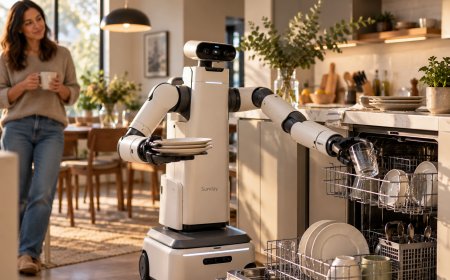
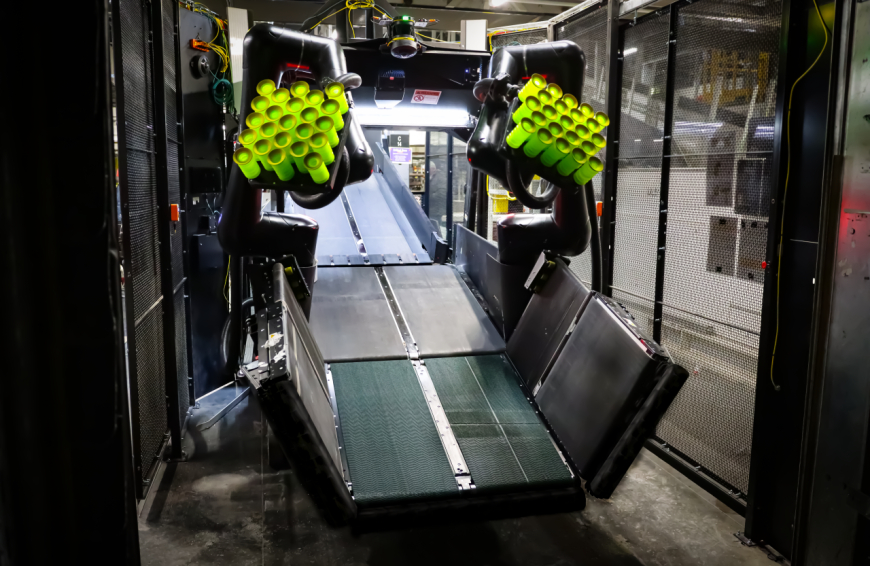
A recent multi-year collaboration with Berkshire Grey, which SoftBank owns, highlights this direction. Through this non-exclusive partnership, the companies have developed a robotic system called Scoop. This robot is designed specifically for bulk package unloading, meaning it can remove large groups of parcels from delivery trucks in a single operation.
FedEx plans to begin deploying these robots in its warehouse network later this year through a pilot program. While the system won't be compatible with every unloading dock across the company's infrastructure, we plan to scale deployment if the pilot is successful.
According to Stephanie Cook, director of advanced technology and innovation for robotics at FedEx, bulk unloading is among the most physically demanding and unpredictable tasks in warehouse operations. She noted that the company had previously attempted to automate this process but struggled to find a solution that met its requirements.
"There's nothing off-the-shelf that we recognise will work for our needs," Cook said. "We worked with Berkshire Grey in the past and felt this was a good fit for us in terms of a collaboration. We knew it wasn't something that we could develop in a matter of months. It was going to take a multi-year journey to get here."
Bulk unloading is considered an ideal candidate for automation because, while it requires some decision-making, it does not demand the same level of precision as tasks like identifying or selecting individual packages. O.P. Skaaksrud, vice president of advanced technology and innovation at FedEx, explained that the diversity of package sizes and types makes single-item picking slower and less efficient compared to bulk handling.
"Because we have such a variety of package mixes, to specialise in individual picking, it's just not gonna be fast enough," Skaaksrud said. "That was one of the other tradeoffs that we went with here, because there are package unloaders out there that do single picks. They're not fast enough and not able to do this type of mix."
Cook added that FedEx is prioritising automation in repetitive, physically demanding roles, allowing employees to transition into safer, more skilled positions within the organisation.
Partnership-driven approach to innovation
Although FedEx continues to develop certain technologies internally — such as its SenseAware and SenseAware ID systems, which track packages — the company views robotics development as a significantly more complex undertaking.
"The entire package and developing sensor hardware is complicated, but developing robotics capabilities is next level," Skaaksrud said. "It's much better and faster to partner with other companies in the field to move faster. That is the way we look at it. We see these partnerships as really benefiting both FedEx and the companies we work with."
Beyond Berkshire Grey, FedEx has established multiple collaborations focused on automation. Within its warehouse operations, the company works with Dexterity, known for creating robots with human-like manipulation capabilities, and Nimble Robotics, which develops fully autonomous warehouse systems.
Autonomous transportation is another major focus area. In 2021, FedEx entered into a pilot agreement with Aurora Innovation to move packages using self-driving trucks on specific routes in Texas. The partnership expanded in 2022, and the companies have since completed more than 3,200 autonomous delivery runs.
FedEx also previously partnered with Nuro for last-mile delivery solutions. However, after Nuro shifted its business model toward licensing its autonomous technology in 2025, FedEx is no longer working with the company.
The company has also experimented with in-house solutions for last-mile delivery. In 2019, FedEx introduced the SameDay Bot, designed to handle short-distance deliveries. However, the project faced challenges, including regulatory pushback — notably from former New York City mayor Bill de Blasio — and was eventually discontinued, although FedEx continues to explore last-mile innovation.
Balancing innovation with practicality
Despite its push toward automation, FedEx emphasises a measured approach rather than chasing every emerging technology trend. According to company leadership, successful automation requires integrating multiple systems and addressing practical operational challenges, not just deploying advanced hardware.
"Don't be too focused only on the technology, because then we're going to fail," Skaaksrud said. "This is really 3D chess that you're playing here. You'll need to solve for all these different, often less glamorous components that make up the overall solution. We are definitely doing what is required to not only have interesting technology, but interesting productive technology that's going to solve business problems."
FedEx is also not overly concerned about the lack of proprietary robotics hardware. Skaaksrud pointed out that the value of the company lies not in the physical machines themselves but in the broader logistics network and operational intelligence that powers its services.
As automation advances across the industry, FedEx will proceed strategically. The company aims to deploy technologies that deliver clear returns on investment and improve workplace safety, rather than adopting solutions based solely on hype.
One area where FedEx remains cautious is humanoid robotics. While acknowledging their long-term potential, company leaders note that deploying humanoid robots in complex, dynamic warehouse environments presents significant challenges.
"The orchestration aspects of multiple humanoids in a limited space that is highly dynamic, you know how hard it is," Skaaksrud said. "I think that humanoids are very interesting, and we're definitely paying attention, but is this fit for purpose. You've got to figure that out, because the hype is really high, but there's a lot of long-term potential. But you have to understand the limitations and set your expectations accordingly."
Ultimately, FedEx says its automation strategy is centred on supporting its workforce. We focus on technologies that work alongside employees to improve efficiency while maintaining safety and enabling workers to take on higher-value roles within our operations.
What's Your Reaction?
 Like
0
Like
0
 Dislike
0
Dislike
0
 Love
0
Love
0
 Funny
0
Funny
0
 Angry
0
Angry
0
 Sad
0
Sad
0
 Wow
0
Wow
0