


























Chef Robotics survives the robot cooking bust and is now scaling successfully
Chef Robotics is thriving after avoiding the failures that have hit many robot-cooking startups, by focusing on automation for food production and real-world demand.
Chef Robotics CEO Rajat Bhageria often points out that the robot-cooking space has historically been difficult for startups to survive in. The sector has seen multiple high-profile failures, including Chowbotics — a salad-making company that was later shut down after being acquired by DoorDash — and Zume, which raised hundreds of millions of dollars before collapsing in 2023 while attempting to reinvent pizza delivery.
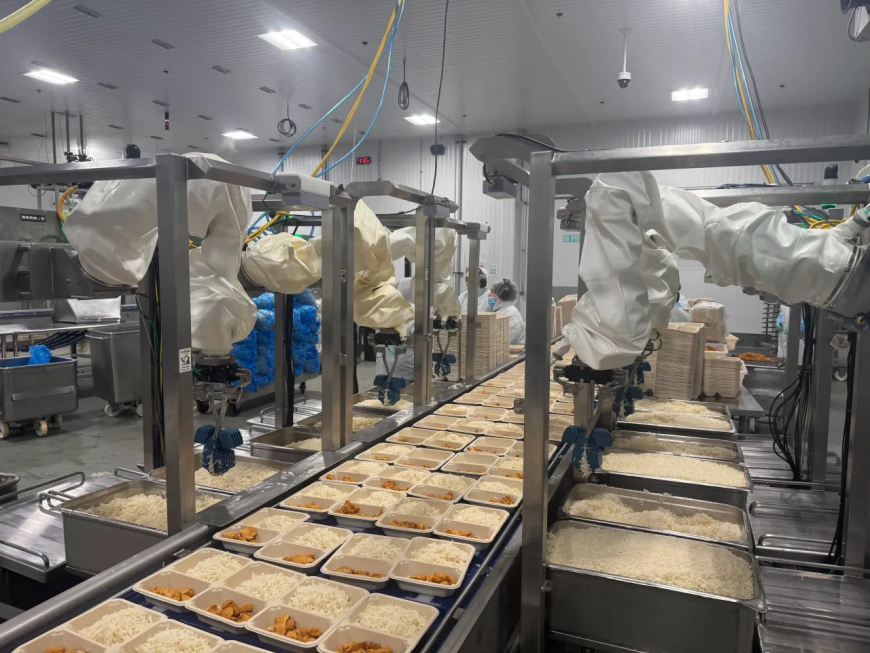
Bhageria believes his company has found a more sustainable approach. The idea centres on using AI-powered robotic arms to automate labour-intensive tasks in large-scale food production environments. While Chef Robotics initially targeted fast-casual restaurants, it quickly shifted direction after realising a greater opportunity in food manufacturing.
That pivot has led the company to enterprise-level clients, including Amy's and Chef Bombay, as well as partnerships with one of the largest school lunch providers in the United States. By focusing on industrial-scale food preparation rather than traditional restaurant settings, the company has found steadier demand and greater scalability.
Chef Robotics now says it has reached a significant operational milestone: completing 100 million servings. The company defines a "serving" as a "portion of food placed by its robotic systems into a meal tray. While this does not constitute a full meal, it represents one component of a broader dish, highlighting the system's volume and consistency.
Having moved away from smaller dining environments and toward institutional clients, the company is now seeing increased activity. Bhageria explained that the next stage of growth involves expanding into what the company refers to as "small" r kitchens, though that term can be misleading. One of its newest customers in this category is described as one of the largest airline catering companies globally, demonstrating that even "small" operations can still operate at a significant scale.
Beyond catering, Chef Robotics is also exploring opportunities in ghost kitchens — facilities that operate without a traditional storefront and prepare food exclusively for delivery platforms such as DoorDash. Looking further ahead, the company aims to expand into fast-casual restaurants, stadiums, and even institutional environments such as correctional facilities.
A key part of the company's strategy involves leveraging the data generated from its operations. The 100 million servings processed so far are being used to train and refine its AI systems, improving how robots handle and package food. Bhageria noted that food presents unique challenges for automation because it is often irregular in shape, texture, and consistency, making it more difficult for machines to handle than rigid industrial materials.
By continuously feeding operational data into its models, Chef Robotics aims to enhance the precision and adaptability of its systems over time. The company expects that as its technology improves, its robots will become more efficient and capable, allowing the business to scale further and expand into new markets.
What's Your Reaction?
 Like
0
Like
0
 Dislike
0
Dislike
0
 Love
0
Love
0
 Funny
0
Funny
0
 Angry
0
Angry
0
 Sad
0
Sad
0
 Wow
0
Wow
0