




















Kevin Weil and Bill Peebles leave OpenAI as company refocuses strategy
OpenAI sees the departure of Kevin Weil and Bill Peebles as it streamlines priorities and cuts back on experimental side projects to focus on core goals.
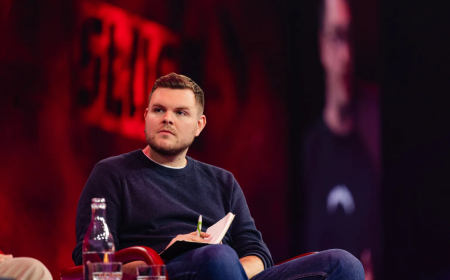
OpenAI is undergoing a notable leadership shake-up, with two key figures behind some of its most experimental initiatives stepping away. Kevin Weil, who led the company’s science-focused research efforts, and Bill Peebles, the lead on the AI video-generation tool Sora, both confirmed their departures on Friday.
The exits come as OpenAI shifts its priorities toward enterprise-focused artificial intelligence products and its upcoming “superapp” strategy. The company has recently been scaling back several experimental “side projects,” including consumer-facing and research-heavy initiatives such as Sora and OpenAI for Science.
Sora, OpenAI’s video generation model, was reportedly consuming significant compute resources, with estimates suggesting operational costs of around $1 million per day. The project was officially discontinued last month as part of the broader restructuring.
Another affected initiative, OpenAI for Science, was an internal research group responsible for developing Prism, an AI system designed to accelerate scientific discovery. According to Weil’s public statements, the group’s work is now being integrated into other research divisions within the company.
Reflecting on his tenure, Weil described his time at the company as deeply transformative. “It’s been a mind-expanding two years, from Chief Product Officer to joining the research team and starting OpenAI for Science,” he said. “Accelerating science will be one of the most stunningly positive outcomes of our push to AGI.”
However, the team’s journey was not without controversy. Shortly after its announcement in October 2025, Weil faced scrutiny after deleting a post claiming that GPT-5 had solved ten previously unresolved Erdős mathematical problems. The claim was quickly challenged by the administrator of the Erdős Problems website, casting doubt on its validity.
Despite the setback, the group continued to produce research output, including the recent release of GPT-Rosalind, a model designed to advance life sciences research and support drug discovery efforts.
In his departure statement, Peebles highlighted the broader impact of Sora on the industry, noting that the tool helped accelerate investment and innovation in AI-generated video. He also suggested that exploratory research requires autonomy from core product roadmaps to thrive.
“Cultivating entropy is the only way for a research lab to thrive long-term,” Peebles wrote.
In addition to these exits, Srinivas Narayanan, OpenAI’s chief technology officer for enterprise applications, is also reportedly leaving the company, according to Wired. Narayanan is said to have informed colleagues internally that he is stepping down to spend more time with his family.
The leadership changes highlight a broader realignment within OpenAI as it concentrates resources on commercial AI offerings and large-scale enterprise deployment, while stepping back from some of its more experimental research directions.
What's Your Reaction?
 Like
0
Like
0
 Dislike
0
Dislike
0
 Love
0
Love
0
 Funny
0
Funny
0
 Angry
0
Angry
0
 Sad
0
Sad
0
 Wow
0
Wow
0