



























Apple Watch Audio Intelligence Raises New Privacy and Consent Questions
Apple Watch Audio Intelligence adds Live Rewind and Siri Recap, raising privacy and consent questions about conversation summaries and on-device listening.
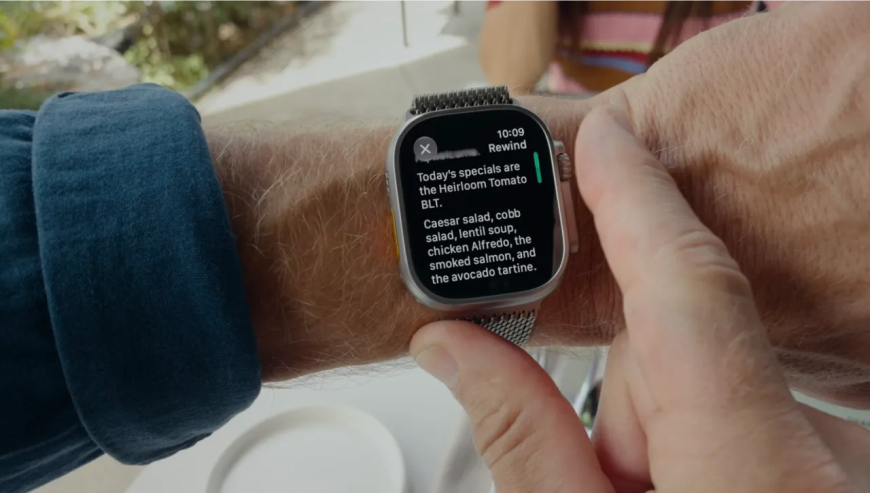
Apple’s latest Apple Watch software features are pushing wearable technology deeper into everyday conversations, giving users tools that can listen for nearby audio, recover recently spoken words, and create AI-generated summaries of discussions.
The new Audio Intelligence features, introduced with Apple Watch Series 12, include Sound Recognition, Live Rewind and Siri Recap. Together, they also raise questions about how people will respond when a device worn on someone’s wrist can continuously process nearby conversations, even when it is not creating a traditional audio recording.
Apple Watch can process conversations in real time
Sound Recognition has a clear accessibility purpose. Apple says the on-device feature can alert users who are deaf or hard of hearing to sounds including sirens, alarms, doorbells and a baby crying, even when their iPhone is not nearby.
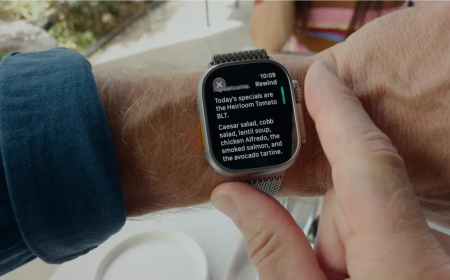
Live Rewind takes conversational audio further. Double-pressing the Digital Crown can display the previous 15 seconds of a conversation as a text snippet, allowing users to recover something they missed or want to remember.
Apple says Live Rewind produces an audible chime and displays a microphone animation when activated. The company does not create or store an audio recording, but the resulting text can still preserve what someone said.
Siri Recap takes a broader approach. When enabled, it uses ambient listening to create high-level notes from conversations. Apple Intelligence generates a title and key points that users can review later in the Siri app, rather than producing a word-for-word transcript.
Consent questions extend beyond traditional recordings
The ability to capture spoken information from a wearable raises consent questions, especially because recording laws differ by location. AI recorder maker Plaud, for example, tells users they are responsible for informing participants and obtaining legally required consent before recording.
Amazon’s Bee service takes a similar approach to user responsibility. Its terms place responsibility on users for complying with applicable privacy and data-protection requirements, including obtaining necessary permissions when minors may be recorded or have their data collected.
Apple’s implementation differs because it says raw audio from these Audio Intelligence features is not stored or accessible, even by Apple. Siri Recap also does not identify individual speakers and is designed to generate summaries rather than exact transcripts.
Live Rewind snippets and Siri Recap summaries are end-to-end encrypted in the Siri app with iCloud syncing, according to Apple. Users must opt in to the features and can control when Siri Recap operates or turn it off through Control Centre.
Wearable listening can change how people behave
Privacy concerns around wearable recording technology aren’t limited to what happens to the data afterwards. Research into wearable cameras has found that perceived recording can create social and surveillance discomfort and can cause people to modify their behaviour.
Other research has examined a similar effect in social settings. A study of Facebook described an “extended chilling” effect in which awareness of online surveillance could influence offline behaviour.
More recent research has also found evidence that awareness of digital surveillance can affect communication. A 2026 field experiment involving 827 participants found that exposure to information about dataveillance reduced participants’ comfort with opinion sharing, information seeking and personal disclosure.
Apple’s new features do not function like a conventional always-recording device, and the company has built visible notifications, encryption and user controls around them. Still, Live Rewind and Siri Recap make passive audio processing a more prominent part of a mainstream consumer wearable.
That distinction between recording audio and processing nearby speech may become increasingly important as AI-powered wearables become more common. For Apple Watch users and the people around them, the practical privacy question is no longer limited to whether a microphone is recording, but also what information a device can extract, summarise,rize and preserve from an everyday conversation.
What's Your Reaction?
 Like
0
Like
0
 Dislike
0
Dislike
0
 Love
0
Love
0
 Funny
0
Funny
0
 Angry
0
Angry
0
 Sad
0
Sad
0
 Wow
0
Wow
0