


































Robot AI Companies Push Toward Better Physical Intelligence
Physical AI startups are building better robot brains as companies tackle challenges in training data, simulation, and real-world deployment.
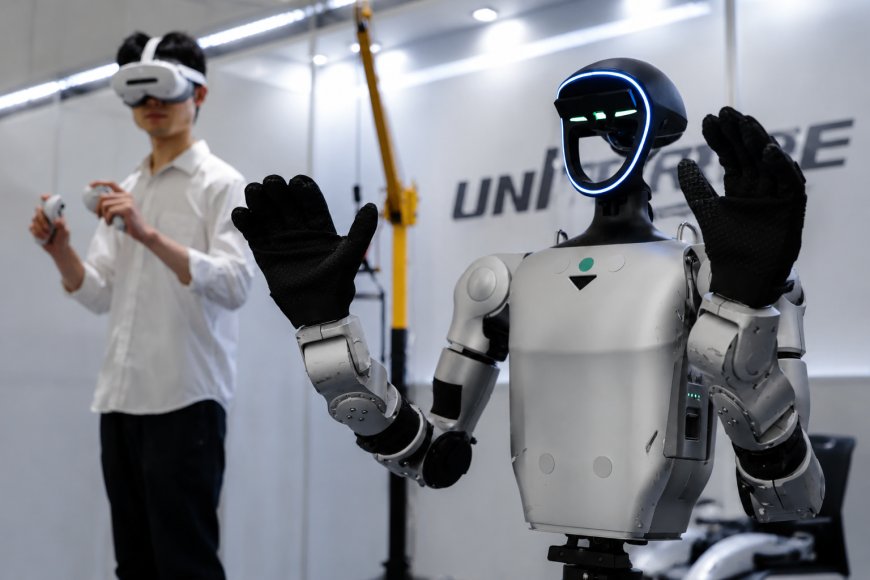
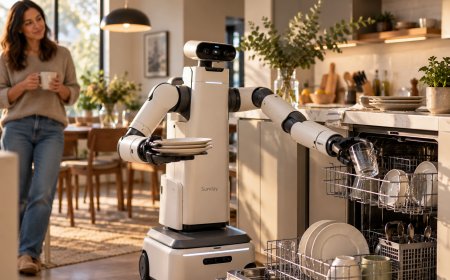
Physical AI has become one of the fastest-growing areas in robotics, with startups and investors applying lessons from large language models to build machines that can understand and interact with the real world.
The sector has attracted billions in investment, but companies face a major challenge: creating robotic systems that can reliably perform useful tasks outside controlled environments.
The issue became apparent after Unitree, one of China’s leading robot makers, saw its valuation surge following its public market debut, only to lose nearly half of its value. Analysts pointed to a gap between improving robot hardware and the ability of those machines to perform valuable work consistently.
Robotics companies search for better AI training methods
At the Actuate conference, a gathering focused on developers building AI systems for robots, the industry’s progress and limitations were on display. The event has grown significantly since its launch in 2023, attracting about 1,500 attendees, according to organiser Foxglove.
One of the biggest challenges discussed at the event was the shortage of high-quality training data for physical AI models. Building robots that can perform many different tasks requires diverse datasets, better simulations, and improved reinforcement learning environments.
Harry Mellsop, founder of simulation startup Antioch, described the current stage of physical AI as its “GPT-2 era,” comparing it to the period before ChatGPT when more data and computing power were still needed to unlock major advances.
Robotics developers are exploring simulation technology and high-performance computing, including GPUs optimised for advanced visual simulations, to create better environments for training AI models.
Autonomous vehicles provide a path for robot intelligence
Autonomous vehicle companies are among the most advanced users of robotics AI infrastructure because they have access to large amounts of real-world driving data. Many of the tools used for physical AI development have roots in the self-driving industry.
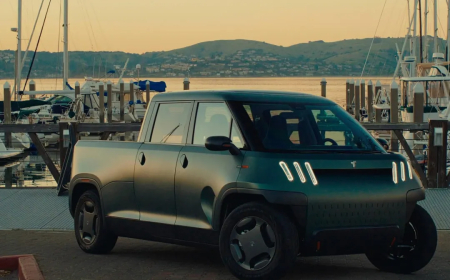
Companies including Tesla, Wayve, and Uber are now applying their machine learning expertise beyond vehicles and exploring humanoid robotics. Wayve CEO Alex Kendall said advances in data infrastructure and simulation could eventually be shared across different types of robotic systems, although each machine will require specialised models.
Genesis AI CEO Théophile Gervet disagreed with a hardware-independent approach, arguing that companies are still early enough in the market to benefit from designing robotics hardware and AI systems together.
Specialised robots compete with general-purpose machines
Another debate in the industry involves whether robotics companies should focus on specific tasks or build general-purpose humanoid robots. Specialised systems are already being deployed in areas such as solar construction, industrial work, and autonomous excavation.
Gervet said companies focused only on general-purpose robots face challenges because customers need reliable solutions for specific jobs. However, he also warned that more advanced general models could eventually overtake narrow systems built on limited AI capabilities.
Bedrock’s CTO, Kevin Peterson, said his company began with autonomous excavation to understand real-world manipulation challenges, but plans to develop broader intelligence systems across construction equipment.
Managing the large amounts of visual and lidar data generated by robots remains another challenge. Foxglove recently introduced a product built on Nvidia’s Cosmos open-weight world model that allows engineers to search robotics data using natural language and improve testing and simulation workflows.
The search for a ChatGPT moment in robotics
Industry leaders remain divided on what breakthrough will define physical AI. Wayve’s Kendall said a major consumer moment would be when useful autonomous technology becomes affordable and widely available.
For Genesis AI’s Gervet, the breakthrough will come when people can communicate naturally with robots and have them reliably complete everyday physical tasks without extensive setup.
Foxglove CEO Adrian Macneil said robotics may not have a single ChatGPT-style moment because deploying machines in the physical world is more difficult than distributing software. Instead, he compared the future milestone to the introduction of personal computers, when useful machines became accessible to everyday users.
What's Your Reaction?
 Like
0
Like
0
 Dislike
0
Dislike
0
 Love
0
Love
0
 Funny
0
Funny
0
 Angry
0
Angry
0
 Sad
0
Sad
0
 Wow
0
Wow
0