




































I Tested Xiaomi’s Weirdest Gadgets
I tested Xiaomi gadgets ranging from smart tools and lighting to a massage gun, 3D printer and electric scooter. The best products were often the simplest, solving real everyday problems.
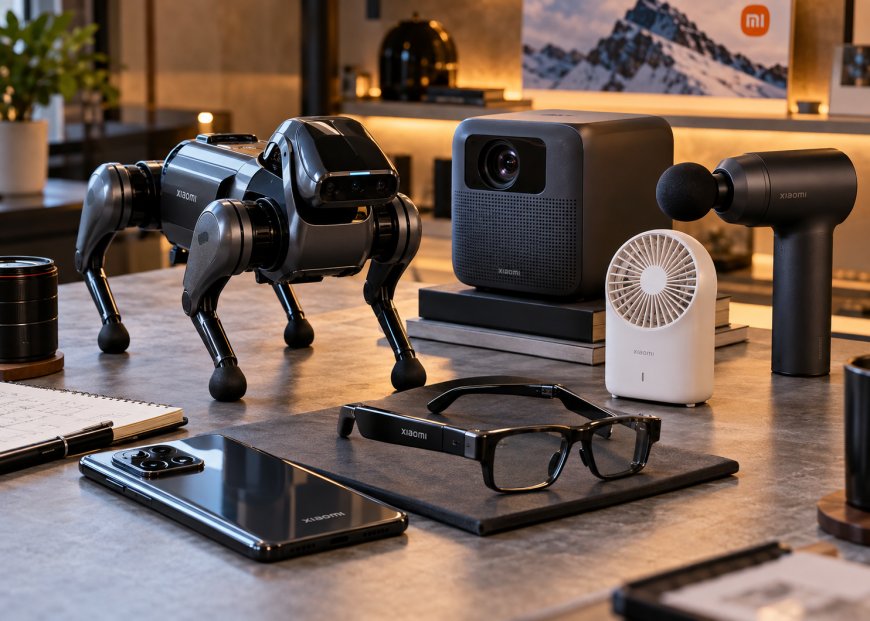
I know Xiaomi mainly for phones, but after testing a much wider selection of its hardware, I think some of the company’s best products might be the things that never make it into a smartphone launch. I spent time with gadgets ranging from the Xiaomi Smart Laser Measure and Xiaomi Electric Precision Screwdriver to smart lighting, a bedside display, a massage gun, a resin 3D printer and several products I am still not convinced needed to exist in the first place. What kept surprising me was how often Xiaomi took something extremely ordinary and made it feel better thought out without turning it into an expensive technology project.
At the other end of the experiment was hardware like the Xiaomi Electric Scooter 4 Pro, which feels much more like a serious transportation product than a quirky gadget. Xiaomi rates that model at up to 55 kilometres of range after its range-enhancing firmware update, gives it 10-inch self-sealing DuraGel tyres, and uses a magnetic charging connection. After trying products across such different categories, I came away with a clearer idea of what Xiaomi does particularly well: its strongest gadgets are usually the ones where the technology disappears into an object that was already useful.
The Cheap Gadgets Impressed Me the Most
The motion-sensor night light was one of the simplest products I tested, and one of the easiest to recommend. Instead of sticking the entire light permanently to a wall or cabinet, Xiaomi uses a separate magnetic base, so I can remove the light, change its angle, or reposition it without redesigning the whole setup.
The motion detection also worked from much farther away than I expected during my test, which made it useful in places where I’d genuinely install one, such as a bathroom, hallway, or dark cabinet. The Xiaomi Home app adds brightness and timing controls, but importantly, the product does not require me to open an app every time I want light. It behaves like a normal light first and a smart-home product second, which is exactly how I want this kind of gadget to work.
The same philosophy is even clearer with Xiaomi’s screwdrivers. I am not somebody who gets excited about filling a toolbox, but the regular electric screwdriver is one of those products that immediately makes the cheaper alternatives around it look unnecessarily clumsy.
The design is clean, USB-C charging means I don’t need another proprietary adapter, the bits attach magnetically, and the controls are simple enough that I never have to think about them. For normal furniture assembly and basic household work, it had more than enough power during my testing, while the smaller precision version makes more sense for phones, watches and electronics.
Xiaomi says the Electric Precision Screwdriver includes 24 S2 steel bits and can handle more than 400 precision screws on a charge. That sounds like a product-page spec, but what matters to me is that the case, bits, and screwdriver feel like one coherent tool instead of a collection of loose accessories.
The Smart Laser Measure Is the Xiaomi Gadget I’d Keep
If I had to pick one smaller Xiaomi gadget from everything I tested, I’d probably keep the Smart Laser Measure.
The hardware itself is almost aggressively simple. It has one main button, a small display, and a laser. Yet, Xiaomi rates it for measurements from 5 centimetres to 40 metres with a stated precision of roughly ±3mm under its test conditions.
I checked it against conventional measurements during testing, and the results were extremely close. That alone makes it useful, but the clever part is what happens when I connect it to Xiaomi Home.
I can store measurements rather than scribble them on paper and forget them. I can label them, run calculations, and even sketch a rough room layout while assigning the measurements I have already taken to individual walls, turning a tiny measuring tool into something I can realistically use when planning furniture or renovations.
This is where Xiaomi’s approach works best for me. The product isn’t smart just because the company added Bluetooth and printed “AI” on the box; the connected features remove steps I would otherwise have to do manually.
Xiaomi’s Smart-Home Ecosystem Is Both the Appeal and the Risk
The Mi Smart Clock gave me a similar feeling. It is basically a compact bedside display with clock faces, weather, calendar information, music and smart-home controls, and Xiaomi built it around a four-inch display rather than trying to turn it into a full tablet.
The interface felt smoother than I expected, and controlling other devices in the same ecosystem made it more useful than a basic alarm clock. Xiaomi’s official specifications list an 800-by-480 display, Wi-Fi, Bluetooth, and a 1.5-inch speaker, modest hardware but perfectly adequate for the job.
The LCD is the obvious weakness at night because black areas still glow instead of disappearing the way they would on OLED. I noticed that in a dark room, but I still liked the overall product because it never pretended to be more complicated than it was.
The smart pillow showed me the dangerous side of the same ecosystem.
On paper, the idea is fantastic. Sensors inside the pillow track information while I sleep, and because it belongs to the same wider Xiaomi ecosystem, that information could eventually trigger other devices, such as blinds or lights, without me needing to wear a watch.
The problem is that health and sleep data are only useful when I trust them. I slept with the pillow and an Apple Watch, and the Xiaomi data suggested I had been awake for hours during a period when I am confident I was asleep.
One bad night doesn’t prove a product can never work accurately, but it was enough to make me not rely on the pillow for sleep decisions. I love the ecosystem idea much more than I trust this particular implementation.
Some Xiaomi Products Solve Problems I Don’t Really Have
The portable electric kettle is where Xiaomi’s habit of rethinking ordinary objects started to work against it.
The concept is clever. It works like an insulated bottle that can also boil its own water when plugged in, and the built-in temperature display is genuinely useful.
My issue is that I struggled to find a situation where I would choose it over either a normal kettle or a proper thermos. If I make a drink before leaving home, an insulated bottle already keeps it hot, while using the boiling function somewhere else still requires access to mains electricity.
It worked. I just find the problem convincing enough.
The monitor light bar falls somewhere in the middle. I already like this category because putting the light on the monitor keeps my desk clear and lets the beam illuminate the work surface without shining directly into the display.
Xiaomi’s version is clean, USB-powered, and controlled by a wireless dial that adjusts brightness and colour temperature. Xiaomi says its asymmetric lighting design is specifically intended to reduce reflections on the monitor, and that basic function worked well for me.
The compromise is that more expensive light bars can automate colour-temperature adjustments or add rear bias lighting behind the display. Xiaomi gives me the core experience for less money, but it doesn’t fully replace the higher-end products I have used.
The Massage Gun Gets the Important Things Right
The Xiaomi Massage Gun is another product where I expected the lower price to show up quickly, and it largely didn’t.
The build feels solid, the motor has enough force to deliver a proper massage, and the three included heads cover the main areas I would use a massage gun on. Xiaomi specifies three speed settings topping out at 3,200 rpm, a 10mm amplitude, and up to five hours of battery life, which is plenty for short sessions rather than continuous use. It also has a pressure indicator to show whether I am pressing with the right amount of force. I found the basic feedback useful, but I wouldn’t buy the device specifically for that feature.
My bigger criticism is portability. Smaller massage guns fit more naturally in a backpack, whereas I would be more inclined to leave this one at home.
As a home massage gun, however, I was impressed by how little I felt I was sacrificing compared with considerably more expensive models. That is the kind of Xiaomi value proposition I find much easier to recommend than a gadget that invents a complicated new use case.
The 3D Printer Is Impressive but Definitely Not Effortless.
The resin 3D printer was one of the more ambitious products I tested because home 3D printing still has a reputation for requiring patience.
Xiaomi did a good job making the setup feel approachable. The software previews the model, shows its dimensions, and even identifies the support structures that need to be removed after printing, which makes the process feel less intimidating for someone who has never used a resin printer before.
The finished print also looked far smoother than the typical layered surface I associate with inexpensive filament printers. The detail was genuinely impressive.
The problem is everything surrounding the print.
Resin smells unpleasant, ventilation matters,s and cleanup is far more involved than pressing a button and coming back to a perfect object. The cartridge system also creates consumable waste, so while the printer itself felt unusually consumer-friendly, resin printing has not magically become as simple as using a normal paper printer.
I enjoyed the result more than the process.
The Water Gun Is Brilliantly Excessive
Xiaomi’s electric water gun is one of the products I had the most fun testing and one of the hardest to defend financially.
The built-in display shows water level and firing mode; the gun fills itself electronically when placed in water and offers multiple firing options, including single bursts and a charged shot. It feels dramatically more sophisticated than the inexpensive electric water gun I compared it with.
It’s still a water gun.
The more expensive hardware produced a stronger, more controlled stream in my testing, but physics doesn’t suddenly disappear because the product costs hundreds of dollars. Water still breaks apart in the air, and the expensive model does not become some long-range precision device.
I would never call it good value. I would call it a very polished version of something nobody needs, which is also why it is fun.
The Scooter Is Where Xiaomi’s Hardware Experience Comes Together
The Electric Scooter 4 Pro was the product that made Xiaomi’s broader hardware strategy make the most sense to me.
The deck is wide, the frame accommodates taller riders better than some smaller scooters I have used, and the acceleration feels strong without making the product hard to control. Xiaomi officially rates the original Scooter 4 Pro at 700W maximum power and a maximum 20% incline, though the European specification limits top speed to 20 km/h.
The details are what made it feel finished. The magnetic charging connector is less likely to pull the scooter over if someone catches the cable, regenerative braking recovers some energy during deceleration, a nd the 10-inch DuraGel tubeless tyres are designed to self-seal small punctures.
I even subjected the tyre to a deliberately rough puncture test, and it came through without an obvious loss of pressure afterwards. That isn’t a standardised durability test, so I wouldn’t treat it as proof the tyre is puncture-proof, but it gave me much more confidence in the design than reading “self-sealing” on a spec sheet would have.
I’m still more likely to choose a bicycle because I like getting some exercise when I am not driving. If I wanted an electric scooter, though, the Xiaomi product from the entire test felt closest to a mature, complete transportation device rather than another piece of consumer electronics.
My Verdict: Xiaomi Is Best When It Keeps Things Simple
After testing all of these products, I understand Xiaomi’s gadget business better. The company can make extremely complicated products, but the devices I liked most were often the simplest.
The night light, electric screwdrivers and laser measure work because I already understand why I need them. Xiaomi improves the design, adds useful connectivity where it genuinely saves effort and keeps the hardware clean enough that the technology never becomes a burden.
The weaker products usually reverse that formula. The smart pillow asks me to trust data I was not confident in, while the portable kettle solves a problem I am not convinced most people have. The expensive water gun is fantastic entertainment, but value stopped being part of the conversation long before I pulled the trigger.
The Scooter 4 Pro sits at the opposite end because almost every piece of engineering contributes to its basic job: riding. That is the pattern I would use when deciding whether a strange Xiaomi gadget is actually worth buying.
When Xiaomi adds technology to make an ordinary object easier to use, the result can be excellent. When the technology becomes the reason the object exists, I become much harder to convince.
What's Your Reaction?
 Like
0
Like
0
 Dislike
0
Dislike
0
 Love
0
Love
0
 Funny
0
Funny
0
 Angry
0
Angry
0
 Sad
0
Sad
0
 Wow
0
Wow
0