





























Hot Girl Hotline Brings AI Relationship Advice to Young Women
Hot Girl Hotline uses AI to offer personalised dating and relationship advice for young women, with safeguards designed to limit emotional dependency.
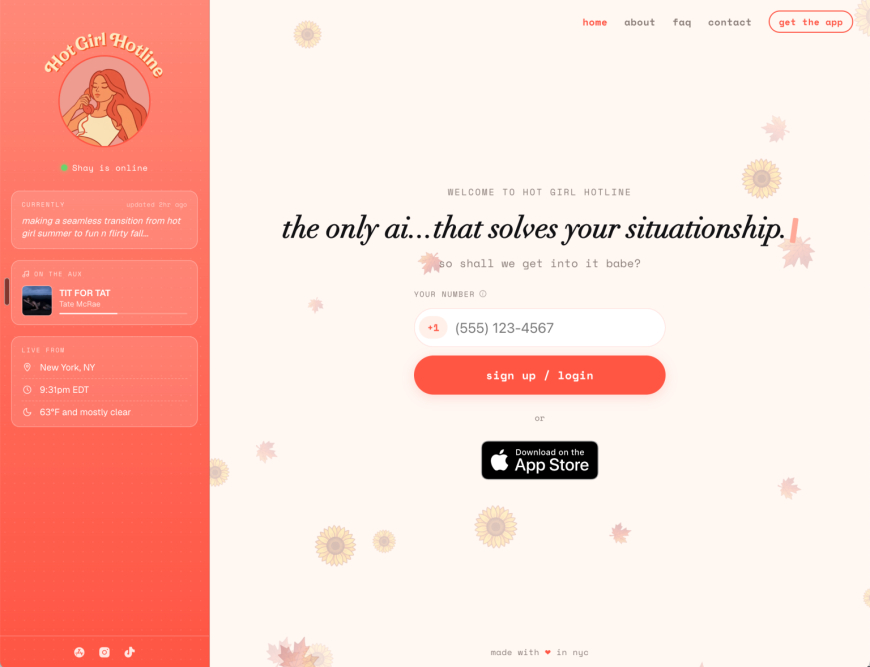
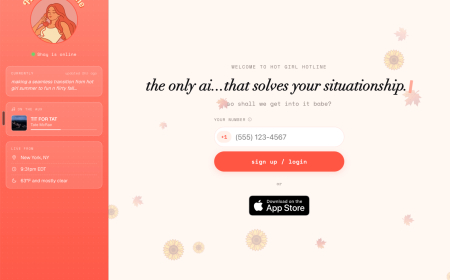
AI startups have spent the past two years building assistants for everything from productivity to shopping. Still, Hot Girl Hotline is aiming at a more intimate category: dating and relationship advice for young women.
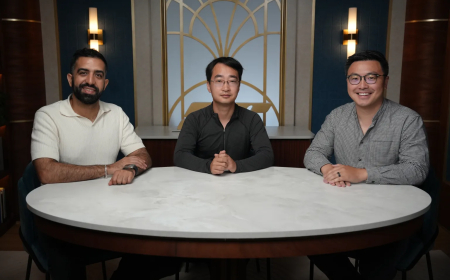
Hot Girl Hotline was co-founded by sisters Baila Mudgil and Sumrin Mudgil, who argue that many people already turn to general-purpose chatbots for personal advice, even though those tools weren’t built for emotionally sensitive conversations.
A relationship-advice app, not an AI companion
The founders say the product is not meant to function as an AI companion or substitute for human relationships. Instead, they describe it as a guided advice tool designed to feel more like talking to a trusted friend or older sister while helping users think through dating and relationship questions.
Its approach relies on behavioural-science ideas and often uses a Socratic style, with the AI asking questions intended to help users work toward their own conclusions. The company says the goal is not only to suggest what someone should do next, but also to help them understand why.
The startup is trying to build more guardrails around personal AI use
The pitch comes at a time when more people are using large language models for emotional and personal conversations, an area that has drawn growing scrutiny. General-purpose AI systems have been criticised for manipulative or overly reinforcing interactions, especially when users are vulnerable, and Hot Girl Hotline says its product is designed with more limits and safeguards.
The founders say the app knows when to stop rather than encouraging endless rumination. Instead of pulling users deeper into repetitive back-and-forth conversations, it is meant to push them toward taking action in the real world. If a conversation raises serious concerns, the app can direct users to outside resources such as the 988 crisis hotline.
Privacy and personalisation are central to the product
Hot Girl Hotline also personalises advice based on a user’s values, goals, identity and preferences. Under the hood, the startup uses a mix of AI models and says it encrypts user data both in transit and at rest.
The company also says it does not sell user data or train its systems on those conversations. When it relies on third-party AI models, it says it applies a zero-data-retention policy there as well. That privacy positioning is part of its effort to persuade users that sensitive conversations about relationships can be handled more carefully than they might be in a broad consumer chatbot.
The company is starting with relationships but plans to expand
Hot Girl Hotline is charging $9.99 per month for a subscription, and the founders say hundreds of its most active users are already paying. They have also said the company may eventually add advertising.
For now, relationship advice is the entry point. Over time, the startup plans to expand into adjacent areas aimed at young women, including beauty and lifestyle. The broader bet is that there is room for a more specialised category of AI advice products that focus less on companionship and more on bounded, structured support.
What's Your Reaction?
 Like
0
Like
0
 Dislike
0
Dislike
0
 Love
0
Love
0
 Funny
0
Funny
0
 Angry
0
Angry
0
 Sad
0
Sad
0
 Wow
0
Wow
0