


































AI Is Starting to Reshape Clinical Trials
AI is being used to match patients, select trial sites, analyse clinical data and support drug development as AI-designed candidates reach later-stage trials.
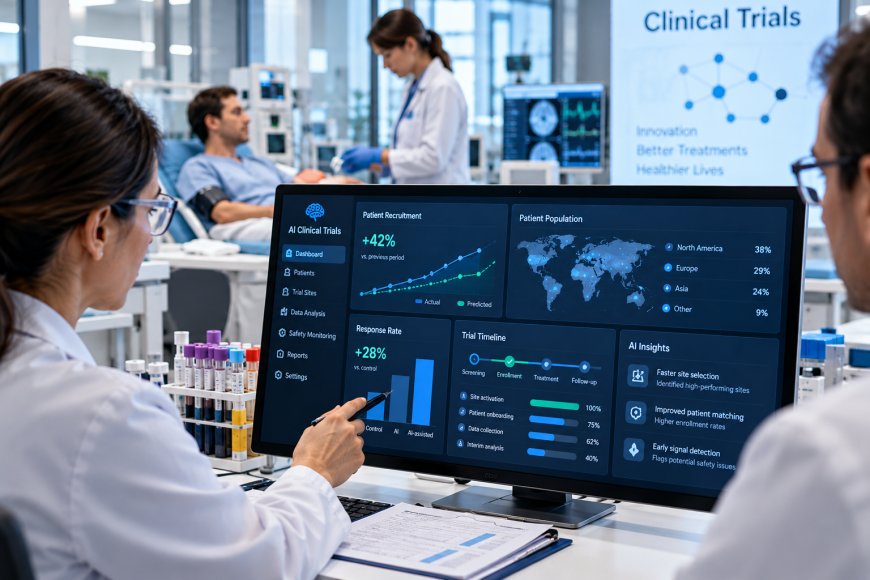
Artificial intelligence has already changed the way some drug companies search for new targets and design experimental medicines. The next test is harder: whether AI can make a difference once those drugs enter human trials.
That shift is now becoming visible.
Researchers are using AI to match patients with studies, identify trial sites, organise clinical data and explore new ways to measure whether a treatment is working. At the same time, one of the most closely watched AI-discovered drug candidates has moved into Phase III testing.
A September 2026 review in Nature Reviews Bioengineering described this emerging model as AI-enabled clinical trials, covering areas such as patient recruitment, digital twins, surrogate endpoints and automated data analysis.
Read the Nature Reviews Bioengineering paper.
The promise is easy to see. Clinical trials are slow, expensive and operationally difficult. AI could help remove some of that friction.
But clinical research is also where hype runs into evidence. A drug still has to work in real patients.
An AI-Discovered Drug Has Reached Phase III
One of the most important developments came from Insilico Medicine.
On September 10, 2026, the company said it had dosed the first patient in the Phase III GENESIS-IPF-3 trial of rentosertib, also known as ISM001-055.
The drug is being developed for idiopathic pulmonary fibrosis, a serious disease that causes progressive scarring of the lungs.
What makes rentosertib unusual is how Insilico developed it.
Insilico used its AI platform to identify TNIK as a potential therapeutic target, then used generative AI to design the molecule itself.
Earlier research published in Nature Medicine reported results from the drug’s randomised Phase IIa study.
Read the Nature Medicine Phase IIa study.
The new Phase III study is a multicenter, randomised, double-masked placebo-controlled trial, with patients receiving treatment over 52 weeks.
Read Insilico Medicine’s Phase III announcement.
Reaching Phase III is significant, but it should not be confused with success.
The drug still has to demonstrate safety and efficacy in a much larger patient population. That is precisely why the trial matters. Rentosertib is moving from the part of drug development where AI has already shown promise into the part where clinical evidence decides what happens next.
Finding the Right Patients Is Another AI Problem
Recruiting patients is one of the biggest challenges in clinical research.
Trials often come with long eligibility criteria. A study may require a specific diagnosis, disease stage, treatment history, laboratory range, age group or genetic profile.
Matching those requirements against patient records can take a great deal of manual work.
AI is starting to take on some of that burden.
A study published in Nature Communications in March introduced TrialMatchAI, a system designed to match patients with clinical trials using both structured medical data and unstructured physician notes.
The idea is not to let a model decide who enters a study.
Instead, the system can narrow a long list of possible trials and help clinicians or research staff identify the ones worth reviewing.
That could be especially useful in oncology and rare diseases, where patients may qualify for only a small number of studies, and those studies may be spread across different institutions.
AI Is Also Being Used to Choose Trial Sites
Another problem appears before recruitment even begins.
Drug companies need to decide which hospitals, clinics and investigators should run a trial.
The choice can make or break a study.
A site may look good on paper but struggle to recruit enough eligible patients. When that happens across several locations, a trial can fall behind schedule.
Researchers are now testing AI to improve that process.
A March 2026 paper in Nature Health described DocTr, a system built to match clinical trials with potential physician investigators.
The researchers evaluated it using data from 24,984 clinicians and 5,210 clinical trials.
Read the Nature Health study.
DocTr combined trial documents, medical claims data and historical enrollment relationships to recommend potential investigators.
This is not the kind of AI that attracts the same attention as a new drug molecule, but operational problems matter just as much once a trial begins.
A study cannot produce evidence if it cannot recruit patients.
Clinical Trials Are Becoming a Data Problem
Modern trials generate enormous amounts of information.
Researchers may work with laboratory results, scans, pathology images, physician notes, wearable-device readings, electronic health records and patient-reported outcomes.
The problem is not always collecting data. It is making sense of it.
That is one reason AI is becoming more attractive in clinical development.
The recent Nature Reviews Bioengineering paper describes a future in which AI helps harmonise different types of trial data, identify patterns and support faster decisions during drug development.
This could be especially useful as trials become more digital.
Instead of relying only on occasional hospital visits, some studies now collect information continuously through wearables, remote monitoring or other connected devices.
The more data a study produces, the harder it becomes to analyse everything manually.
Digital Twins Are Starting to Enter the Conversation
One more ambitious idea is using digital twins.
In simple terms, a digital twin is a computational model that represents some aspect of a real patient or biological system.
Researchers could potentially use these models to simulate disease progression, compare possible outcomes or test assumptions before exposing more patients to an experimental treatment.
The concept appears in the Nature Reviews Bioengineering paper as one of several technologies that may become part of AI-enabled trials.
There is an important limit here.
A digital model is not a patient.
Clinical trials still need real people because biology is messy, individual responses vary, and models can only reflect the data and assumptions used to build them.
The more realistic role for digital twins may be to improve trial design rather than replace human participants.
AI Could Help Researchers Read Early Signals
Clinical trials can take years because some outcomes take a long time to appear.
Researchers therefore often look for surrogate endpoints, measurable changes that may predict whether a treatment will eventually benefit patients.
AI could make those signals more sophisticated.
For example, a model might analyse combinations of imaging, molecular and physiological data rather than relying on a single measurement.
The Nature review points to areas such as AI-assisted histology and digital biomarkers as possible tools for future studies.
That could help researchers spot patterns earlier.
But caution still matters.
A pattern associated with a good outcome is not automatically proof that changing that pattern will improve a patient’s health.
Surrogate endpoints still need validation.
Better AI Still Depends on Better Biological Data
Another part of this story is easy to overlook.
AI models are only as useful as the biological information they are trained on.
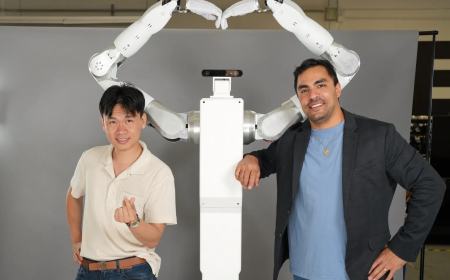
TechAmerica.ai recently covered how Vivodyne is building robotic laboratories that generate experimental data from living human tissue.
The company’s approach gets at a basic problem in AI drug discovery: a model can generate predictions quickly, but those predictions still need to be tested against biology.
That creates a feedback loop.
AI suggests an experiment.
Automated labs run it.
The results feed back into the model.
If that process works well, it could help researchers eliminate weak drug candidates earlier, before they reach expensive human trials.
Rare Diseases Could Be One of the More Useful Test Cases
Rare diseases are another area where AI may have an outsized role.
Patient populations are small, expertise is often concentrated in a few centres, and recruiting enough people for a study can be difficult.
TechAmerica.ai has previously looked at how AI is being used to address research bottlenecks in rare-disease development.
Trial matching could be particularly valuable here.
When eligible patients are scattered across different countries or health systems, better software may help research teams find them more efficiently.
AI cannot solve the basic problem of a very small patient population.
It can, however, reduce some of the waste involved in finding the right people and the right sites.
AI Will Not Replace the Clinical Trial
People tend to talk about AI as if it will automate every part of drug development.
Clinical research is a useful reality check.
Randomised trials remain the main way researchers determine whether a treatment actually works.
AI may help design the study, recruit patients, select sites, organise data and identify useful biomarkers.
It may even help design the drug itself.
But none of those steps answers the final question.
Does the treatment help patients enough to justify its risks?
Rentosertib is a good example.
AI helped identify the target and design the molecule. The drug still has to prove itself in Phase III.
That is not a weakness in the AI story.
It is the point.
Regulators Are Modernising the Trial Infrastructure Too
The regulatory side of clinical research is also becoming more digital.
In May 2026, the FDA issued final guidance for the M11 Clinical Electronic Structured Harmonised Protocol, creating a standardised digital format for clinical-trial protocols.
The guidance is not specifically about AI.
Still, structured, machine-readable trial protocols could make it easier for digital systems to process clinical-study information consistently.
The FDA also launched an Expedited Investigational New Drug pilot in September, aimed at shortening the path between identifying a promising drug candidate and starting a first-in-human study.
Read the FDA’s Expedited IND Pilot announcement.
Again, this is broader than AI.
But the timing matters.
Drug developers are already trying to compress timelines using automation, computational biology and generative models. Regulators are modernising parts of the infrastructure at the same time.
The Hard Part Starts After Discovery
AI can generate molecules quickly.
That is not the same as making a medicine.
A drug candidate still has to survive laboratory testing, early safety studies and progressively larger human trials.
Most experimental drugs never make it through that process.
That is why AI’s move into clinical development matters more than another demo showing how quickly a model can generate a molecule.
The real test is whether these tools can improve the parts of drug development that have always been difficult: finding the right patients, running efficient trials, interpreting messy data and identifying treatments that actually work.
Rentosertib will be watched closely because it pushes an AI-originated drug into one of the toughest stages of pharmaceutical development.
Systems such as TrialMatchAI and DocTr show another side of the same story.
AI’s impact on clinical research may end up being less about replacing scientists and more about removing the slow, repetitive work that surrounds them.
The next phase of AI drug discovery will not be judged by how many compounds a model can generate.
It will be judged by what survives the trial.
What's Your Reaction?
 Like
0
Like
0
 Dislike
0
Dislike
0
 Love
0
Love
0
 Funny
0
Funny
0
 Angry
0
Angry
0
 Sad
0
Sad
0
 Wow
0
Wow
0