



























Vivodyne Opens Human Data Centre to Train AI on Biology
Vivodyne opened a human biological data centre with 12 robotic HIVE labs designed to generate large-scale human tissue data for AI drug discovery research.
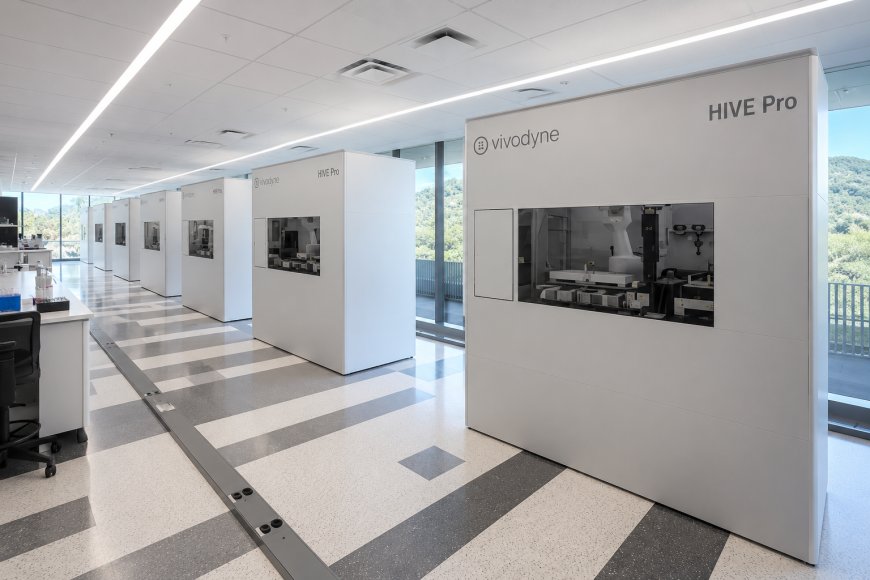
Vivodyne is betting that one of the biggest obstacles facing AI-driven drug discovery is not computing power or model size, but the biological data used to train those systems. The biotech startup is building automated laboratories designed to generate large amounts of experimental data directly from living human tissues.
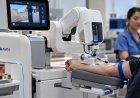
Its HIVE robotic labs can grow and test more than 20 types of engineered human tissue, automatically applying drugs or other stimuli and measuring the tissue’s response. Vivodyne argues that this kind of causal data could give future AI systems a better picture of human biology than datasets derived largely from animal experiments, isolated cells or individual proteins.
Vivodyne wants to close AI’s human biology data gap
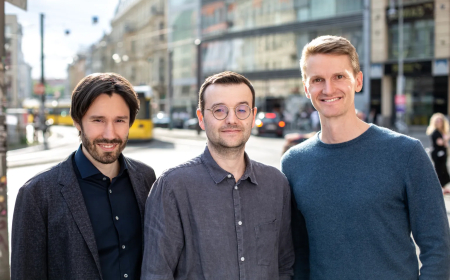
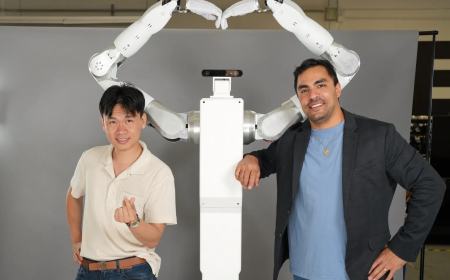
CEO and co-founder Andrei Georgescu said that current AI models still face a fundamental limitation when asked to predict what happens inside people, given the insufficient experimental data from human biological systems.
“Absent human testing, what are these [AI] models going to do? They’re going to cure cancer in mice.”
The concern comes amid ambitious claims about AI’s potential role in medicine. Anthropic CEO Dario Amodei, OpenAI CEO Sam Altman and Google DeepMind CEO Demis Hassabis have all publicly discussed the possibility that increasingly capable AI could accelerate major medical discoveries. Yet translating computational advances into approved medicines remains difficult.
AI-designed drug candidates are beginning to enter human trials, but success in a computer model or preclinical experiment does not guarantee that a therapy will be safe in people. AlphaFold transformed researchers’ ability to predict protein structures, but it has not itself produced an approved new medicine. Isomorphic Labs, the Alphabet company created to apply AI to drug discovery, has also emphasised the need for highly accurate models covering a broad range of biochemical properties and interactions.
Robotic labs run experiments on living human tissue
Vivodyne grew out of research at the University of Pennsylvania, where Georgescu earned his doctorate in bioengineering. The company’s approach uses engineered, living human tissues designed to reproduce key characteristics of organs, then subjects those tissues to controlled experiments at an automated scale.
Vivodyne reports strong predictive results from several of its tissue models. The company says its liver tissue has achieved 94% predictive accuracy against human clinical toxicity outcomes, while its airway tissue has matched human tissue behaviour 96% of the time. It also says its bone marrow model achieved complete concordance in testing involving 20 chemotherapy drugs. Those figures are company-reported performance claims rather than evidence that the platform can replace clinical trials.
The startup has raised about $78 million through a $38 million seed financing and a $40 million Series A, both led by Khosla Ventures. It recently launched what it calls the world’s largest human biological data centre, comprising 12 robotic HIVE laboratories capable of conducting up to 3.1 million experiments on living human tissue annually.
Vivodyne also says major pharmaceutical companies are already using or evaluating the platform. The goal is to identify safety problems and ineffective drug candidates earlier, before companies commit to expensive human clinical trials where failure can consume substantial time and money.
Georgescu compared the problem to automotive crash testing. Carmakers generally conduct extensive engineering and simulation before a regulatory crash test, giving them confidence about the likely result. Drug developers, by contrast, can enter human trials despite significant uncertainty about whether results seen in preclinical models will translate to patients.
From static biological data to cause and effect
Vivodyne’s larger ambition is to use its automated experiments as training data for new biological AI models. Georgescu argues that many existing datasets show models what cells look like at particular moments but provide far less information about the sequence of events that led to those states.
Research published in Nature Methods this year also raised questions about whether simply adding more existing single-cell data will continue improving biological foundation models. Researchers evaluating training dataset size and diversity found relatively little additional performance improvement beyond certain scaling points.
Vivodyne wants HIVE to produce a different type of dataset. Its systems can expose diseased human tissue to a specific intervention and then repeatedly measure the resulting biological changes using controlled experiments. That creates paired information about an action and its effects rather than only a collection of static cellular observations.
Georgescu believes such causal data will become increasingly important if researchers want AI systems to help design more complicated medicines, including combination therapies that affect multiple biological pathways. As the number of possible drug combinations grows, experimentally testing every option becomes impractical.
“You have to say, ‘I want this effect to happen, so what cause should I invoke?’ Establishing causality in human biology is the basis of all of this.”
Vivodyne’s approach does not eliminate the need for testing medicines in people. Instead, the company is trying to improve the information available before a drug reaches that stage, while building the experimental datasets it believes more capable biological AI models will require.
What's Your Reaction?
 Like
0
Like
0
 Dislike
0
Dislike
0
 Love
0
Love
0
 Funny
0
Funny
0
 Angry
0
Angry
0
 Sad
0
Sad
0
 Wow
0
Wow
0