































AI Agents Are Turning Text Messages Into Personal Assistants
AI agents are moving into text messages, handling calendars, email, travel, shopping, family planning and other everyday tasks for users.

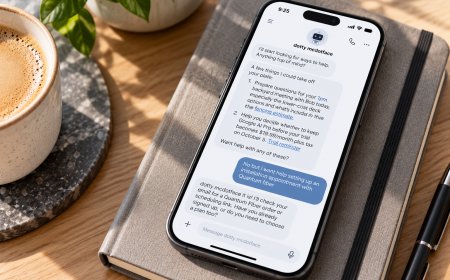
AI assistants are moving into a familiar interface: the text message. Instead of asking users to open another app, a growing group of services can be reached through iMessage, SMS, WhatsApp, Telegram and other messaging platforms, where they can remember context and complete tasks on a user’s behalf.
The capabilities vary widely. Some focus on calendars and email, while others handle family logistics, travel, shopping, content creation or professional workflows. The broader idea is the same: make an AI assistant feel more like a contact you can message whenever something needs to get done.
General-purpose assistants move into messaging
Caddy works through iMessage on iPhones and RCS on Android, connecting information from conversations and calendars. It can identify items that need attention, create calendar events, set reminders, track follow-ups and research topics without requiring users to manage a separate inbox.
Folk is available through iMessage, WhatsApp and Telegram. It can remember personal context, manage reminders, research subjects, track flights, work with email and complete tasks such as restaurant reservations. Its system runs on a private cloud computer that can run code and handle multi-step jobs.
Instinct is designed to take actions rather than answer questions. Users can interact with it by text or voice and connect services such as email, calendars and Google Workspace. Tasks can include planning trips, buying groceries, booking tickets and cancelling subscriptions.
Iris, powered by the Hermes agent, takes a similar approach through iMessage. Users can delegate a task in a message, after which the assistant works through the necessary steps while retaining relevant context from previous conversations.
Martin can be reached through SMS, phone, WhatsApp, email and Slack, alongside its own iPhone app. It handles calendars, email, reminders, notes and communications, and can take actions such as sending messages or making calls for the user.
Family-focused agents tackle household coordination
Fambot acts as an AI chief of staff for families, bringing together school information, sports schedules, meal planning and calendars. It can send a nightly summary of the nextday’ss events and tasks, while parents can reply by text to ask questions or update plans.
Ohai also focuses on household organisation. Messages, forwarded emails, and voice requests can be turned into schedules, reminders, and plans, with support for coordinating chores, meals, and calendars across multiple family members.
Ollie brings together information spread across calendars, email, school communications, reminders and task lists. It then surfaces relevant details through text messages, reducing the need for families to track information across several services manually.
Orbits goes beyond organisation by completing household tasks. In addition to combining calendars, lists and conversations, it can search online, make purchases, book restaurants, change appointments and request quotes from service providers.
Some agents specialise in travel, relationships and everyday context
Miso applies the messaging-assistant model specifically to travel. Users can arrange flights through iMessage while the service considers travel preferences and loyalty points, and it can provide trip details, flight updates and recommendations.
Pally is designed to connect information across services including WhatsApp, Gmail, calendars and Google Drive. By retaining that context, it can help users remember plans, dates, receipts, files and other details that might otherwise be scattered across different apps.
Poke is a broader personal assistant that works through text messaging and can handle calendars, planning, fitness-related tasks, smart-home controls, photos and other everyday activities.
Rene presents itself more like a persistent AI contact than a conventional productivity app. Available through iMessage, Telegram and WhatsApp, it can turn conversations into reminders and tasks, retain context over time, browse the web, write code and assist with shopping and content creation.
AI assistants are also moving into work and content creation
Skye takes a somewhat different approach. Rather than operating solely as a text contact, it functions as an agentic iPhone home screen that analyses connected information and surfaces contextual cards, reminders, meeting preparation and daily or audio briefings.
Stanley is aimed at creators. Available through iMessage, Telegram, and the web, it can help develop ideas, turn voice notes into scripts or captions, organise a content calendar, and schedule posts.
Tomo can participate in group conversations rather than operating only as a private one-to-one assistant. It can support scheduling, goals and accountability while working with calendars and email, searching the web and handling media-related tasks.
Town focuses on professional workflows. Its AI assistant, called a Townie, is designed to learn how a user works and take on recurring tasks involving email, calendars, documents and Slack. The company raised a $55 million Series A in June 2026.
Some agents are being given more autonomy
Wajo gives its consumer agent, Fo, tools to interact more independently with businesses and other people. Fo can make calls, send emails, join group chats, arrange bookings and purchases, and coordinate tasks. It also receives its own email address, phone number and payment card, while a human assistant can step in when a task cannot be completed automatically.
The growing category shows how AI companies are experimenting with a different interface for personal agents. Rather than asking users to visit a chatbot or dedicated app repeatedly, these services aim to embed AI in the communication tools people already use throughout the day.
What's Your Reaction?
 Like
0
Like
0
 Dislike
0
Dislike
0
 Love
0
Love
0
 Funny
0
Funny
0
 Angry
0
Angry
0
 Sad
0
Sad
0
 Wow
0
Wow
0