






























Feather Robotics Builds Modular Humanoid Platform for Developers
Feather Robotics is building a $30,000 modular humanoid platform for developers, with early deployments in restaurants and labs and more than $1 million in revenue.
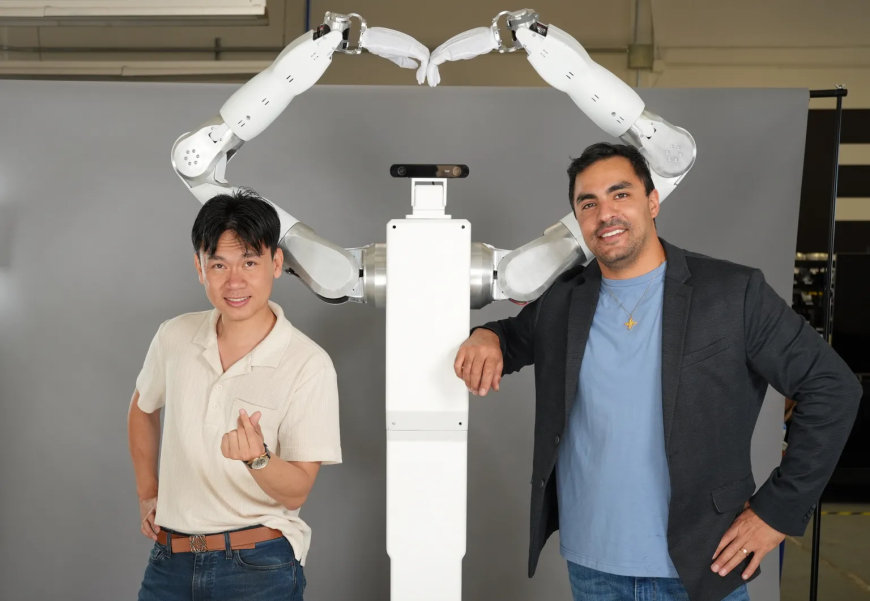
Feather Robotics is taking a different approach to the humanoid robotics race. Instead of building both a general-purpose robot and the foundational AI system that controls it, the startup is creating a modular hardware and software platform developers can use for real-world applications today.
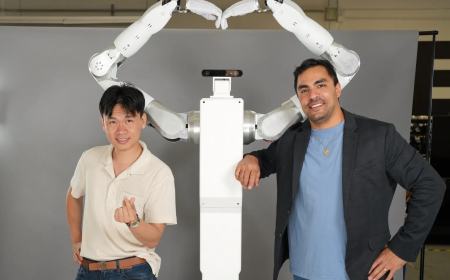
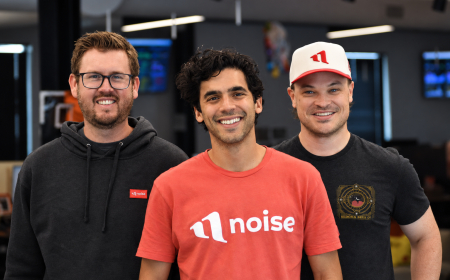
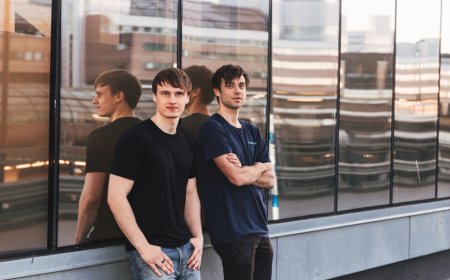
The company was founded in 2025 by Hoa Mai and Parsa Bakhtiari. Mai previously founded a humanoid robotics startup that was sold to 1X, while Bakhtiari is a former Tesla Model 3 engineer who once reported directly to Elon Musk.
The pair want Feather to become what they describe as the Android of robotics, giving developers a platform they can customise rather than requiring them to wait for a fully general-purpose humanoid.
“You can’t buy a Tesla robot today and develop on top of it,” Mai said. “We realised that this is not how most companies became successful. Hardware players like Nvidia or Apple started with a product that worked and was deployable, and then they added complexity over time.”
A modular robot developers can customise
Gradient Ventures backed Feather at its inception and led the startup’s previously announced $7.6 million pre-seed round.
Feather has since developed a modular robotic system that lets developers alter the hardware for different applications, including adjusting arm lengths. The startup has already begun selling robots and said it has surpassed $1 million in revenue.
Feather has not disclosed its customers, but said its robots are being used as cooks in restaurants and to clean science laboratories.
The platform is also designed to work with models from outside robotics AI providers. Feather said its hardware can run models from companies including Nvidia, Skild and Physical Intelligence.
“We’ve been selling small quantities of these robots, and now that we’ve resolved almost all the issues over the last year of field testing, we’re getting ready for a big product launch,” Mai said.
A $30,000 alternative in the U.S. market
Darian Shirazi, general partner at Gradient Ventures, said he does not see a direct U.S. competitor to Feather’s modular humanoid approach. He described the market as including companies such as Sunday building household robots, companies such as Figure and Tesla pursuing general-purpose machines, and Feather focusing on a customisable platform for developers.
Mai said Feather has taken inspiration from Chinese robotics companies such as Unitree. With newer foreign-made models restricted from entering the U.S. market, Feather is positioning itself as a domestic alternative.
Price is another part of that strategy. Feather’s robot costs $30,000, which the company says is about half the price of Unitree’s H2 Edu.
Shirazi argued that the price could make the platform attractive for some labour-intensive jobs. “You would hire a labourer for $50,000 to $60,000 a year; you’d have to train [them]. They’d have to have HR. They’d have to have all these different support mechanisms,” he said. “You can now buy a Feather robot to do that.”
According to Shirazi, Feather has also spent only a fraction of the money raised in its pre-seed round.
Betting on a broader physical AI ecosystem
Feather’s larger bet is that much of the value in robotics will come from an ecosystem of companies building specialised applications on top of available hardware.
“If we think about the market size today for physical AI companies, it’s very small,” Mai said. “But if you think about how many physical AI application companies will probably exist in five years, we expect it to be in the thousands.”
Feather wants its hardware and developer tools to serve as the platform those companies can build on, whether the industry’s long-awaited general-purpose robotics breakthrough arrives soon or remains years away.
What's Your Reaction?
 Like
0
Like
0
 Dislike
0
Dislike
0
 Love
0
Love
0
 Funny
0
Funny
0
 Angry
0
Angry
0
 Sad
0
Sad
0
 Wow
0
Wow
0