



























How Qwen Became the Best Free AI of the Year
Qwen 3.8 27B hit 3 million downloads in three days and now rivals paid frontier AI, all from a free model you can run at home. Here’s how it got so good.
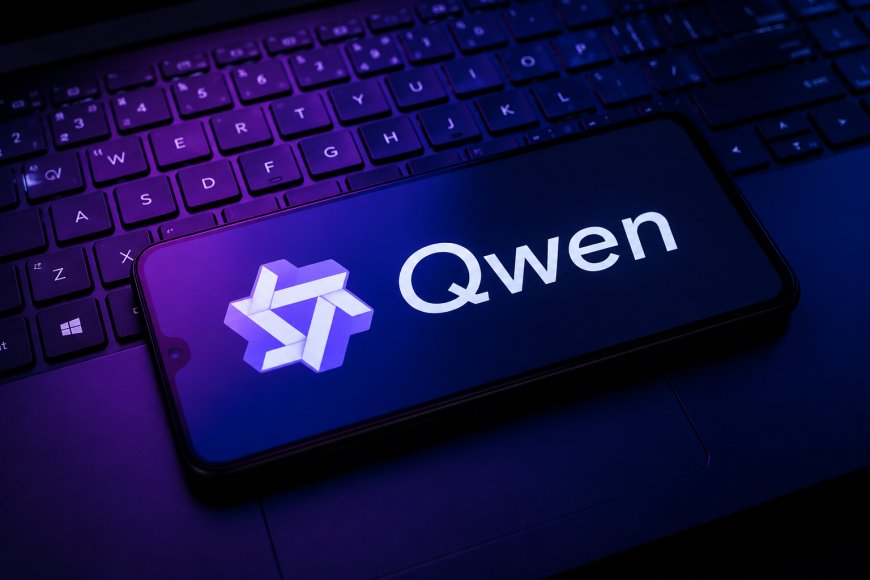
There is a free AI right now that can write code, build entire applications, read and understand images and videos, draft research papers, and handle tasks that, until recently, required an expensive subscription to the biggest names in artificial intelligence. Three million people downloaded it in its first three days.
It is called Qwen 3.8 27B. Alibaba built it. It costs nothing. And you can run it on your own computer. Not on a supercomputer. Not on a rented server in somebody else’s data centre. On a regular, powerful laptop sitting on your desk.
On independent benchmarks, it scores within range of AI systems built by OpenAI, Google, and Anthropic, systems that run on massive infrastructure, cost real money per use, and cannot be downloaded at all. Developers started calling it “local Opus,” comparing it to Anthropic’s Claude, one of the most expensive and capable AI systems in the world, the kind you pay a monthly subscription to use and can never own. It is not beating every frontier model outright. But it got close enough that the gap stopped being a gap and started being a conversation.
So how did a free model that runs on a laptop get this good?
That is the real story. And it is not the story most people think it is.
What Qwen Actually Is
Qwen is a family of AI models made by Alibaba’s research lab. Think of it as Alibaba’s answer to OpenAI’s GPT or Google’s Gemini, except a large part of the Qwen family is free and open for anyone to download, modify, and build on top of.
Qwen models have collectively been downloaded more than 2 billion times. The family ranges from small models that run on a phone to massive ones that rival anything the biggest Western labs have built.
The Qwen 3.8 generation has two members worth knowing about. Qwen 3.8-Max is the giant: a huge model available only via a paid online connection, designed to go toe-to-toe with the best in the world on the leaderboards. It is the headline grabber.
Qwen 3.8 27B is the one people are actually using. Because unlike the Max, you can download it, install it, and run it entirely on your own machine. No subscription. No monthly bill. No company sitting between you and the model.
Why You Can Run This at Home
Here is what makes this model special, explained.
Most of the powerful AI you have heard of lives in giant data centres. When you use it, your request travels to those data centres, gets processed on hardware worth more than a house, and comes back to you. You are renting a slice of someone else’s machine, and you pay for the privilege, either with money or with your data.
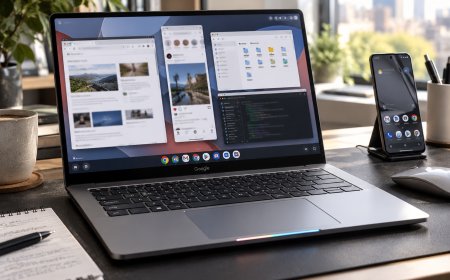
Qwen 3.8 27B is small enough to skip all of that. It is compact enough to fit on a single high-end graphics card, the kind a serious gamer or a video editor might already own, or on a well-equipped laptop. You download it once, and from then on it runs on your home hardware, offline if you want. Nobody can take it away, raise the price on you, or watch what you do with it.
It can read images and video, not just text. It can handle very long documents in a single go. And it is released under the Apache 2.0 license, which, in plain terms, means you can do whatever you want with it, including building a business on top of it.
For anyone who has ever worried about depending on a company’s AI that could change its rules or its prices overnight, this is a different deal entirely. This one is yours.
This Is the Part That Gets Interesting
Every time AI gets noticeably better, people assume somebody built something new. A new chip. A bigger model. A more complicated design. More money, more power, more sophistication. That is how the industry has worked for years: throw more resources at the problem, and intelligence goes up.
Qwen 3.8 27B did not do that.
Its predecessor, Qwen 3.6 27B, came out a few months earlier. Developers liked it. It was solid, respected, a good local model. Then Qwen 3.8 27B arrived and left it far behind on nearly every measure of quality.
Here is the part nobody expected. If you open up the technical blueprint of both models and set them side by side, they are essentially identical. Same structure. Same depth. Same size. Same design. The architecture, the actual engineering of how the model is built, did not change. Not one part was added. Not one dimension was widened. It is the same blueprint.
And yet, on an independent test run by Artificial Analysis, a company that scores AI models on quality, the older Qwen 3.6 27B scored 38. The new Qwen 3.8 27B scores 52. That is a huge jump on a model that is structurally the same machine.
So what changed?
Training changed.
It Didn’t Get a New Brain. It Got a Harder Education.
This is where the story stops being about one model and starts being about the future of AI.
The Qwen team did not redesign the model. They retrained it. And not just by feeding it more of the same. They fundamentally changed how the model was taught.
Think about it the way athletes train. Two runners can have the same body: the same height, the same muscle mass, the same lung capacity. But the one who trains smarter, who runs harder routes, who fails at a brutal hill sprint and then runs it again and again until the legs stop giving out, that runner gets faster. Not because their body changed, but because their body learned to use itself better.
That is what happened here. The Qwen team focused on the part of the process the field calls post-training: the phase after a model’s basic structure exists, where it is shown problem after problem and taught to solve them better. They put the model through an enormous number of challenges, especially the hard, practical kind, like writing working code, using tools, and carrying a complicated task through many steps to completion. The model attempted these, failed at plenty of them, learned which approaches worked, and gradually got sharper.
The training was gradual and constant, the way real learning is. Early rounds move quickly. But the later stages, where the problems become truly difficult and the model has to grind through tasks that demand real planning, reportedly took days at a time to complete.
The result is a model that went from “pretty good for its size” to “competitive with AI systems that cost far more to run.” Same body. Better education. And that idea, that you can make an AI dramatically smarter by teaching it better rather than building it bigger, is the thing that could change everything about how AI gets made.
So How Good Is It, Really?
Let’s be honest about the numbers, because hype without honesty helps nobody.
On the Artificial Analysis Intelligence Index, Qwen 3.8 27B scores 52. That happens to tie GPT-5.6 Luna at its maximum setting, a paid, cloud-only model from OpenAI. It lands one point behind models many times its size, including a 1.7-trillion-parameter system from DeepSeek. For a model small enough to run on a home computer, that is a startling result. It is the first time a model you can run on your own laptop has reached this tier.
It is not the smartest AI in the world. The strongest settings of OpenAI’s GPT-5.6 Sol still score higher, from 56 up to 61. On the hardest pure-reasoning tests, Qwen trails the frontier. But on agent-style tasks, the kind where an AI has to plan and use tools, it scored high enough to edge out Claude Opus 4.8 at maximum effort, a flagship model Anthropic had released only months earlier. Among developers using the Cline coding tool, it became the most popular local model within four days.
One honest clarification on the “best free AI” claim, because it matters. If “free” means any open-weight model regardless of size, then Qwen’s own 2.4T-A95B (the Max flagship’s open version) scores higher, and DeepSeek V4 Pro is also open-weight and competitive. The 27B isn’t the smartest free model on earth. It’s the smartest free model you can run on your own hardware without a data centre. That distinction is the whole point, and it’s more impressive, not less.
One Thing to Watch Out For
The model has a quirk worth knowing before you try it.
It ships with its reasoning turned all the way up, a setting called xhigh, which means it thinks extremely hard about everything, even things that do not need it. For a difficult coding problem, that is a strength. Even a simple question is a problem. One well-known developer found the model spent 21 minutes and more than 22,000 words of internal reasoning to generate a simple drawing of a pelican riding a bicycle.
The fix is easy: turn the reasoning effort down to medium or low for everyday use, and save the maximum setting for the hard problems. But if you download it and run it as-is without knowing this, you will think it is broken. It is not broken. It is overthinking, which is an oddly human flaw for a machine to have.
It is also worth remembering that many of the flashiest benchmark numbers come from Alibaba’s own testing. The independent score of 52 is real and verified. Several of the head-to-head wins over Claude and GPT are vendor-reported and are still awaiting outside confirmation. The numbers are credible. They are not all fully settled.
Why This Matters Beyond Qwen
For years, the AI race has been measured mostly in size. Bigger models. Bigger chips. Bigger data centres. Bigger electricity bills. That race produced extraordinary results, and nobody disputes that the giant frontier systems are remarkable.
But Qwen 3.8 27B asks a question the industry has been slow to take seriously: what if the brain is already big enough, and the real bottleneck is the education?
If better training alone can make a model dramatically smarter without changing a single part of its design, then the whole economics of AI shifts. You do not always need a new chip or a new data centre. Sometimes you need better lessons, smarter practice, and the patience to let a model work through harder problems for longer. That is a path far more people can walk than the one that requires billions of dollars of hardware.
For everyday people, it means that powerful AI is becoming something you can own rather than rent. For developers and startups, it means building on a foundation nobody can take away or reprice overnight. And for the industry as a whole, it means the next great leap might not come from whoever builds the biggest machine. It might come from whoever figures out how best to teach it.
Qwen 3.8 27B did not build a bigger brain. It studied harder. And right now, that might be the most important idea in AI.
What's Your Reaction?
 Like
0
Like
0
 Dislike
0
Dislike
0
 Love
0
Love
0
 Funny
0
Funny
0
 Angry
0
Angry
0
 Sad
0
Sad
0
 Wow
0
Wow
0