


































Outer Biosciences Trains AI on Living Human Skin to Find New Cosmetic Ingredients
Outer Biosciences uses living human skin and machine learning to discover new cosmetic ingredients, keeping tissue viable for up to four weeks in the lab.
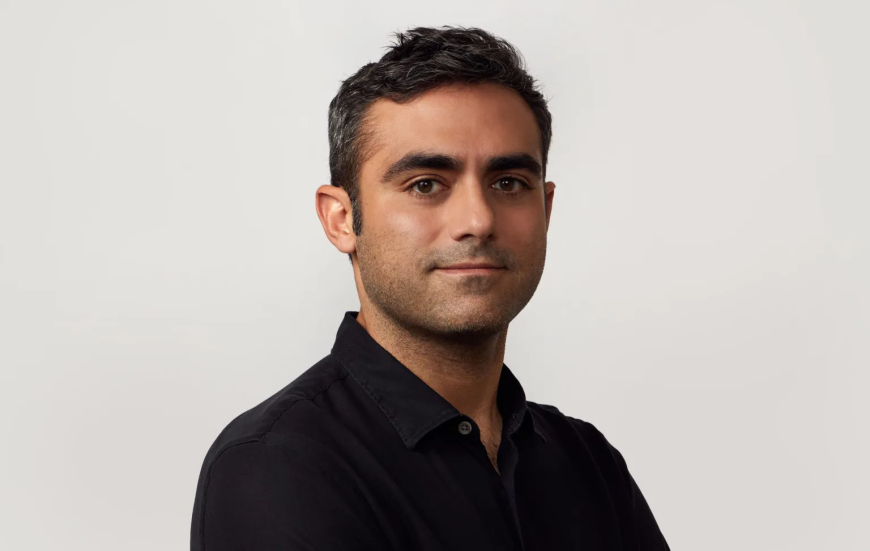
Outer Biosciences is using living human skin and machine learning to search for new cosmetic ingredients, building a feedback system in which AI predictions are tested directly on donated tissue and the experimental results are then used to improve the model.
The startup, co-founded in 2022 by CEO Michael Polansky, has developed technology that can keep full-thickness human skin viable for about 4 weeks outside the body. Its YUNA discovery platform combines that tissue with automated laboratory screening and machine learning to study biological changes that can take weeks to unfold.
Outer Biosciences keeps human skin alive for weeks
Outer Biosciences sources skin that would otherwise be discarded after surgery, primarily through tissue organisations that operate with donor consent and under institutional review board oversight. Polansky said samples arrive de-identified, without names, contact information or other direct identifiers.
The company’s support system supplies nutrients and removes metabolic waste, allowing researchers to maintain tissue for far longer than the few days typically available in experiments. Outer Biosciences says its system preserves the skin’s epidermis, dermis, multiple resident cell types, and immune-associated molecular programs over a four-week period.
That longer window allows scientists to follow slower processes such as inflammation, pigmentation, barrier repair and collagen-related changes. In one example described by Polansky, researchers can expose living skin to UVB radiation and track the resulting stress, inflammatory and recovery responses over subsequent weeks.
AI predictions are tested on real tissue
Thecompany’ss AI system is designed around a closed experimental loop. Machine-learning models predict which previously untested compounds could affect a particular skin function; promising candidates are tested experimentally, and the resulting data is returned to the models regardless of whether the original prediction proved correct.
Outer Biosciences says its models are trained on data generated by its own human tissue experiments rather than relying solely on public datasets. Its platform also draws on samples from hundreds of donors across different ages, skin types and demographic groups.
Polansky said the process has accelerated the company’s search for potential ingredients. Its earlier approach relied heavily on scientific literature and research into natural compounds, producing only a small number of leads over roughly 18 months. With machine learning incorporated into the process, he said Outer Biosciences is now generating a new candidate about every six weeks.
The company currently has six active leads and has recorded several dozen additional promising results. Polansky said four of the six active candidates appear likely to advance toward commercialisation. However, turning a laboratory discovery into a finished ingredient still requires safety testing, manufacturing development and other work.
The business is focused on ingredients, not a consumer brand
Outer Biosciences currently plans to license or sell ingredients to beauty, pharmaceutical and other companies rather than launch its own skincare line. Partners could then formulate those ingredients into products such as creams or serums under their own brands.
The startup is also generating revenue through research collaborations. Polansky said those include work with a pharmaceutical company to study why certain cancer medicines cause severe skin rashes, as well as with beauty companies to test compounds and evaluate biological questions using Outer Biosciences’ platform.
That approach differs from conventional drug development because Outer Biosciences is currently pursuing cosmetic ingredients rather than medicines. Potential ingredients still need standardised industry naming and appropriate safety testing before commercialisation.
Polansky’s path to biotechnology started with cancer research
Polansky studied applied mathematics and computer science at Harvard before working at Bridgewater Associates and later Founders Fund. He subsequently worked closely with Sean Parker on investments and philanthropy and remains listed by the Parker Institute for Cancer Immunotherapy as executive director of the Parker Foundation.
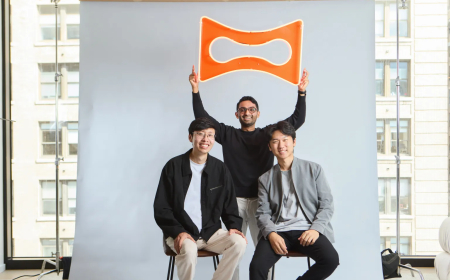
His years working in cancer immunotherapy ultimately led him into biotechnology, despite not being a scientist himself. Outer Biosciences was founded with chief scientist Kyung-Jin Jang, chief technology officer Chris Hinojosa and chief business officer Stanley King.
Polansky is also the partner of Stefani Germanotta, better known as Lady Gaga. The two met through connections involving Sean Parker and Gaga’s mother, Cynthia Germanotta, who co-founded the Born This Way Foundation with her daughter.
Germanotta sits on Outer Biosciences’ board, and there is some scientific crossover with her cosmetics company, Haus Labs. Jang serves on Haus Labs’ scientific advisory board, and the companies have collaborated on projects. Haus Labs has also grown into a significant beauty business, though Outer Biosciences is being developed as an independent biotechnology company rather than an extension of the cosmetics brand.
Outer Biosciences has raised about $23 million
The startup has raised roughly $23 million to date and employs 19 people, with most of the team based near Cambridge, Massachusetts. Its AI workloads currently run on its own infrastructure rather than in the cloud, a choice Polansky said is intended to keep thecompany’ss proprietary biological data under tighter control.
That data is central to Outer Biosciences’ strategy. Unlike AI systems that can train on enormous quantities of information already available online, experimental biology often requires companies to generate their own datasets through physical testing. Each tissue experiment, therefore, adds information that can be used to inform future predictions.
Outer Biosciences ultimately wants its models to become accurate enough to identify promising directions in skin biology before researchers have to test every possibility physically. The company is now preparing to expand its product-development capabilities so that promising discoveries can move more efficiently through formulation, manufacturing, safety testing, and commercialisation.
What's Your Reaction?
 Like
0
Like
0
 Dislike
0
Dislike
0
 Love
0
Love
0
 Funny
0
Funny
0
 Angry
0
Angry
0
 Sad
0
Sad
0
 Wow
0
Wow
0