


























Why Japanese Tech Still Feels Different From the Rest of the World
Japanese tech still stands out for specialised gadgets, unconventional product design, and hardware built around specific everyday needs rather than simply chasing bigger specifications or more screens.
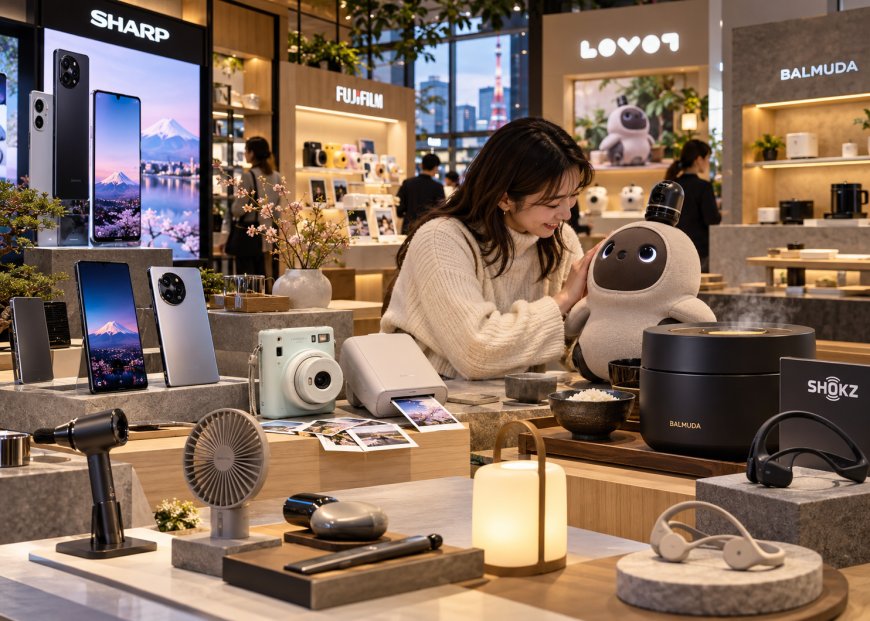
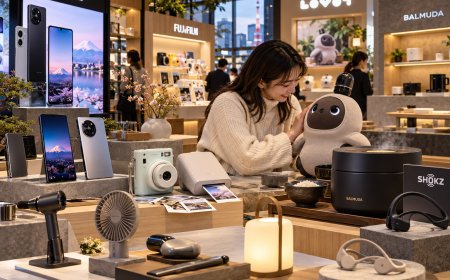
Walk through a large electronics store in Tokyo and the differences from a typical American or European retailer appear quickly. There are smartphones from brands that receive little shelf space overseas, entire walls devoted to camera accessories, oddly specific gaming peripherals, compact cooking appliances, companion robots and personal-care devices designed around problems that other markets barely treat as technology categories. Some products are genuinely advanced. Others are simply unusually focused.
That distinction matters because Japan’s technology market is often described in the language of futurism, as though the country is filled with gadgets several years ahead of everyone else. The reality is more interesting. Japanese consumer technology often feels different not because every product contains breakthrough engineering, but because companies are willing to build hardware for narrower situations, experiment with unconventional form factors and treat small improvements to everyday routines as legitimate product opportunities.
A hands-on visit through Japan’s electronics retail ecosystem illustrates that approach. The most memorable products were not necessarily the most powerful or expensive. They were often devices that reconsidered something familiar: a camera separated from its printer to make it easier to carry, a rice cooker that uses steam as part of its cooking process, a robot designed primarily around companionship, or a children’s wearable that behaves more like a simplified phone than a conventional smartwatch.
Japan’s Smartphone Market Has Its Own Priorities
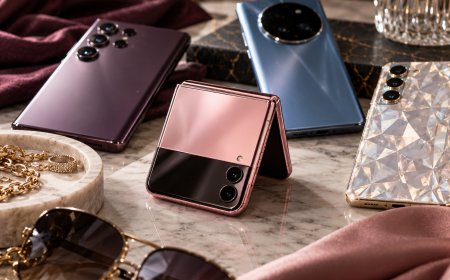
Japan is no longer an isolated mobile ecosystem. Apple remains the country’s dominant smartphone brand, and international Android manufacturers compete aggressively alongside domestic companies. Counterpoint Research said Apple continued to lead the Japanese market in 2025, while Samsung and Google gained ground and established Japanese vendors, including Sharp and Sony, faced a tougher competitive environment.
Yet walking through a Japanese phone department still reveals hardware far less visible in Western stores. Sharp’s AQUOS line is one example. The AQUOS R8 pro tested in the source was not a strange experimental phone but a genuine domestic flagship built around a Leica-supervised 1-inch image sensor, a 14-channel spectrum sensor and Sharp’s Pro IGZO OLED display technology. Sharp also included software ideas such as automatic scrolling, two-finger fingerprint authentication and customizable high-refresh-rate behaviour that made the phone feel distinct from the increasingly standardized Android flagship formula.
The problem was not a lack of ideas. Source testing found plenty of them, while also criticizing software clutter and carrier influence in the buying and setup experience. That tension remains one of the more revealing aspects of the Japanese market: hardware companies can still pursue unusual features, but the surrounding software and carrier ecosystem can make an otherwise interesting product feel more complicated than it needs to be.
This also helps explain why Japanese smartphones can be fascinating without necessarily becoming global successes. Good ideas are only one part of the equation. Camera consistency, software polish, distribution, update support and brand recognition increasingly matter as much as distinctive hardware.
Some of the Best Ideas Are Deliberately Small
Fujifilm’s instax Pal captures another side of Japanese product design. Instead of combining a camera and instant printer into one relatively bulky object, Fujifilm separated the two functions. The Pal is a tiny digital camera that can store images on its own and later send selected shots to compatible instax Link printers. Fujifilm still sells the concept around exactly that separation: take the small camera with you and leave the printing hardware elsewhere.
That sounds almost trivial compared with AI smartphones or mixed-reality headsets, but the product solves a specific problem cleanly. Instant cameras are appealing because they produce physical memories, yet carrying the film and printing mechanism makes the camera larger. Separating capture from printing preserves much of the emotional appeal while reducing what you have to carry.
The source testing found the same appeal. Image quality was not the point. The attraction came from being able to take a small dedicated camera out without relying on a phone, then decide later which photographs deserved physical prints. That is a very different philosophy from the smartphone industry’s attempt to put every function into one device.
Japan’s technology retail scene contains many products built around that kind of specialization. Not all of them need to become global categories. Sometimes the goal is to make one familiar activity slightly more satisfying.
Companion Robots Show a Different Vision of Robotics
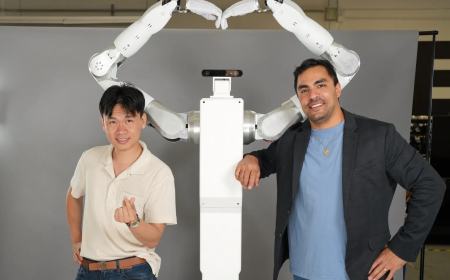
The LOVOT companion robot takes specialization much further. It is not primarily designed to clean floors, carry boxes or automate household chores. Its job is social interaction.
The robots respond to touch, movement and people around them, while face recognition allows them to distinguish between individuals. GROOVE X has continued updating that system over time, including a face-recognition engine update intended to improve how LOVOT identifies people and reacts to them.
That makes LOVOT an interesting counterpoint to the direction robotics is taking in the United States and China, where much of the attention is currently focused on humanoid machines intended for manufacturing, logistics and eventually household labour. The Japanese companion-robot approach asks a different question: what if usefulness is emotional rather than productive?
It is easy to dismiss that category as novelty technology, especially because the robot deliberately uses expressive movement and a cute appearance to encourage attachment. But the engineering problem is real. A machine intended to live around people has to recognize them, respond at the right moment and move in ways that feel intentional without becoming unsettling.
The source encounter with LOVOT demonstrated why that matters. Its appeal did not come from completing a measurable task. It came from how the machine moved toward people, reacted to touch, and created the impression that it remembered who was interacting with it. Whether consumers want to pay for that experience is a separate question, but it represents a very different idea of what personal robotics can be.
Japanese Appliances Often Focus on Process, Not Connectivity
The home-appliance products in the source also challenge the assumption that making something “smart” necessarily means adding Wi-Fi, an app or a display.
BALMUDA The Gohan is a good example. Instead of approaching rice cooking primarily through more menus and connected functions, BALMUDA uses an unusual two-container system in which it heats water in an outer chamber to generate steam around the inner rice pot. The company describes the current model as using indirect steam-based cooking rather than induction heating.
That is a meaningful difference in design philosophy. The technology influences the physical cooking process rather than creating another digital interface. During the source test, the resulting rice retained more separation between individual grains, exactly the characteristic the appliance was designed to emphasize.
The same principle appears across many successful specialist appliances. A device can be technologically sophisticated without advertising that sophistication every time it is used. In fact, the better implementation is often the one where the user interacts with a straightforward appliance while most of the engineering stays hidden.
Japan’s Gadget Culture Also Produces Plenty of Dead Ends
None of this means products sold in Japan are automatically better designed. The same retail environment that supports clever specialist hardware also produces overcomplicated accessories, questionable wellness devices and solutions looking for problems.
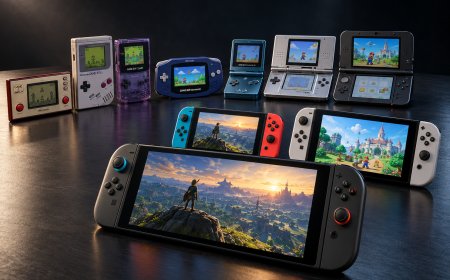
The source visit encountered add-on cooling hardware for the Nintendo Switch that offered little obvious benefit, a portable vinyl player whose convenience compromised the reason for listening to vinyl in the first place, and personal-care devices whose marketing claims were much easier to understand than their measurable benefits. The lesson was similar to gadget shopping anywhere else: unusual engineering does not guarantee usefulness.
Even products that work can struggle with tradeoffs. Trackball mice reduce the need to move an entire mouse across a desk, but some users may find the thumb position less comfortable. Neck speakers keep the ears uncovered and can create convincing spatial sound, yet conventional headphones can deliver stronger isolation and bass. Gaming controllers can improve ergonomics while giving up features built into Nintendo’s own Joy-Con hardware.
This is where the stereotype of Japan as a gadget paradise becomes less useful. The real advantage is not that every product is brilliant. It is that consumers are exposed to a broader range of hardware experiments, including many that would struggle to receive shelf space in more consolidated retail markets.
The Most Interesting Japanese Tech Is Built Around Context
Open-ear audio is another example of a product category that makes more sense in context than through specifications. Shokz’s original OpenFit earbuds, which appeared in the source trip, keep the ear canal uncovered and use the company’s DirectPitch technology to direct sound toward the listener while reducing leakage. Shokz has since moved the technology into newer products, but the underlying goal remains situational awareness rather than maximum isolation.
That tradeoff can be useful for commuting, running or working around other people. It is not inherently superior to noise-cancelling earbuds; it is optimized for a different environment. That kind of product logic appears repeatedly in Japanese electronics retail, where there is room for devices built around highly specific habits rather than a single universal definition of “best.”
This may be a more useful way to understand why shopping for technology in Japan still feels unusual even as the global electronics industry becomes increasingly standardized. The country is not operating several years in the future, and many of its largest technology companies face the same competitive pressures as manufacturers everywhere else.
What remains distinctive is the willingness to treat small, contextual problems as products worth engineering around. A camera can become smaller by separating it from the printer. A robot can be designed to create attachment rather than perform labour. A rice cooker can justify its engineering through texture instead of connectivity—a children’s wearable can prioritize simple controls and emergency communication instead of trying to imitate an adult smartwatch.
Some of those ideas will never travel far outside Japan. Others will eventually appear elsewhere under different brands and categories. Either way, they reveal something that gets lost when consumer technology converges around the same phones, laptops and earbuds: innovation does not always have to mean doing more.
Sometimes it means designing much more carefully for one particular thing.
What's Your Reaction?
 Like
0
Like
0
 Dislike
0
Dislike
0
 Love
0
Love
0
 Funny
0
Funny
0
 Angry
0
Angry
0
 Sad
0
Sad
0
 Wow
0
Wow
0