





























Conway Research Launches Underdog, a Private On-Device AI Assistant
Conway Research launched Underdog, a private, on-device AI assistant that keeps data local and plans to earn revenue from payments rather than ads.

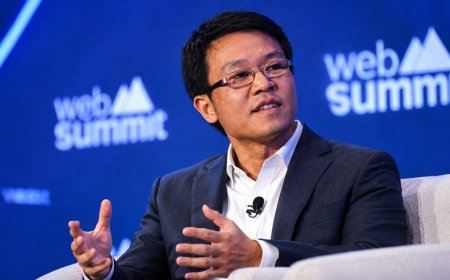
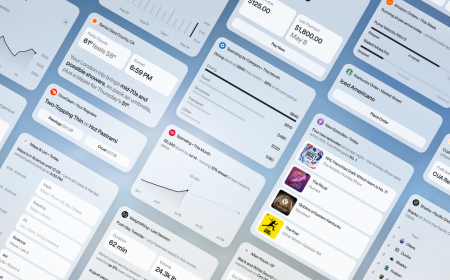
Conway Research founder Sigil Wen has launched Underdog, an invite-only AI assistant designed to run entirely on a user’s own computer rather than sending personal data to cloud-based models. Wen announced the beta launch Monday, positioning privacy as the product’s main distinction from a growing field of personal AI assistants.
Underdog currently runs on Mac and Windows PCs, with Linux, iPhone and Android versions planned. Its local approach means conversations and other information the assistant uses can remain on hardware controlled by the user, rather than being processed remotely in a data centre.
Underdog runs its AI locally
The assistant runs on Husky, an inference engine Wen developed to run AI models on consumer hardware. He says the engine reduces the amount of data transferred between a computer’s main processor and graphics hardware compared with competing local inference systems.
Underdog also encrypts credentials for services such as email accounts that users authorise it to access. That architecture is intended to give the assistant access to useful personal information without requiring Conway Research to store the same data.
The trade-off is model size. Underdog currently uses a 27-billion-parameter reasoning model fine-tuned from Qwen3.8-27B, considerably smaller than many frontier models served from large data centres.
Wen argues that smaller local models are already capable enough for many everyday assistant tasks, including research, shopping, and homework help. He points to benchmark comparisons with Claude Opus 4.6 to show how far compact models have progressed, although benchmark results vary considerably by model configuration and test.
Privacy shapes Underdog’s business model
Underdog will initially be free, and Wen says it will not rely on advertising. Because inference happens on users’ hardware, Conway does not bear the recurring cloud-computing expense of serving every AI request from its own infrastructure.
Instead, the startup plans to earn a small percentage from transactions the assistant completes using Stripe’s payment infrastructure. The model resembles transaction-based businesses in financial technology, tying Underdog’s revenue to purchases rather than advertising or monetising user data.
That choice reflects the argument Wen makes in Underdog’s privacy manifesto: increasingly capable AI assistants may require access to unusually sensitive information to be useful, creating greater consequences when personal data is collected remotely.
For a personal agent that can eventually work across email, shopping and other accounts, privacy is not limited to conversation history. Such systems may encounter financial information, family details, private communications and other data while carrying out tasks on a user’s behalf.
Conway draws prominent Silicon Valley backing
Wen arrived in Silicon Valley as a teenager and spent time in an AI hacker house alongside researchers and founders who later worked on prominent AI products. He also worked on Airchat, the social application backed by Naval Ravikant, and became a Thiel Fellow in 2025.
Conway Research has attracted backing from several technology investors. Andreessen Horowitz said it led Conway’s first funding round, describing Underdog as an effort to bring personal AI onto devices users directly control.
Other investors named by the company include Khosla Ventures, Hummingbird, SV Angel and the Anthology Fund, along with angel investors including Stripe co-founder Patrick Collison, Vercel founder Guillermo Rauch, OpenAI researcher Noam Brown and Deedy Das.
Wen has also been publicly documenting the project and its development, including details shared around Underdog’s launch. The product enters an increasingly crowded personal-assistant market. Still, its bet is different: make useful AI local enough that users don’t have to trade control of their personal data to use it.
What's Your Reaction?
 Like
0
Like
0
 Dislike
0
Dislike
0
 Love
0
Love
0
 Funny
0
Funny
0
 Angry
0
Angry
0
 Sad
0
Sad
0
 Wow
0
Wow
0