




























Telerobotic Surgery Advances Worldwide as U.S. Faces Adoption Hurdles
Telerobotic surgery is moving into real clinical procedures worldwide, but U.S. adoption still faces regulatory, connectivity, licensing and reimbursement challenges.
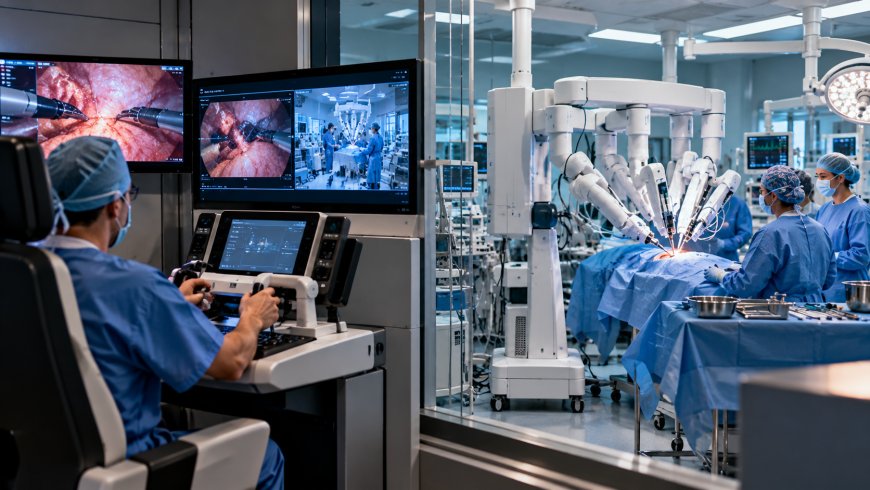
Remote robotic procedures are already being performed in several countries, but regulation, connectivity, and medical licensing still limit wider U.S. use.
A surgeon in Santiago, Panama, recently operated on a stroke patient about 150 miles away. Using XCath’s robotic system, neurosurgeon Vitor Mendes Pereira performed a mechanical thrombectomy while doctors at the patient’s side assisted with the procedure. The 68-year-old patient recovered well enough to talk and move again two hours later, according to XCath.
The operation was notable not simply because a robot was involved, but because the surgeon and patient were in different locations. It is the kind of procedure that could eventually allow specialists to treat patients who live far from major hospitals without requiring the patient to travel.
That possibility is driving interest in telerobotic surgery well beyond a handful of demonstrations. Remote robotic procedures have also been performed in India, Kuwait and Brazil. In June 2025, urologist Vipul Patel performed a prostatectomy from Florida on a patient in Luanda, Angola, nearly 7,000 miles away. The procedure was carried out under an FDA investigational device exemption.
For stroke care, the potential is particularly significant. ARPA-H says more than half of Americans live more than an hour from a stroke centre capable of performing a thrombectomy. The agency recently committed up to $175.3 million to a group of universities and companies, including Siemens Healthineers and Philips, to develop robotic systems for long-distance stroke treatment.
The technology is already being tested in real procedures.
Telerobotic surgery is still a small part of the broader robotic surgery market. For comparison, Intuitive’s robotic systems have been used in more than 20 million surgeries over the company’s history. Vipul Patel estimates that only about 5,000 remote robotic surgeries have been performed worldwide so far.
The technology has nevertheless moved considerably since the Lindbergh Operation in 2001, when surgeons in New York performed a gallbladder operation on a patient in Strasbourg, France. Improvements in robotic systems and communications networks have made longer-distance procedures more practical.
India and China are currently among the countries pushing the technology forward. Shanghai-based MicroPort MedBot’s Toumai system has been used for international procedures and received CE marking in June for robot-assisted telesurgical procedures in urology, general surgery, thoracic surgery and gynaecology.
India’s SS Innovations has taken a similar approach with its SSi Mantra system, combining telesurgery with teleproctoring so surgeons can share expertise remotely. The company says it has performed more than 185 robotic telesurgeries using the system, including more than 25 cardiac procedures. Its telesurgery technology is approved in India, Indonesia and the Philippines.
The U.S. is taking a more cautious route. No surgical robot is currently authorised in the country specifically for remote procedures, although the FDA is developing guidance around robotically assisted surgical devices with remote capabilities. The agency also recently granted breakthrough device designation to XCath’s Iris system following the Panama procedure.
The biggest problem may not be the robot.
Operating a surgical robot from another location introduces a problem that doesn’t exist when the surgeon is sitting beside the operating room: every movement depends on a communications connection. Some delay will always exist in processing video and transmitting the surgeon’s hand movements, SS Innovations CEO Sudhir Srivastava told MedTech Dive. The question is how much distance and latency a procedure can safely tolerate.
Network reliability is therefore becoming part of the medical device infrastructure. 5 G networks can support fibre connections, creating redundancy if one connection fails. But hospitals would still need procedures for dropped signals, unexpected latency, and other technical failures.
There are also less visible hurdles. Surgeons may need licenses and hospital credentials in the location where the patient is being treated. Hospitals and insurers would need to determine who is responsible for a remote procedure and how to reimburse it.
That is why major robotic surgery companies are currently building toward remote surgery rather than making it routine immediately. Intuitive is developing telesurgery capabilities for its da Vinci 5 platform, while Medtronic’s Hugo system already supports remote telepresence for consultation and training. Johnson & Johnson has taken a similar approach with its Ottava system, starting with secure intraoperative telepresence before considering more advanced remote procedures.
For now, the more immediate use of connected surgical systems may be to allow specialists to observe an operation, provide a second opinion, or train another surgeon remotely. Operating hundreds or thousands of miles away is technically possible, but making it routine requires hospitals, regulators, networks, and medical teams to solve problems that extend well beyond the robot itself.
The recent procedures suggest that distance is becoming less of a technical barrier. Whether it becomes an ordinary part of surgical care will depend on how the medical system manages the risks of putting that distance between the surgeon and the patient.
What's Your Reaction?
 Like
0
Like
0
 Dislike
0
Dislike
0
 Love
0
Love
0
 Funny
0
Funny
0
 Angry
0
Angry
0
 Sad
0
Sad
0
 Wow
0
Wow
0