






























Genesis AI expands into full-stack robotics as new demo gains attention
Khosla-backed Genesis AI is expanding its full-stack robotics platform, with a new demo showcasing advances in AI-driven automation and robotics systems.
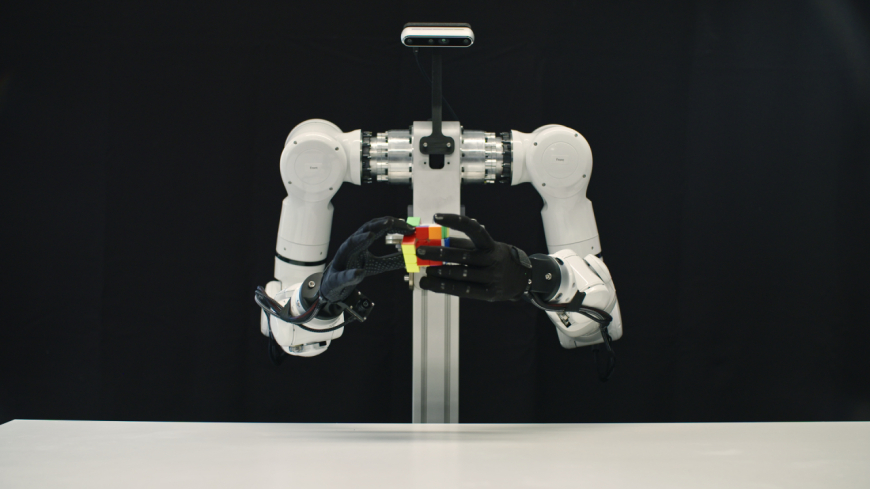
Genesis AI, the robotics startup that previously raised a $105 million seed funding round to develop foundational AI models for robotics, has now introduced its first model called GENE-26.5. Alongside the unveiling, the company revealed a new set of robotic hands that immediately became a major focus after the release of a demonstration video showing the system performing a wide range of complex physical tasks.
The robotic hands were developed in partnership with the Chinese robotics company Wuji Tech. In the demonstration, the system performed advanced manipulation tasks, including cooking, preparing smoothies, playing the piano, and even solving a Rubik’s Cube.
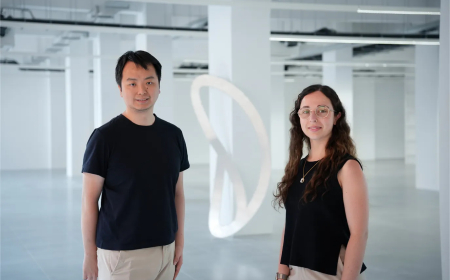
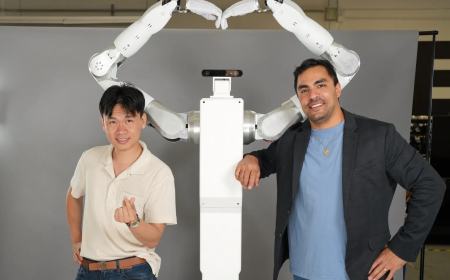
According to Genesis AI co-founder and CEO Zhou Xian, the company originally focused almost entirely on the AI model itself before eventually deciding it needed greater control over the underlying hardware. “The model has always been the goal, because a better model means better intelligence,” Zhou said. However, he explained that the company eventually realised it could not fully optimise performance without designing its own robotics platform. “So we decided to go full stack,” he added.
Genesis AI now joins a growing list of heavily funded companies operating at the intersection of artificial intelligence and robotics, including startups such as Physical Intelligence and Skild AI. Still, Zhou and Genesis co-founder Théophile Gervet believe the company’s custom hardware could provide a meaningful competitive advantage.
One of the key distinctions of Genesis’ robotic hand design is its close match to the size and structure of a real human hand. This differs from the simpler two-finger grippers that many robotics firms have relied on for years.
By creating hardware that more accurately mirrors real human anatomy, Genesis says it can dramatically narrow what robotics researchers often refer to as the “reality gap” or “embodiment gap” between human actions and robotic replication. “That lets us collect a lot more data than was previously possible, to train a model that can do many more tasks,” said Gervet, who previously worked as a research scientist at Mistral AI and now serves as president of Genesis AI.
Among all the demonstrations shown in the company’s launch video, Gervet said his personal favourite was the cooking sequence because it required the robot to perform a long chain of delicate and difficult actions. Those included cracking an egg, slicing vegetables, and preparing ingredients with precision.
Genesis also demonstrated other tasks, including smoothie preparation, piano playing, and solving the Rubik’s Cube — the latter of which is a common benchmark and visual showcase frequently used in robotics demonstrations.
Some of the additional use cases shown by the company are aimed at more practical enterprise applications. Lab work, for example, could eventually become one of the first commercial areas in which Genesis deploys its technology.
Beyond the robotic hardware itself, Genesis has also developed a glove packed with sensors that functions as a real-world counterpart to the robotic hand. The glove allows human movements to be recorded and translated into usable robotics training data.
“Our idea was that if we could design a robotic hand that tries to mimic a human hand as much as possible, we could instantly unlock huge amounts of human data without having to worry about what people call the ‘embodiment gap’ in robotics research,” Zhou explained.
While other robotics companies have attempted to solve similar data collection challenges, Genesis argues that its major innovation lies in how tightly its hardware and AI model are integrated.
The company’s first model is named GENE-26.5 as a reference to May 2026. Still, Zhou said many future iterations are expected as Genesis continues to improve both the model and its simulation systems. According to Zhou, simulation technology has become essential for accelerating model development and evaluation. “The real bottleneck for the iteration speed of the model is evaluation. So this helps us speed up model training a lot,” he said.
Even with sophisticated simulation environments, Genesis believes real-world human data will remain critical for building more capable robotics systems. That is where the company’s lightweight sensor glove may become especially important.
Gervet said many current data collection devices used in robotics research are cumbersome and uncomfortable, which limits widespread adoption. In contrast, Genesis designed its glove to be lightweight and practical enough for daily use. He compared it to protective gloves commonly used in industries such as manufacturing and pharmaceuticals, while emphasising that they are also relatively inexpensive to produce.
“We’re in talks with a lot of customers right now, and a lot of the value of a glove would be that, for the first time, you can wear the data collection device when you’re doing your daily job, whether it’s a lab technician for pharma or for manufacturing,” Gervet said.
He added that the glove-based data collection would also be paired with “egocentric video data,” meaning recordings captured from a first-person perspective while individuals perform various tasks. Still, questions remain about whether workers would willingly wear devices and cameras that could ultimately be used to train robots to replace some forms of labour.
Gervet acknowledged that those concerns exist, but suggested those decisions would largely depend on Genesis’ enterprise customers and their relationships with employees. “We haven’t nailed the details yet,” he said. The founders also admitted that some businesses may choose not to share internally collected data with Genesis. However, the startup says it has multiple other methods for building what it calls a “human skill library.”
One option is to pay external partners to gather training data specifically for robotics development. Genesis also stated that its model has already been trained using “massive amounts of human-based internet videos,” according to a company press release. Genesis believes the combination of large-scale simulation systems, human-generated data, and full-stack robotics development could significantly reduce the cost and complexity of deploying robotics systems in real-world environments.
Former Google CEO Eric Schmidt, who invested in the startup, said the company’s latest progress represents an important milestone for both Genesis itself and the robotics industry more broadly. “This marks an important milestone for their team and the robotics industry more broadly,” Schmidt said. Genesis AI first emerged from stealth in July 2025, only a few months after the company was founded. At the time, it announced a $105 million seed round co-led by Eclipse and Khosla Ventures.
Additional investors included Bpifrance, HSG, and several high-profile individual backers, including Eric Schmidt, Xavier Niel, Daniela Rus, and Vladlen Koltun. Since raising that funding, Genesis has expanded significantly. The startup currently operates offices in Paris and California and has recently added a new office in London.
“One big reason we decided to be in Europe is that there is a huge talent density across the whole continent,” Gervet said.
The company now has a workforce of around 60 employees, with approximately 40% to 45% based in Europe and 50% to 55% located in the United States. Genesis said it is actively hiring across all three of its office locations.
Beyond hiring and expanding operations, the startup also plans to reveal its first general-purpose robot soon. Zhou confirmed that the upcoming system will be a full-body robot rather than just a standalone robotic hand platform. Despite the company’s growing hardware ambitions, Zhou insisted that the overall mission has remained unchanged.
“Our goal is to build the most capable robotic system,” he said.
What's Your Reaction?
 Like
0
Like
0
 Dislike
0
Dislike
0
 Love
0
Love
0
 Funny
0
Funny
0
 Angry
0
Angry
0
 Sad
0
Sad
0
 Wow
0
Wow
0