






























Pit emerges as Stockholm’s newest AI startup success, founded by Voi creators
Pit, the new AI startup launched by the founders of Voi, is quickly gaining attention as one of Stockholm’s fastest-rising technology companies.
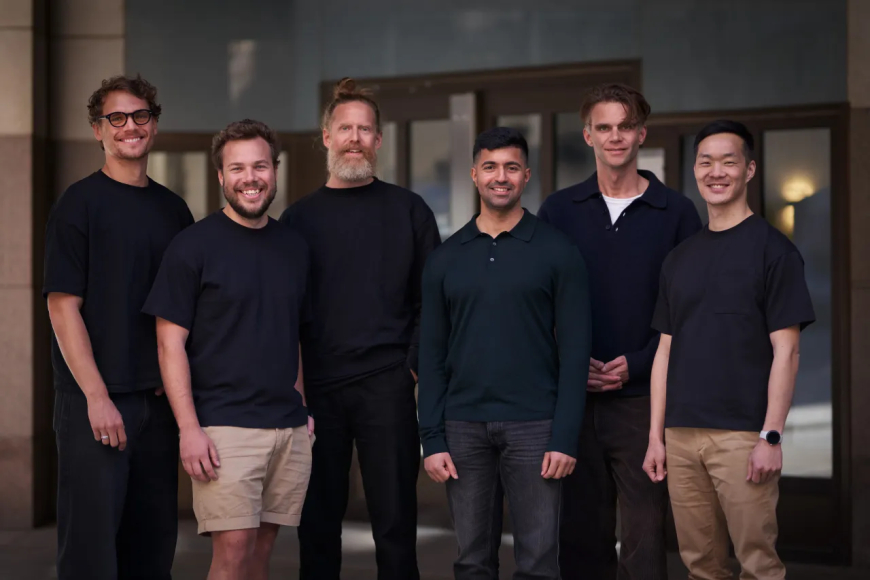
Swedish startup Pit is quickly becoming one of Stockholm's latest AI companies to attract major attention, even if some of its early visibility came through controversial social media posts designed to spark debate online.
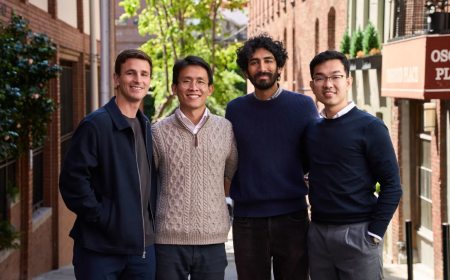
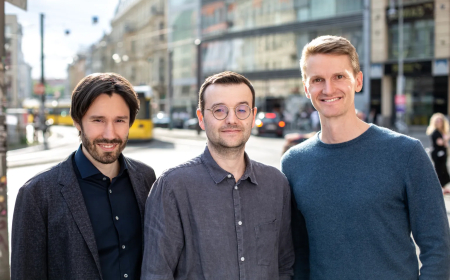
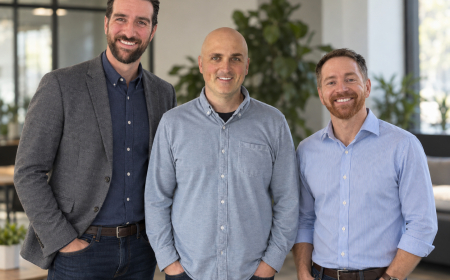
Several people behind the European scooter company Voi, including Voi CEO Fredrik Hjelm, led the startup. The team also includes former engineers from Klarna and iZettle. Now, Pit has secured strong backing from Andreessen Horowitz, which is leading the company's $16 million seed funding round.
The investment further highlights Stockholm's growing reputation as one of Europe's hottest AI startup hubs. The city, which is also home to fast-growing AI company Lovable, has become an important focus area for a16z as the venture capital giant searches for Europe's next major technology companies.
Pit focuses on enterprise AI and aims to help businesses automate internal operations with AI-generated software. According to Pit CEO Adam Jafer, the company's products are designed to learn how businesses operate and then automatically build custom tools and workflows around those operations.
Jafer left Voi last summer after spending seven years helping scale the scooter company into an organisation with nearly 1,000 employees operating across 13 countries. During that period, he said he became convinced that AI technology had matured enough for broader enterprise adoption.
Initially, he believed AI could replace smaller SaaS tools used internally by companies. Over time, however, he saw a much larger opportunity beyond Voi itself.
"The aha moment for the bigger opportunity was when the models were no longer just chatbots that generate text, but became more agentic and could do things," Jafer said.
Unlike many competitors that focus on AI agent builders or vibe-coding products, Pit describes itself as offering an "AI product team as a service."
The startup's platform is built around two main products. The first, Pit Studio, allows enterprise employees to walk the AI through workflows and processes that could potentially be automated using AI-generated software. The second, Pit Cloud, is designed to deploy AI-generated systems in ways that meet enterprise requirements for governance, compliance, certifications, and auditability.
Pit began quietly testing its approach with pilot customers in sectors including healthcare, telecom, logistics, and other industries earlier this year. The company's initial focus has been strictly on internal process automation. "Nothing customer-facing, no conversational AI, just pure back-office, service, and support functions that we turn into automations so that you can give back time to people to focus on your core business," Jafer explained.
As the company prepares for broader commercial expansion, Pit is also hiring solution engineers who will work directly with customers. Similar to the growing trend of forward-deployed engineers at AI startups, these employees are expected to help enterprises adopt the platform more effectively.
According to Jafer, large enterprise clients are primarily interested in measurable business outcomes rather than simply adopting AI for experimentation. "They're looking to buy outcomes. They want processes to go faster. They want to see productivity unlock and time unlock," he said.
Pit also insists it is not positioning AI as a replacement for workers. Jafer said the goal is to move employees away from repetitive administrative tasks and toward higher-value work. "The theme is more around moving people upstream to do more valuable things for the business, rather than repetitive back-office work," he said.
The startup nevertheless faced criticism earlier this year after Jafer posted on LinkedIn that Pit did not currently employ junior engineers because AI agents were handling much of the work those employees would traditionally perform.
Although the post remains online, Jafer now says his views have evolved. "It may have started like that, but you need a good mix as you scale," he said.
Fredrik Hjelm also appeared aware that Pit's founding team could attract scrutiny. In a post on X, he jokingly described Pit as being "founded by tech bros, from Voi and Klarna," before adding that the company also had women on the team.
The company's leadership does show strong ties to Voi. Three of Voi's four co-founders are now involved with Pit, including Hjelm, Jafer, and founding engineer Filip Lindvall. Another engineer at Pit, Andreas Hjelm, is Fredrik Hjelm's brother.
Although Fredrik Hjelm is listed as a co-founder at Pit, he remains CEO of Voi, meaning his role at the AI startup may initially be less operational. Still, his reputation and network within European tech have already helped the company attract high-profile investors.
Hjelm explained on X that his relationship with Andreessen Horowitz partners Alex Rampell and Gabriel Vasquez began several years ago, when they visited Stockholm to understand the European startup ecosystem better.
"When it came to picking partners for Pit, we didn't need the money to get going, but we wanted the strongest backers we could find. So we picked them, and they picked us," Hjelm wrote.
Jafer also confirmed that Pit did not spend significant time pitching multiple investors. In addition to a16z, the funding round included participation from Lakestar, several technology executives from American companies, wealthy Nordic families, and Pit's own founders.
The company believes its European roots could also help drive enterprise adoption, especially as businesses increasingly look for sovereign technology solutions. "We're going after industrials, and there's plenty of that in Europe," Jafer said.
He added that many enterprise clients appreciate Pit's flexible approach because the company can work with multiple AI providers and cloud vendors depending on customer preferences. "EU models running on EU compute is top of mind for almost every CIO we're meeting," Jafer said.
What's Your Reaction?
 Like
0
Like
0
 Dislike
0
Dislike
0
 Love
0
Love
0
 Funny
0
Funny
0
 Angry
0
Angry
0
 Sad
0
Sad
0
 Wow
0
Wow
0