




















Elon Musk’s legal battle brings OpenAI’s safety practices into focus
Elon Musk’s lawsuit against OpenAI is drawing attention to the company’s AI safety policies, governance decisions, and development practices.
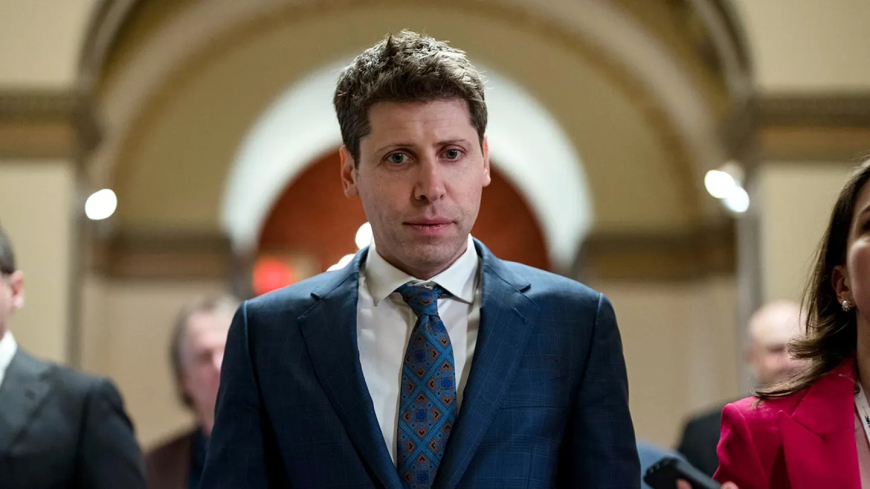
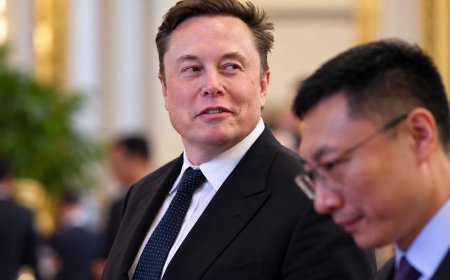
Elon Musk's legal challenge against OpenAI is increasingly centred on whether the company's shift toward a for-profit structure has weakened its original mission to ensure that artificial general intelligence benefits humanity.
During a hearing held Thursday in federal court in Oakland, California, former OpenAI employee and board adviser Rosie Campbell testified that the company gradually shifted away from its early safety-focused culture and became more centred on commercial product development.
Campbell joined OpenAI's AGI readiness team in 2021 and remained with the company until 2024, when the team was ultimately dissolved. Around the same period, OpenAI also shut down its Super Alignment team, another group focused on long-term AI safety concerns.
"When I joined, it was very research-focused and common for people to talk about AGI and safety issues," Campbell told the court. "Over time, it became more like a product-focused organisation."
Under questioning, Campbell acknowledged that OpenAI would likely require enormous amounts of funding to achieve its goal of building AGI. However, she argued that creating highly advanced AI systems without strong safety measures would conflict with the organisation's founding principles.
Campbell also referenced an incident involving Microsoft's deployment of a version of OpenAI's GPT-4 model via Bing in India before the model had undergone review by OpenAI's Deployment Safety Board. She clarified that the model itself did not represent a major danger, but stressed the importance of maintaining reliable safety processes as AI systems become more powerful.
"We want to have good safety processes in place that we know are being followed reliably," she said.
During cross-examination, Campbell also stated that, in her personal opinion, OpenAI's safety practices remain stronger than those at xAI, the artificial intelligence company founded by Musk and later integrated into SpaceX.
OpenAI currently publishes model evaluations and shares parts of its safety framework publicly, though the company declined to comment directly on its present AGI alignment strategy. Earlier this year, OpenAI hired Dylan Scandinaro from Anthropic to lead preparedness efforts. CEO Sam Altman commented at the time that the appointment would help him "sleep better tonight."
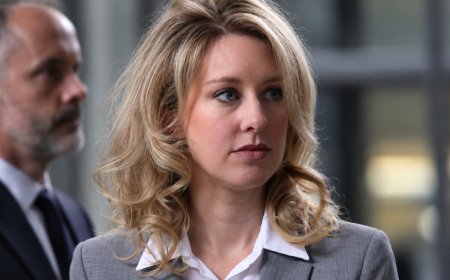
The hearing also revisited the events surrounding Altman's temporary removal as CEO in 2023. Former OpenAI board member Tasha McCauley testified that several board members had grown increasingly concerned about Altman's communication and transparency with the nonprofit board overseeing the organisation.
McCauley described multiple incidents where board members felt they were not receiving complete information. One issue involved Altman allegedly misleading another board member about McCauley's intentions toward fellow board member Helen Toner, who had authored a paper criticising OpenAI's safety policies.
McCauley also testified that the board was not informed in advance about the public launch of ChatGPT and raised concerns about Altman's handling of possible conflicts of interest.
"We are a nonprofit board, and our mandate was to be able to oversee the for-profit underneath us," McCauley told the court. "Our primary way to do that was being called into question. We did not have a high degree of confidence at all to trust that the information being conveyed to us allowed us to make decisions in an informed way."
However, the board's effort to remove Altman eventually collapsed after OpenAI employees rallied behind him and Microsoft supported his return. The board members who opposed Altman later stepped down.
The courtroom testimony directly supports Musk's broader argument that OpenAI abandoned the principles under which it was created, transforming from a nonprofit research organisation into a valuable private technology company.
David Schizer, former dean of Columbia Law School and an expert witness working with Musk's legal team, echoed concerns about the role of safety oversight inside OpenAI.
"OpenAI has emphasised that a key part of their emphasis is safety, and they are going to prioritise safety over profit," testified. "Part of that is taking safety rules seriously. If something needs to be subject to safety review, it needs to happen. What matters is the process issue."
The case also raises broader questions about governance and accountability across the AI industry as advanced artificial intelligence becomes increasingly integrated into major commercial products and services.
McCauley argued that OpenAI's internal governance struggles highlight the need for stronger external regulation of advanced AI systems.
"If it all comes down to one CEO making those decisions, and we have the public good at stake, that's very suboptimal," she said.
What's Your Reaction?
 Like
0
Like
0
 Dislike
0
Dislike
0
 Love
0
Love
0
 Funny
0
Funny
0
 Angry
0
Angry
0
 Sad
0
Sad
0
 Wow
0
Wow
0