





























Robotics Startup Aims to Bring the Next ChatGPT-Style Breakthrough to Physical AI
A robotics startup is developing foundation models that could transform physical AI, helping robots learn faster with less training data and accelerating the future of intelligent automation.
Before OpenAI’s GPT-3 ushered in the era of foundation models, most organisations developing natural language processing systems created highly specialised models from the ground up, training each one on extensive amounts of task-specific data. Today, that approach has largely shifted. Businesses typically begin with general-purpose foundation models such as OpenAI’s GPT series, Claude, or Llama, then adapt them through prompting or fine-tuning to meet their own requirements.
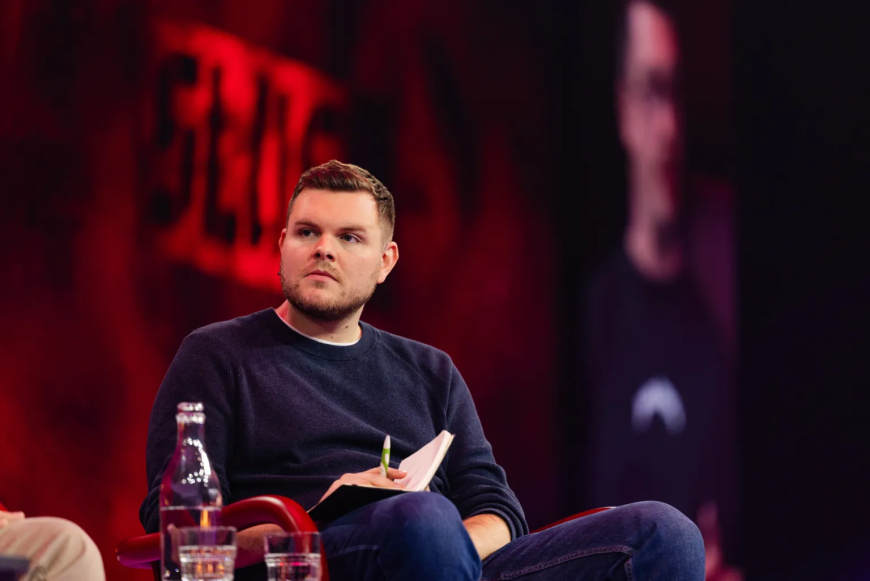
Pim de Witte, CEO of General Intuition, believes the field of embodied artificial intelligence is heading toward a similar transformation. Instead of gathering enormous real-world datasets to build individual robotic systems for specific tasks, he argues that the industry should focus on creating higher-quality datasets to build foundation models that can transfer knowledge about movement, interaction, and physical reasoning across many environments.
Speaking during a recent episode of the Equity podcast, de Witte said many robotics companies are currently focusing on highly specialised solutions tailored to individual robot types, specific environments, or single hardware platforms.
According to him, much of that specialised work could eventually become unnecessary as more capable general-purpose robotics models emerge, including the foundation model his company has been developing and deploying.
De Witte said the real product is the model’s ability to generalise across different situations. He believes that once a model possesses a fundamental understanding of space, time, and physical interaction, companies will no longer need to collect hundreds of thousands—or even millions—of hours of real-world robotics data. Instead, he argues that only a few minutes of task-specific data may be required to adapt a strong foundation model to new environments.
General Intuition has developed its own foundation model by training it on millions of hours of video game data. That training includes detailed information about the controller inputs made by human players and the precise timing of every action. Both de Witte and the company’s lead investor, Vinod Khosla, believe that learning from these action-based datasets is essential for developing AI systems with human-like intuition for understanding space, movement, and time.
The company strengthened that vision last month by raising $320 million in funding at a $2.3 billion valuation. According to General Intuition, its current model has demonstrated the ability to play a video game continuously for several hours while also operating a four-legged robot after being fine-tuned using only eight minutes of real-world robotics data.
De Witte said one of the biggest surprises during testing was that the robot successfully performed zero-shot operation using only its front-facing camera, without relying on additional sensors. The robot was tested in an office environment where people moved around freely, and dynamic objects were introduced, yet it continued to operate successfully. He described the result as an indication of what future robotics systems may be capable of achieving.
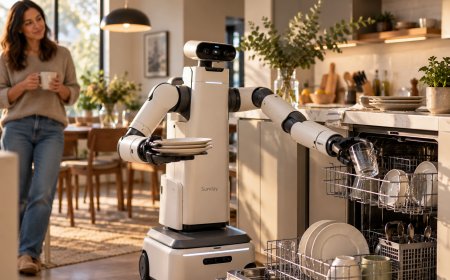
General Intuition does not intend to manufacture robots itself. Instead, the company’s long-term objective is to become the foundation model provider for physical AI, supplying the core intelligence that other robotics companies can build on as they develop their own machines.
As de Witte explained, the company’s goal is not to build its own self-driving car business or become a robotics manufacturer. Instead, it wants to make it dramatically easier for the next generation of companies to build autonomous vehicles, robots, and other AI-powered physical systems using its underlying foundation model.
What's Your Reaction?
 Like
0
Like
0
 Dislike
0
Dislike
0
 Love
0
Love
0
 Funny
0
Funny
0
 Angry
0
Angry
0
 Sad
0
Sad
0
 Wow
0
Wow
0