



































Venus Aerospace Secures $90M Series B to Advance Next-Generation Rocket Engine Technology
Venus Aerospace has raised $90 million in Series B funding to accelerate development of its rotating detonation rocket engine, supporting future hypersonic, defence, and space propulsion technologies.
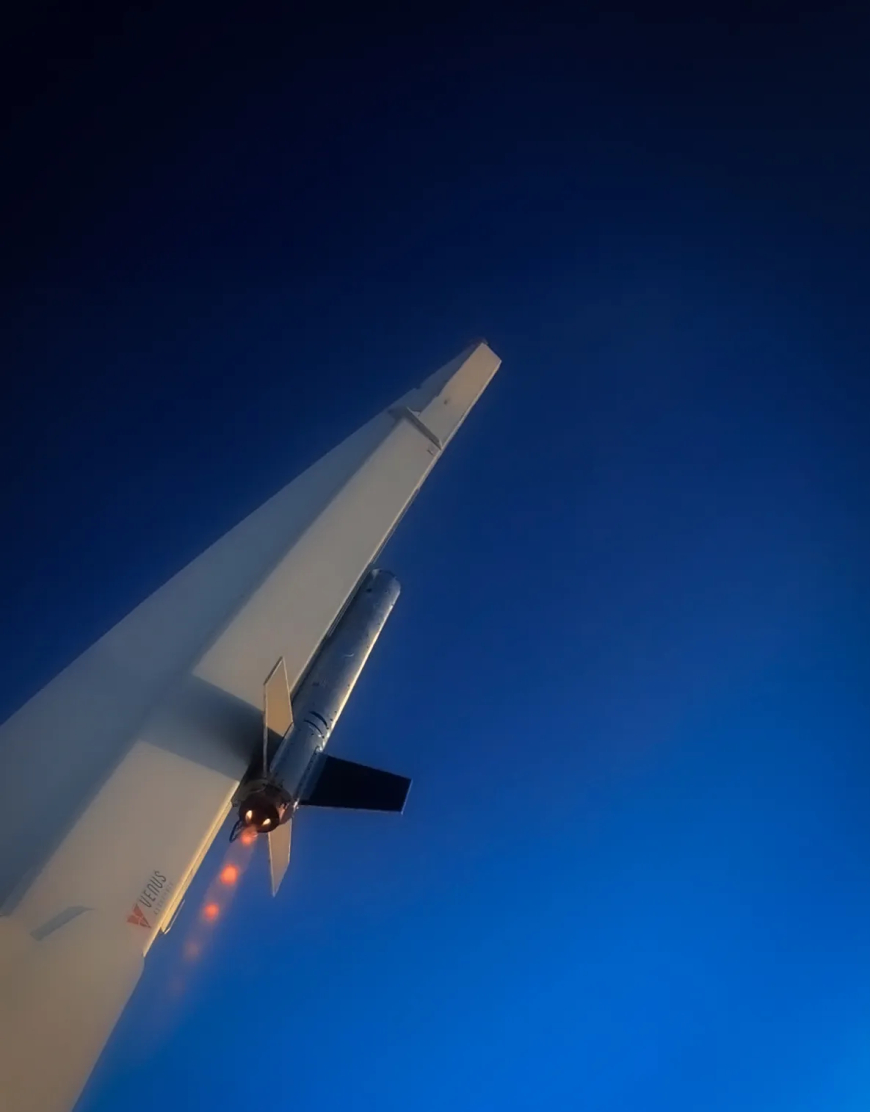
Develop a new type of rocket engine, and interest from across the aerospace industry is likely to follow. That has certainly been the experience of Venus Aerospace and its Rotating Detonation Rocket Engine (RDRE), an advanced propulsion system designed to deliver greater efficiency while launching payloads into the sky.
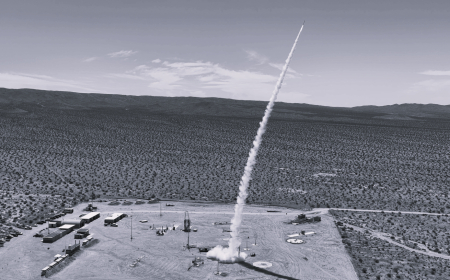
Venus Aerospace was established in 2020 by husband-and-wife team CEO Sassie Duggleby and CTO Andrew Duggleby with the original vision of developing clean-flying hypersonic passenger aircraft. However, after successfully demonstrating the RDRE during a flight test last year, the company’s direction shifted significantly.
Reflecting on that milestone, Sassie Duggleby said the industry’s response exceeded expectations. Following the successful flight in May, organisations began approaching the company with requests to purchase its working RDRE technology, even though commercial engine sales had not originally been part of Venus Aerospace’s business plan.
Today, the company has redirected much of its attention towards defence and aerospace applications. Its current focus includes developing hypersonic weapons by replacing traditional solid rocket motors used in many missile systems with its own propulsion technology, while also pursuing high-speed space vehicles designed to meet military requirements.
“Our propulsion architecture combines efficiency, throttling, reusability and manufacturability in a way that customers need for real defence and space missions,” Andrew Duggleby said in a statement. “We are focused on translating technical progress into reliable systems for operational use.”
To support those ambitions, Venus Aerospace announced a $90 million Series B funding round to accelerate product testing and the development of vehicle designs in collaboration with prospective customers. The financing was led by Mercury Fund and included participation from Lockheed Martin Ventures, MESH, PEAK6, Draper Associates, Starboard Star Venture Capital, and Green Sands Equity.
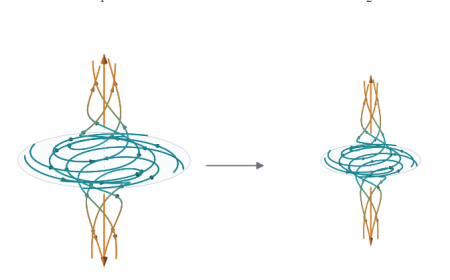
The concept behind the Rotating Detonation Rocket Engine dates back to the mid-twentieth century, when engineers first proposed it as a potentially more efficient propulsion system for rockets. Unlike conventional engines that burn propellants inside a standard combustion chamber, the RDRE generates a continuous supersonic detonation wave that travels around a circular chamber. The approach promised higher efficiency by reducing propellant waste, although the complex physics involved made the technology extremely difficult to understand and control.
Recent advances in manufacturing and simulation technologies have helped change that outlook. Improvements in 3D printing and computer modelling have made practical development increasingly achievable. The first successful RDRE ground test took place at the University of Central Florida in 2020. NASA successfully demonstrated the technology on the ground in 2022, while Japan’s space agency, JAXA, briefly operated an RDRE in space in 2021. VenuAerospace’s successful 2025 flight marked the first time an RDRE-powered rocket had flown.
Looking back at the company’s early years, Sassie Duggleby explained that much of the challenge centred on proving not only that the new engine could produce greater heat, thrust, and efficiency, but also that it could survive those extreme operating conditions. She said much of the team’s work over the past four years has focused on preventing the engine from melting during operation, adding that the company believes it has now overcome that challenge.
Earlier this year, Venus Aerospace also received funding from the Texas Space Commission to construct a larger engine test facility. The expanded infrastructure is expected to play an important role in the next phase of development. Although the company has conducted around 600 engine tests so far, its longest continuous engine burn has lasted 32 seconds. Future customer requirements are expected to demand sustained operation lasting between six and fifteen minutes, making extended-duration testing a key objective for the company moving forward.
What's Your Reaction?
 Like
0
Like
0
 Dislike
0
Dislike
0
 Love
0
Love
0
 Funny
0
Funny
0
 Angry
0
Angry
0
 Sad
0
Sad
0
 Wow
0
Wow
0