




































SpaceX’s First Starship V3 Flight Ends with Booster Loss During Return Attempt
SpaceX launched the upgraded Starship V3 for its inaugural test flight, showcasing major advancements in the next-generation rocket system. While the mission achieved key objectives, the Super Heavy booster was lost during its return phase.
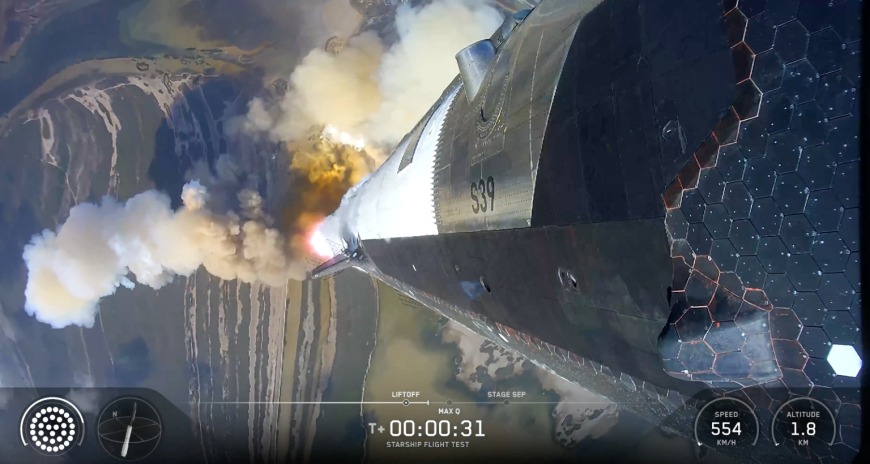
SpaceX successfully launched the third-generation version of its Starship rocket for the first time, marking a major milestone for the company’s next-generation launch system. While the mission achieved several important objectives, it did not proceed entirely as planned, with the Super Heavy booster failing during its return sequence.
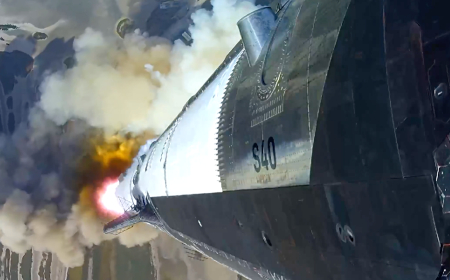
The massive 407-foot-tall rocket, currently the most powerful launch vehicle ever built, lifted off from Starbase, Texas, at approximately 5:30 p.m. local time. A few minutes after launch, the Starship upper stage successfully separated from the Super Heavy booster and continued its journey into space.
Following stage separation, the booster began its planned descent back toward Earth. It was expected to perform a simulated landing in the Gulf of Mexico. Still, the return sequence encountered problems when the engines failed to properly reignite for the sustained burn required to control the descent. As a result, the booster lost stability, tumbled toward the water, and was believed to have exploded on impact.
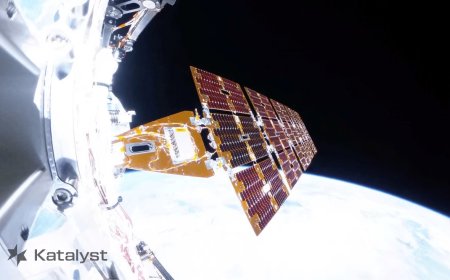
Despite the booster loss, the Starship upper stage continued much of its mission successfully. During ascent, one of its six Raptor engines shut down, but the spacecraft remained operational and completed several key test objectives. Starship successfully deployed 20 Starlink satellite simulators as well as two modified Starlink satellites designed to capture imagery of the vehicle’s exterior during flight.
Approximately one hour after liftoff, Starship carried out a planned simulated landing in the Indian Ocean. After completing the demonstration, the spacecraft tipped over and exploded as expected, concluding the mission.
Although the flight was not flawless, it represented a significant test for SpaceX. The mission served as the first full-scale evaluation of Starship V3 hardware, a redesigned version of the rocket that has been under development for months. It also marked one of the first major uses of a newly constructed launch pad at Starbase, a facility SpaceX has spent years developing.
The launch arrived at a particularly important moment for the company. Earlier this week, SpaceX’s IPO filing was made public, with the company expected to begin trading on Nasdaq in mid-June. Reports suggest the offering could raise approximately $75 billion, providing capital for future Starship development, artificial intelligence initiatives, and obligations related to other ventures connected to Elon Musk.
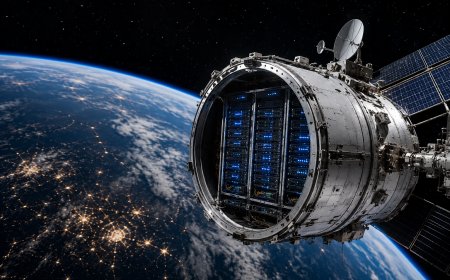
Starship remains central to SpaceX’s long-term ambitions. The company plans to use the rocket for future lunar missions under NASA programs and eventually for missions to Mars. In the near term, however, one of its most important roles will be deploying larger and more advanced Starlink satellites. This business segment has become a major revenue driver for SpaceX.
This was the company’s first Starship flight since October 2025. Earlier launch attempts were delayed after one of the first upgraded boosters exploded during testing in November. A launch attempt on Thursday was also postponed when a hydraulic pin associated with the launch tower failed to retract properly, according to Musk.
Starship V3 introduces several upgrades, including SpaceX’s third-generation Raptor engines, which provide greater thrust while simplifying engine architecture. The redesigned booster is also intended to support faster operations and improve future recovery and catch procedures.
While the mission exposed areas that still require refinement, it successfully demonstrated many of the new vehicle’s capabilities and provided valuable data for future flights. As SpaceX continues developing Starship, the company will use lessons from this test to move closer to its goal of building a fully reusable rocket system capable of supporting missions to Earth orbit, the Moon, and eventually Mars.
What's Your Reaction?
 Like
0
Like
0
 Dislike
0
Dislike
0
 Love
0
Love
0
 Funny
0
Funny
0
 Angry
0
Angry
0
 Sad
0
Sad
0
 Wow
0
Wow
0