




































SpaceX Halts Debut Starship Version 3 Mission Moments Before Scheduled Launch
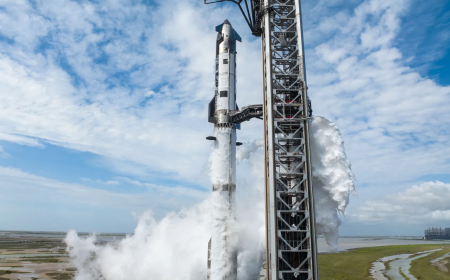
SpaceX called off the first launch attempt of its Starship V3 rocket just before liftoff, delaying a highly anticipated test flight aimed at advancing the company’s next-generation reusable spacecraft program.
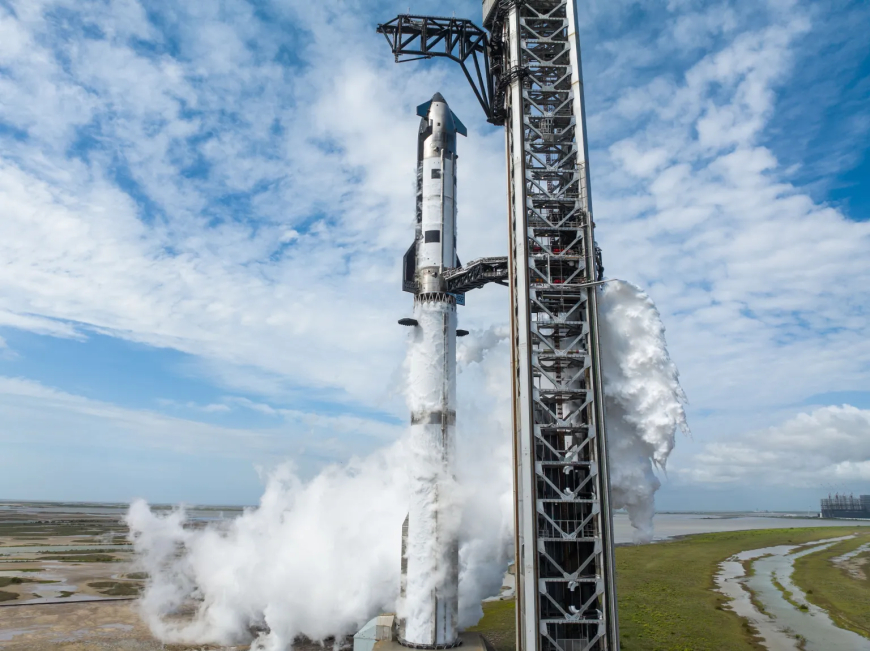
SpaceX has postponed the inaugural launch attempt of its third-generation Starship rocket system from its Starbase facility in Texas, now targeting another launch opportunity on Friday.
The mission carries significant importance for SpaceX, serving as the first major flight test of the upgraded Starship V3 architecture. Timing is especially critical as the company prepares for its anticipated public market debut following its recent IPO filing, and we're closely monitoring the progress of its next-generation launch program.
The upcoming mission will be the 12th flight in the Starship test campaign and the first since SpaceX's previous launch attempt in October 2025. During the months between flights, engineers focused heavily on developing and validating the vehicle's third-generation version. That development process was not without challenges. In November, one of the early V3 booster prototypes exploded during testing, highlighting the complexities of advancing the rocket's design.
Throughout Thursday's countdown, SpaceX repeatedly adjusted the launch timeline before eventually attempting liftoff near the end of the scheduled launch window. Both the Starship upper stage and the Super Heavy booster were fully fueled, and the countdown progressed to less than 40 seconds before launch. However, a series of issues involving vehicle and launchpad systems forced controllers to recycle the countdown several times before ultimately standing down from the attempt.
Following the scrubbed launch, Elon Musk explained on X that a hydraulic pin responsible for holding one of the launch tower arms in position failed to retract as expected. Musk stated that the company intends to attempt another launch on Friday at approximately 5:30 p.m. local time, provided the issue can be resolved in time.
Starship V3 represents one of the most substantial upgrades SpaceX has introduced since the program began. Among the most notable improvements are the third-generation Raptor engines, which deliver greater thrust while featuring a more streamlined, efficient design. The upgraded booster has also been redesigned to simplify recovery operations performed by the launch tower and features one fewer grid fin compared with previous versions.
Engineers have implemented several additional modifications to improve reliability across the entire system. One important improvement addresses propellant leaks in sections of the Starship upper stage. Fuel accumulation in those areas contributed to complications during multiple earlier test flights, making leak prevention a major focus of the redesign effort.
SpaceX's long-term objective remains the creation of a fully reusable launch system, similar to the operational model it has successfully demonstrated with its Falcon 9 rocket. Achieving rapid reuse is considered essential to reducing launch costs and supporting future missions involving satellites, lunar operations, and eventual human exploration of Mars.
Although this mission will provide the first real-world test of the V3 vehicle, it is not intended to accomplish every milestone SpaceX has outlined for the upgraded rocket. The company does not plan to recover either the Super Heavy booster or the Starship spacecraft during this flight. Instead, both stages are expected to perform controlled soft landings in the ocean. Current plans call for the booster to descend into the Atlantic Ocean, while the Starship upper stage is targeted for a splashdown in the Indian Ocean.
The mission also will not place Starship into a full Earth orbit. As a result, SpaceX will likely require additional test flights before demonstrating that the vehicle's upper stage can reliably deploy commercial payloads into orbit, a key capability for future operational service.
The success of Starship V3 is particularly important because of SpaceX's broader business strategy. The company has invested heavily in the expanding satellite network, which generated approximately $11 billion in revenue last year, according to information disclosed in its recently published filing.
Previous Starship flights successfully demonstrated the deployment of mockups of upgraded Starlink satellites, but the company has not yet launched operational payloads aboard the new rocket system. Establishing Starship as a dependable launch vehicle will be critical for supporting future Starlink growth while enabling SpaceX to reduce launch costs and increase deployment capacity for its expanding satellite constellation.
As SpaceX works to resolve the launch tower issue and prepare for another attempt, the aerospace industry will be closely watching the debut of Starship V3. The flight represents an important step in proving the capabilities of the upgraded rocket and advancing the company's long-term plans for reusable space transportation and large-scale satellite deployment.
What's Your Reaction?
 Like
0
Like
0
 Dislike
0
Dislike
0
 Love
0
Love
0
 Funny
0
Funny
0
 Angry
0
Angry
0
 Sad
0
Sad
0
 Wow
0
Wow
0