






































YC-Backed Corgi Rejects Claims of Copying Open Source Software
Corgi, a Y Combinator-backed insurance startup, has denied allegations that it copied open source software from Papermark. The dispute has sparked debate over AI-assisted coding, software licensing, and intellectual property.

Y Combinator-backed insurance technology startup Corgi found itself at the centre of another controversy this week after Papermark, the developer of an open-source virtual data room platform, accused the company of copying its software and presenting it as its own product.
Corgi has firmly rejected the allegation, stating, “No code was used from Papermark.”
The accusation, however, gained significant attention after Papermark co-founder Marc Seitz published a post on X alleging that Corgi’s newly launched product, Dataroom, closely resembled Papermark’s software.
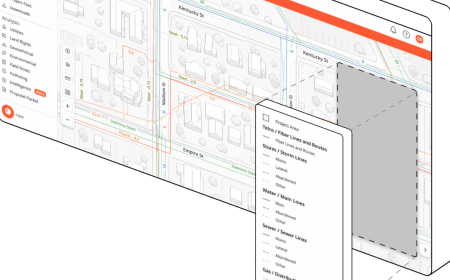
Seitz’s post quickly spread across social media after he shared screenshots showing that Corgi’s platform used identical wording to describe several features, matching Papermark’s language almost word for word. Data room software is widely used for securely sharing documents, particularly by startups that need to provide investors with confidential materials during fundraising and due diligence.
Seitz went further by accusing Corgi’s new product of infringing copyright and software licensing terms, describing the situation as “fraud.”
Corgi co-founder and CEO Nico Laqua responded shortly after seeing the allegations. He said the company would investigate the claims and later published a detailed response on X defending Corgi’s position. Alongside his statement, Laqua shared evidence that he said demonstrated the source code used in Dataroom was different from Papermark’s implementation.
Although Laqua strongly disputed accusations that Corgi had violated Papermark’s software licence—arguing that claims of having “stolen my enterprise-code” were fundamentally different from claims of having “copied my style”—he acknowledged that the similarities in design and wording resulted from using AI-assisted “vibe coding” during development.
“Looking back, we should’ve leaned more into our own language and visual choices instead of taking cues from existing products in the space, and that’s on us,” Laqua wrote.
A spokesperson for Corgi confirmed that the features in question had indeed been generated using vibe coding and said the company had already updated them.
“The issues were isolated to visual elements on two peripheral settings pages,” the spokesperson said, adding that those elements were “immediately updated” and that an internal review confirmed, “No code was used from Papermark.”
Laqua and the company’s spokesperson also suggested that Papermark’s criticism was motivated by competition, arguing that Corgi’s lower-cost offering competes directly with Papermark’s software-as-a-service product.
“I get that this stings since we’re putting out something mostly free that competes with his SaaS. I’d be mad too,” Laqua wrote in reference to Seitz. At the time of publication, Seitz had not publicly responded to requests for additional comment.
Still, the controversy extends beyond commercial rivalry, particularly because multiple interface elements and feature descriptions appeared virtually identical.
The dispute has also highlighted a broader issue emerging alongside AI-assisted software development. If vibe coding makes it increasingly easy to recreate another company’s interface, user experience, and product functionality without copying the underlying source code line by line, it raises new questions about where to draw the boundary between inspiration and imitation.
From a legal standpoint, whether the source code itself has been copied remains the central issue. As a result, this situation differs from the controversy surrounding fellow Y Combinator startup PearAI in 2024, when the company acknowledged that it had cloned an open-source project before releasing it under its own licence.
The ethical considerations, however, are far less straightforward and are likely to become increasingly common as AI-assisted coding tools continue to improve.
Dan Barrett, another Y Combinator founder and creator of the agent operating system OpenProse, commented on X about the broader implications.
“In a world where a bot can trivially copy 1:1 the structure of something even if the character-level code diverges … what makes one unacceptable and the other not? Existing IP law, incidental to the old world? Is there not some greater principle at work here?” Barrett wrote.
Meanwhile, Corgi has moved aggressively to protect its reputation. The company confirmed that it has sent Seitz a cease-and-desist letter requesting that he remove his original post from X.
Separately, the founder of Hello World Cafe—a business that competes to some extent with Corgi’s own coffee shop venture—also claimed on X that he received a cease-and-desist letter from Corgi’s lawyers after joking online about the Dataroom controversy. Although the original post may be challenged, discussion of the incident continues on X, with hundreds of replies and additional posts. Corgi, which also operates a 24-hour coffee shop and has plans for further expansion, recently discussed those ambitions on Harry Stebbings’ podcast.
The latest dispute adds to a growing list of controversies surrounding the two-year-old startup. Corgi has already developed a reputation for taking legal action, including filing lawsuits against several former employees.
Laqua also recently attracted widespread attention after comments he made during an interview on Harry Stebbings’ podcast, in which he said he expected employees to work seven days a week.
“Whatever you can get done in five days, I promise you, you’ll get more done in six and seven,” he said.
Those remarks reignited debate over startup hustle culture. While periods of intense work can sometimes be effective during short-term emergencies, decades of workplace research have consistently concluded that routinely extending working hours ultimately reduces productivity rather than improving it.
Corgi has also generated considerable discussion because of the speed at which it has raised funding and increased its valuation, even by the standards of fast-growing AI startups. Last month, the company announced a $106 million Series B1 funding round that valued the business at $2.6 billion. That came only three weeks after unveiling a $160 million Series B round at a $1.3 billion valuation, itself just four months after raising a $108 million Series A.
What's Your Reaction?
 Like
0
Like
0
 Dislike
0
Dislike
0
 Love
0
Love
0
 Funny
0
Funny
0
 Angry
0
Angry
0
 Sad
0
Sad
0
 Wow
0
Wow
0