

































Blue Origin Investigates Cause of New Glenn Rocket Explosion After Test Failure
Blue Origin, New Glenn rocket, New Glenn explosion, Blue Origin rocket explosion, New Glenn launch, Blue Origin investigation, Jeff Bezos space company, Cape Canaveral rocket test, NASA Artemis, commercial spaceflight, space launch news, rocket testing
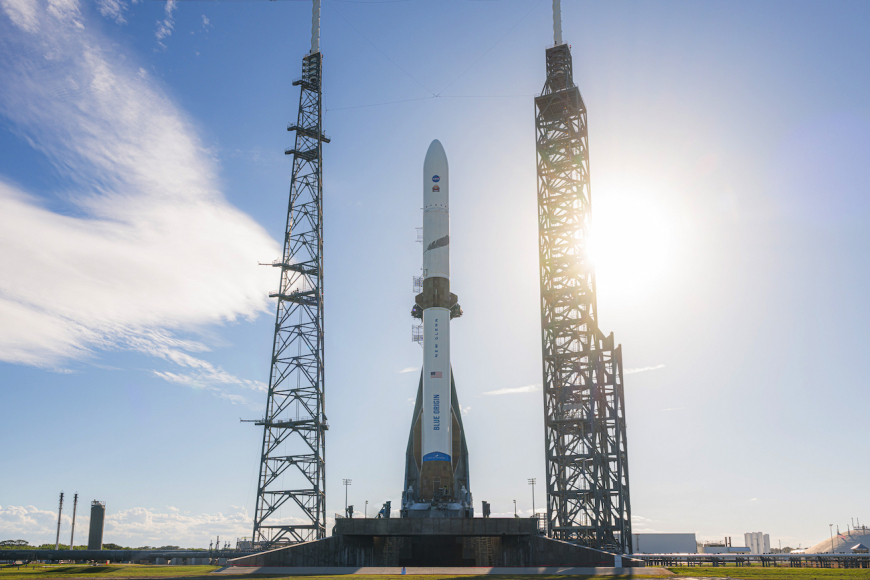
Jeff Bezos’ space company, Blue Origin, remains committed to flying its New Glenn heavy-lift rocket again before the end of the year despite last month’s explosion. However, the company says it has not yet determined the cause of the incident.
In his most detailed public update since the explosion, Blue Origin CEO Dave Limp wrote in a company blog post on Tuesday that engineers are still working to “identify and correct the root cause” of the failure. According to Limp, early findings indicate that the issue originated in “the aft section of the first stage” of the rocket. He added that investigators are analysing extensive information gathered from multiple onboard sensors and cameras positioned around the vehicle.
After spending more than a decade carefully developing the New Glenn programme, Blue Origin had recently accelerated its testing schedule. The rocket completed its maiden launch in January 2025 and was preparing for its fourth flight when it exploded during a ground test on May 28 this year. Fortunately, no injuries were reported as a result of the explosion.
Blue Origin is eager to return New Glenn to flight as soon as possible because the rocket plays a major role in NASA’s efforts to return astronauts to the Moon before President Donald Trump leaves office.
To achieve that goal, the company must not only determine what triggered the explosion and implement the necessary corrective measures, but also rebuild key infrastructure at its launch complex in Cape Canaveral, Florida. The damaged facility is currently Blue Origin’s only launch site capable of supporting the massive New Glenn rocket.
In his statement, Limp praised Blue Origin employees for the progress already made in recovering from the incident.
The explosion destroyed one of the launch site’s lightning towers and severely damaged the transporter-erector—the large structure used to move New Glenn to the launch pad and raise it into a vertical launch position. Several nearby buildings also sustained damage from the blast. Even so, Limp said, “We caught a lot of breaks, too, and intend to make the most of them.”
Among the positive outcomes, he noted that the site’s water tower, gas storage tanks, and rocket integration facility remained intact and are in good condition.
Limp also outlined planned changes to Blue Origin’s launch infrastructure at Cape Canaveral. Instead of rebuilding the transporter-erector system, the company intends to use a massive crane to lift and position New Glenn vertically on the launch pad before each mission.
According to Limp, this revised approach will not only help Blue Origin resume launches sooner than originally anticipated but also improve the rocket’s long-term launch cadence. Before the May explosion, the company had been targeting as many as 12 New Glenn launches during the year.
What's Your Reaction?
 Like
0
Like
0
 Dislike
0
Dislike
0
 Love
0
Love
0
 Funny
0
Funny
0
 Angry
0
Angry
0
 Sad
0
Sad
0
 Wow
0
Wow
0