

































This Founder Just Landed Funding for a Second Go at the Same Problem: Affordable Custom Home Design
Nick Donahue, founder of the failed custom home design startup Atmos, is back with a new venture, Drafted. The AI-driven platform simplifies residential design, generating floor plans and exterior designs in minutes. With $1.65 million in seed funding, Drafted offers customizable home plans at a fraction of the cost of hiring an architect.
Nick Donahue grew up surrounded by the U.S. construction industry. His father built homes for major developers, and his mother sold to big-box builders across the East Coast. Donahue was particularly intrigued by why designing a custom home was so expensive and time-consuming, and why most people had to settle for whatever developers were offering at the time.
So, after dropping out of NC State and moving to the Bay Area, Donahue did what many college dropouts do in San Francisco: he started a company to fix it.
His first attempt, Atmos, went through Y Combinator, raised $20 million from investors such as Khosla Ventures and Sam Altman, and sought to use technology to streamline the custom home design process. The company had designers on staff who worked with clients, while the software handled the back end. It grew to 40 people and $7 million in revenue, and they designed $200 million worth of homes and built 50.
However, Donahue admits the company never quite replaced humans. “It became this extremely operational business,” he said, “Kind of like a glamorized architecture firm.” Then, when the Federal Reserve started raising interest rates, clients who’d spent months designing their dream homes couldn’t afford them anymore. Nine months ago, Donahue shut down the company.
Rather than taking a break, Donahue regrouped and started another company.
Drafted, now nearly five months old, is everything Atmos wasn’t. It has no designers on staff and no operational complexity. It’s just AI-driven software that generates residential floor plans and exterior designs in minutes. You tell it what you want—bedrooms, square footage, etc.—and it generates five designs. If you don’t like them, you can generate five more until you find something that clicks.
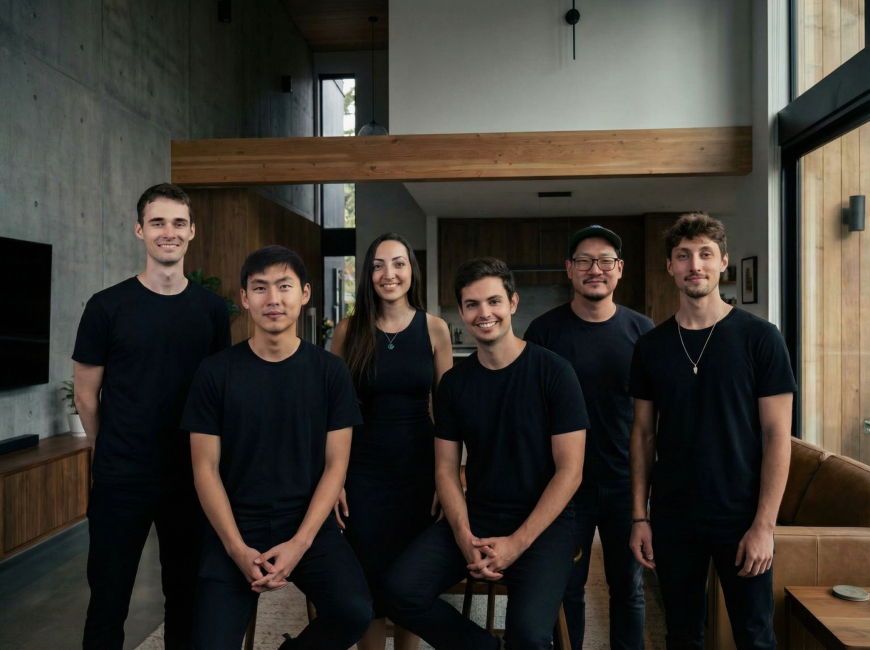
Currently, Drafted has six employees, four of whom came from Atmos. The company has raised $1.65 million at a $35 million post-money valuation from investors like Bill Clerico, Stripe’s Patrick Collison, Jack Altman, Josh Buckley, and Warriors player Moses Moody. Clerico led the round, having previously been an angel investor in Atmos. When Donahue shared the idea for Drafted, Clerico was sold on it, saying, “Nick, please take our money,” and the two spent over two weeks until Donahue agreed.
The pitch is simple. Right now, if you want a custom home, you have two options: hire an architect (expensive and slow) or buy a template plan online (cheap and inflexible). Drafts sit in the middle, offering customization at template prices. A complete plan costs between $1,000 and $2,000.
The economics work because Drafted built its own AI model trained on real house plans from homes that were built and passed permitting. Donahue says the specialized model costs nearly nothing to run—two-tenths of a penny per floor plan, compared to 13 cents for general-purpose AI.
Currently, Drafted only handles single-story homes, but multi-story and lot-specific features are coming. The big question is whether there’s a market for this approach.
Out of the million new homes built in America each year, only 300,000 are custom-designed. Most people either buy existing homes or pick from tract homes offered by big builders. Clerico believes this is a chicken-and-egg problem. Make a custom design cheap and fast enough, and more people will do it. Donahue compares it to Uber, which didn’t just replace taxis but made on-demand car service nearly ubiquitous. “There’s really no reason in the future why everyone shouldn’t have a totally custom-designed home,” Clerico says.
On the other hand, most Americans might remain price-conscious buyers who take what’s available. The housing market has a long history of resisting disruption.
There’s also the “moat” question. Asked what prevents other AI players or vertical competitors from using similar datasets to create the same product, Donahue points to brand, citing his friend David Holz, who founded Midjourney. Despite the rise of new image-generation models, Holz says Midjourney’s usage is barely changing because customers keep returning to the platform.
Similarly, Donahue believes that if Drafted moves quickly and satisfies enough customers, it can become the go-to platform for designing houses.
Since opening to the public, Drafted has gained about 1,000 daily users—a promising start for such a young product.
In the meantime, Donahue has a significant advantage: profound knowledge of the problem and insights from his previous attempt.
What's Your Reaction?
 Like
0
Like
0
 Dislike
0
Dislike
0
 Love
0
Love
0
 Funny
0
Funny
0
 Angry
0
Angry
0
 Sad
0
Sad
0
 Wow
0
Wow
0