

































Otter launches feature enabling search across enterprise tools
Otter introduces a new feature that allows users to search across enterprise tools, improving productivity, knowledge access, and workflow efficiency.
Otter has introduced a new feature that expands its capabilities beyond transcription and summaries, signalling a broader shift toward becoming a full enterprise productivity platform.
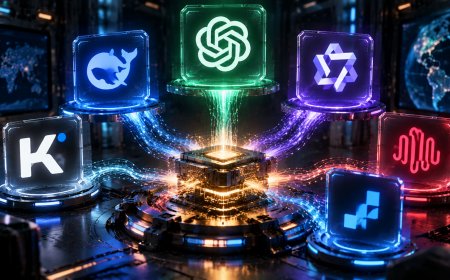
Companies in the AI meeting assistant space have increasingly recognised that basic transcription and summarisation alone are no longer sufficient to support long-term growth. As a result, tools are evolving into centralised workspaces that allow users to integrate data from multiple sources, search across that information, and make decisions more efficiently. Following similar moves by platforms such as Read AI, Fireflies.ai, and Fathom, Otter is now introducing enterprise search functionality by serving as a client for the Model Context Protocol (MCP). This shared standard enables AI tools to connect with external applications and services.
While Otter has been operating for nearly a decade, the company has recently accelerated its transition toward enterprise productivity. In October, it introduced tools that allow organisations to create custom MCP integrations to access Otter data outside its platform. The latest update shifts focus in the opposite direction by bringing external data directly into the Otter environment.
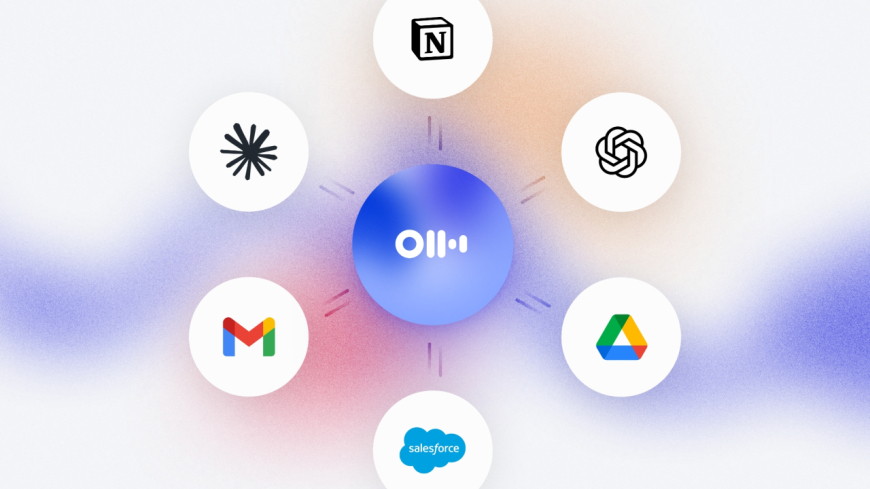
With this new feature, users can connect accounts from widely used services such as Gmail, Google Drive, Notion, Jira, and Salesforce. This allows them to query information from these tools alongside meeting data stored within Otter. The company also plans to expand integrations to include Microsoft Outlook, Microsoft Teams, SharePoint, and Slack in the near future.
In addition to cross-platform search, users can take actions such as sending meeting summaries to Notion or drafting emails directly within Gmail.
Otter has also redesigned its AI assistant to remain continuously accessible across the interface. The assistant can interpret the context of what a user is viewing — whether it’s a specific meeting or a communication channel — and provide relevant responses accordingly.
At the same time, the broader category of meeting assistant tools has been moving toward “botless” recording methods, following trends set by companies like Granola. This approach captures meeting audio directly from a device rather than having a bot join the call. Otter introduced this capability for its Mac application last year and is now extending it to a Windows version with similar functionality.
Despite this shift, Otter CEO Sam Liang indicated that enterprise customers often prefer traditional bot-based participation in meetings, as it provides greater transparency and ensures that notes are shared with all participants rather than remaining private to a single user.
To address concerns about excessive automation in meetings, Otter has implemented a deduplication feature designed to prevent multiple bots from joining the same call simultaneously.
The company previously reported having 25 million users and generating $100 million in annual recurring revenue last year. While updated financial figures were not disclosed, Otter stated that its user base has now grown to 35 million, reflecting continued adoption as it expands its product capabilities.
What's Your Reaction?
 Like
0
Like
0
 Dislike
0
Dislike
0
 Love
0
Love
0
 Funny
0
Funny
0
 Angry
0
Angry
0
 Sad
0
Sad
0
 Wow
0
Wow
0