































SpaceX Revenue Jumps 92% as AI Compute and Starlink Drive Growth
SpaceX reported Q2 2026 revenue of $7.8 billion as AI compute deals with Anthropic and Google and Starlink fueled strong year-over-year growth.
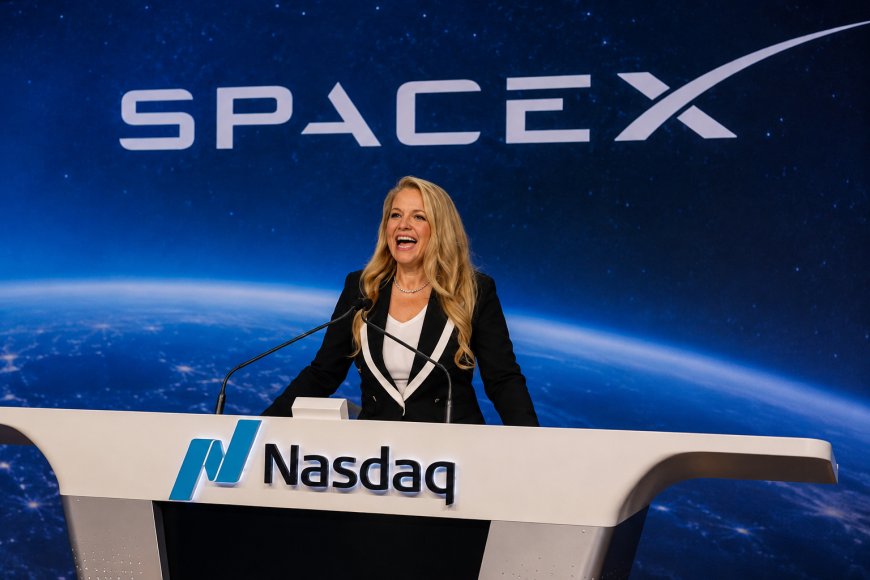
SpaceX nearly doubled its quarterly revenue from a year earlier, driven by rapid growth in its Starlink satellite internet business and new AI computing agreements with Anthropic and Google, the company said in its first earnings report since becoming a public company.
Second-quarter revenue reached $7.8 billion, up 92% from $4 billion during the same period in 2025. Nearly $2 billion of the increase came from the company’s AI division, while Starlink contributed another $1.7 billion in additional revenue. Despite the strong top-line growth, SpaceX reported a quarterly loss of $541 million, an improvement from the $1 billion loss recorded a year earlier.
Chief Financial Officer Bret Johnsen said the company has secured an additional $6.7 billion in cloud services contracts that will begin ramping over six months starting in October. He also said SpaceX expects to reach a $100 billion annualised revenue run rate by the end of the year once it fully integrates AI startup Cursor. The company generated $18.67 billion in revenue during 2025.
CEO Elon Musk expressed even greater confidence during the earnings call, saying a $100 billion annualised revenue run rate by December was effectively the baseline expectation and suggested actual results could exceed that level.
Heavy investment continues after historic IPO
Following a successful post-IPO bond offering, SpaceX now holds approximately $100 billion in available capital. Rather than slowing investment, the company significantly increased spending, reporting more than $28 billion in capital expenditures during the first half of 2026, compared with $7 billion during the same period last year.
The earnings report comes nearly two months after SpaceX completed what it described as the largest initial public offering in history, raising more than $85 billion at a valuation of $1.75 trillion. The stock initially surged after its market debut, briefly surpassing Amazon in market value and approaching Microsoft before retreating in recent weeks.
Shares closed slightly above $125 on Tuesday after being priced at $135 in the IPO, a figure reportedly set by Musk. The stock then fell as much as 8% in after-hours trading following the earnings release.
AI infrastructure becomes a major revenue driver.
The compute agreements with Anthropic and Google, both announced before thecompany’ss public listing, marked a strategic shift for SpaceX’s AI business. The division originated from Musk’s AI startup xAI before being absorbed into SpaceX, but it struggled to compete directly with leading AI developers including OpenAI and Anthropic.
Those competitive challenges coincided with several controversies surrounding xAI’s Grok chatbot, including incidents in which the system generated offensive content and child sexual abuse material. Rather than relying solely on developing its own AI models, SpaceX redirected a significant portion of its existing computing infrastructure toward providing cloud services for other AI companies.
The company had already built large data centres in and around Memphis, Tennessee, to support xAI’s model training. Those facilities are now being used to host AI workloads for customers such as Anthropic and Google, creating a new source of recurring cloud revenue.
Johnsen said the additional hosting agreements are generating strong incremental EBITDA margins because the company is monetising existing compute capacity rather than building entirely new infrastructure for each customer. The results highlight how demand for AI computing resources has become an increasingly important contributor to SpaceX’s broader business alongside Starlink and its traditional aerospace operations.
What's Your Reaction?
 Like
0
Like
0
 Dislike
0
Dislike
0
 Love
0
Love
0
 Funny
0
Funny
0
 Angry
0
Angry
0
 Sad
0
Sad
0
 Wow
0
Wow
0