



































Japan’s Letara Raises $16M to Expand Hybrid Rocket Systems
Japanese space startup Letara raised ¥2.6 billion, about $16 million, to expand its hybrid propulsion technology for larger rocket systems in space and defence.

Japanese space technology startup Letara has raised ¥2.6 billion, about $16 million, as it expands beyond propulsion systems for small satellites into larger hybrid rocket systems for space, defence, and security applications.
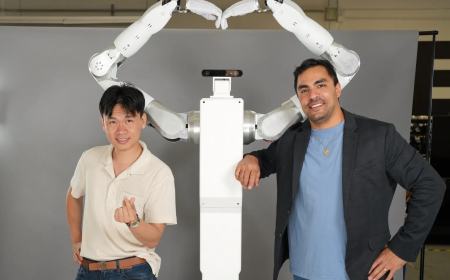
The Sapporo-based company was spun out of Hokkaido University in 2020 by co-CEOs Shota Hirai and Landon Thomas Kamps, who had conducted research on rocket propulsion at the university. Letara initially concentrated on satellite thrusters but is now pursuing launch companies, satellite operators and government customers.
Letara expands its hybrid rocket technology
The pre-Series A round was co-led by Headline Asia, JIC Venture Growth Investments and Incubate Fund. Strategic investors included NES, Toyota Group supplier Toyoda Gosei and Frontier Innovations, whose investment fund is backed by the Japan Aerospace Exploration Agency. Letara’s hybrid propulsion technology keeps solid fuel separate from the liquid oxidiser required for combustion. The company uses inexpensive materials, including plastics and rubber, as fuel and has developed its own process for mixing, shaping, and compressing them to improve ignition and consistent burning.
The company is targeting longstanding challenges associated with hybrid rockets, including generating sufficient thrust, maintaining performance and controlling combustion. Letara says the technology could eventually be applied in areas ranging from in-space propulsion for large spacecraft to launch vehicles and defence systems.
Japan is investing heavily in domestic aerospace
Letara’s expansion comes as Japan increases public support for its aerospace sector. The country’s ¥1 trillion Space Strategy Fund, launched in 2024 and administered by JAXA on behalf of government ministries, is intended to support technologies, including satellites, launch systems, and other commercial space projects, over a decade.
Japan has also loosened longstanding restrictions on defence exports, creating additional opportunities for domestic aerospace companies to develop technologies with potential civilian and security applications.
Letara says it has already secured orders from rocket and satellite companies as well as the Japanese government, although it has not disclosed their value. Commercial satellites are expected to remain an important market for its in-space propulsion technology, while the company is also pursuing growing government demand for larger rocket systems.
In-orbit test is the next major milestone
Letara’s next major step is an in-orbit firing test with an overseas partner, which the company views as an important milestone toward commercialisation. Moving from demonstrations to larger-scale production will also require repeatable manufacturing, quality controls and a reliable supply chain for components including fuel and tanks.
Competition in hybrid propulsion is already developing internationally. Companies pursuing related technologies include Japan’s Interstellar Technologies, South Korea’s Innospace, China’s Galactic Energy, Germany’s HyImpulse, Australia’s Gilmour Space and Singapore’s Equatorial Space.
Letara is also examining whether recycled plastics could eventually serve as fuel. The company considers that technically possible within its hybrid approach, but said further testing and development would be required before such material could be adopted.
The new funding gives Letara capital to move beyond its original satellite-thruster focus and test whether its hybrid propulsion technology can scale into larger systems for commercial spaceflight and government customers.
What's Your Reaction?
 Like
0
Like
0
 Dislike
0
Dislike
0
 Love
0
Love
0
 Funny
0
Funny
0
 Angry
0
Angry
0
 Sad
0
Sad
0
 Wow
0
Wow
0