






























Quantum Space Bets on Military Spacecraft SPAC Amid Growing SpaceX IPO Interest
Quantum Space plans a $1.2 billion SPAC merger to accelerate the development of military spacecraft. The company aims to capitalise on renewed investor interest fuelled by the SpaceX IPO momentum.
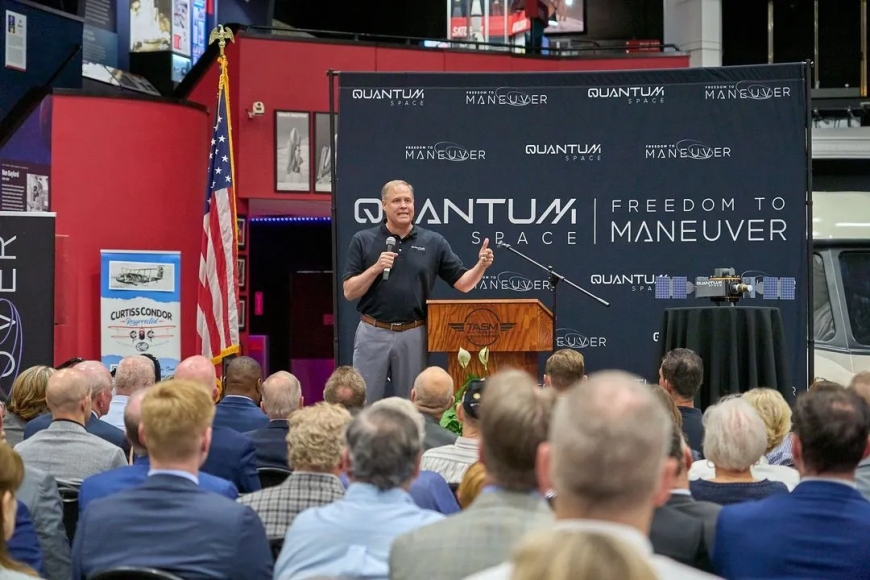
Quantum Space, a startup developing highly manoeuvrable spacecraft for U.S. military missions, has announced plans to enter the public markets through a merger with a publicly traded special purpose acquisition company (SPAC) valued at approximately $1.2 billion.
At a time when traditional IPOs dominate headlines, the decision to pursue a SPAC may seem reminiscent of an earlier era. During 2021, SPAC mergers became a popular route to the public markets across the space industry before spreading throughout the broader technology sector. While many of those deals ultimately disappointed retail investors who backed early-stage businesses, several notable exceptions emerged, including Rocket Lab and Planet, which successfully established themselves as public companies.
Another success story was Intuitive Machines, a company created specifically to serve NASA. Founded by veteran space investor Kam Ghaffarian, the business brought together former NASA officials who transformed their expertise into commercial services for the agency. Today, Intuitive Machines has grown into a company valued at roughly $6.4 billion and regularly conducts robotic missions to the Moon.
Ghaffarian is now attempting to replicate that success with Quantum Space, a venture he established in 2020 following the creation of the U.S. Space Force and the increasing need for spacecraft capable of moving between orbital positions and interacting with other satellites.
“Defence spending, space infrastructure, and America’s strategic priorities in orbit are converging at exactly the moment Quantum Space is ready to scale,” Ghaffarian told TechCrunch. “The Space Force’s requirements are growing rapidly, and demand for manoeuvrable spacecraft is accelerating. Ranger is purpose-built to meet both.”
Leading the company is CEO Jim Bridenstine, a former member of Congress who later served as NASA administrator during President Donald Trump’s first administration. Bridenstine, a strong advocate of public-private partnerships in the space sector, is expected to use his industry experience and government connections to help secure major contracts.
Quantum Space is currently participating in six government development programmes, including one initiative that could eventually send its spacecraft toward the Moon. Despite those opportunities, the company remains focused on a specific mission area.
“We are designed specifically for national security,” Bridenstine said.
Unlike many traditional satellites, which carry only enough fuel to make limited adjustments before reaching the end of their operational lives, a new generation of spacecraft is being developed to transit between orbits and rapidly maintain positions for long-term surveillance. Some of these capabilities are already being deployed by nations such as Russia and China.
Quantum Space’s spacecraft, known as Ranger, is being developed to compete directly with and potentially surpass those systems. The vehicle is expected to carry substantial fuel reserves, enabling it to operate at higher orbits for extended periods while monitoring rival satellites’ activities.
The spacecraft is also being designed with refuelling capabilities, a requirement for participation in future task orders associated with the Andromeda programme.
Quantum Space has already secured a place in the Andromeda contract, a $6.2 billion initiative to develop next-generation spacecraft for orbital reconnaissance and surveillance missions. The next challenge for the company will be winning specific task orders tied to fully funded missions scheduled to begin in 2030.
The proposed SPAC transaction is expected to generate approximately $300 million in private investment, in addition to any proceeds raised through the public markets. According to the company, the funds will be used to establish manufacturing facilities in Tulsa, Oklahoma.
Those facilities are expected to be capable of producing one Ranger spacecraft per quarter by the end of 2028. Before then, Quantum Space plans to launch its first Ranger prototype into orbit in 2027.
The transaction is being sponsored by financier Mike Blitzer, who previously helped bring both Intuitive Machines and USA Rare Earth to the public markets.
Even so, Quantum Space’s decision to pursue a public listing underscores the competitive landscape it faces. One of its rivals, True Anomaly, is also competing for future Andromeda task orders and has already secured approximately $1 billion in venture capital funding.
In addition to competing with well-funded startups, Quantum Space will also need to challenge established defence and aerospace contractors, including Lockheed Martin, Northrop Grumman, and Boeing’s Millennium Space Systems, among others, as it seeks to secure a larger role in the growing national security space market.
What's Your Reaction?
 Like
0
Like
0
 Dislike
0
Dislike
0
 Love
0
Love
0
 Funny
0
Funny
0
 Angry
0
Angry
0
 Sad
0
Sad
0
 Wow
0
Wow
0