



























SpaceX’s IPO Filing Highlights AI Investments, Starship Ambitions, and Elon Musk’s Expanding Influence
SpaceX’s IPO filing showcases major AI initiatives, ambitious Starship development plans, and Elon Musk’s central role in shaping the company’s future growth.
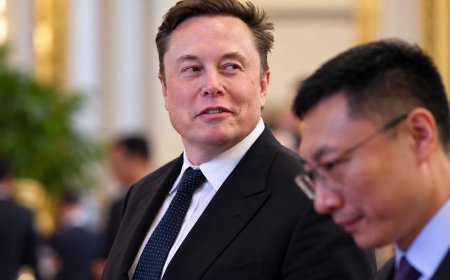
SpaceX, the aerospace company established by Elon Musk 24 years ago, has officially released its long-awaited IPO filing to the public. Once the company begins trading on public markets, Musk is set to remain firmly at the helm, serving simultaneously as chief executive officer, chief technology officer, and chairman of the board.
The extensive filing, published after markets closed on Wednesday, paints a picture of a business that has evolved far beyond its original focus on reusable rocket technology. While SpaceX continues to pursue its long-term objective of making humanity a multiplanetary species, the company has expanded into a broader technology enterprise with major interests in satellite communications and artificial intelligence. It has also become one of the world's most highly valued private companies.
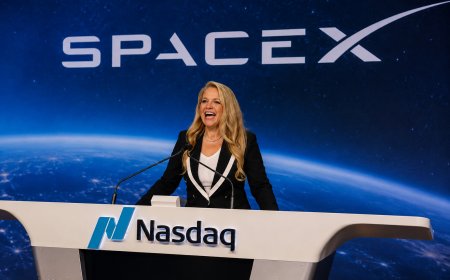
When SpaceX debuts on the Nasdaq later this year, it is expected to rank among the most valuable publicly traded firms. The company has selected the ticker symbol "SPCX" for its market listing. For comparison, chipmaker NVIDIA currently holds the title of the world's most valuable publicly traded company, with a market capitalisation of approximately $5.4 trillion.
The registration statement, known as an S-1 filing, provides the most detailed public look yet at SpaceX's finances and operations. It arrives only weeks before what analysts expect could become the largest initial public offering in history, both in terms of the roughly $75 billion the company hopes to raise and its reported valuation of approximately $1.75 trillion. The filing includes 36 pages outlining business risks. It describes ongoing legal disputes tied to the integration of Musk's artificial intelligence and social media businesses, which SpaceX estimates could cost about $530 million.
Many of the filing's headline figures surfaced in recent weeks after SpaceX confidentially submitted its S-1 to the SEC on April 1. As previously reported, the company recorded a loss of roughly $4.9 billion during 2025 despite generating more than $18 billion in revenue.
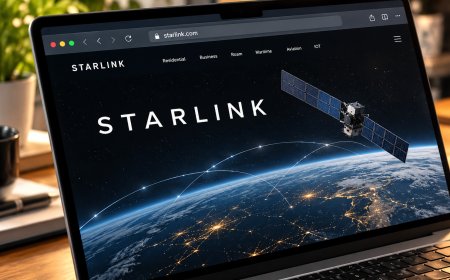
The document shows that SpaceX's business is now largely driven by its Starlink satellite internet service. Starlink accounted for more than half of the company's total revenue last year, contributing approximately $11 billion. The filing also highlights the scale of investment required to build the company, revealing cumulative losses of more than $37 billion since its founding.
The financial burden has been compounded by xAI, Musk's artificial intelligence venture that was recently folded into SpaceX. According to the filing, approximately 60% of the company's 2025 capital expenditures—around $20 billion—were directed toward AI-related operations. Despite that investment, the division, which includes the Grok chatbot, lost billions of dollars and increased revenue by only about 22%, considerably below the growth rates reported by leading AI laboratories.
Even so, SpaceX presents an ambitious outlook. Among its boldest claims is that it has identified what it calls the largest actionable total addressable market in history, valued at $28.5 trillion. Of that figure, the company attributes roughly $22.7 trillion to enterprise-focused artificial intelligence applications.
Everything Depends on Starship
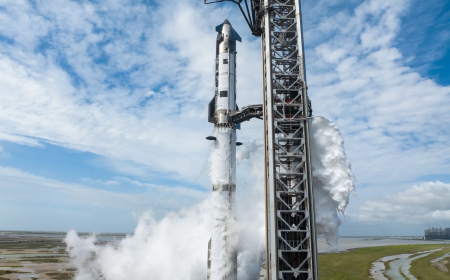
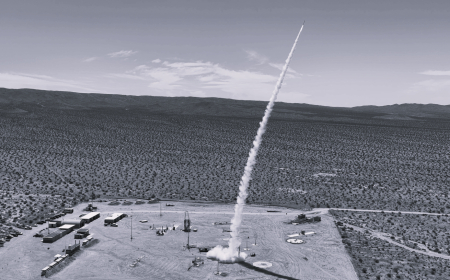
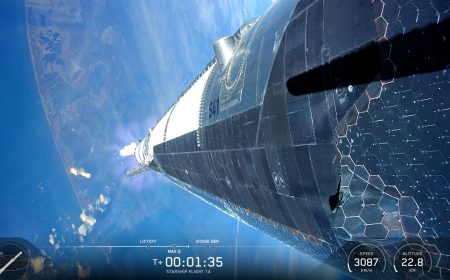
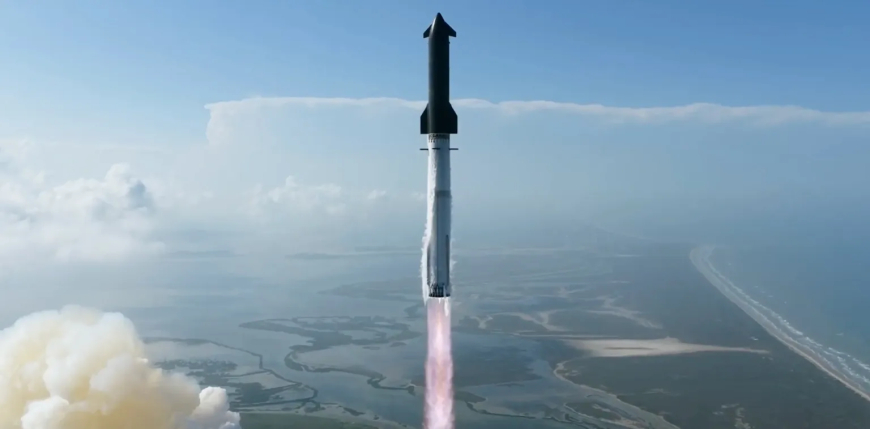
Although SpaceX now spans several business segments, much of its future strategy remains tied to Starship, the company's fully reusable heavy-lift launch vehicle. The rocket program has experienced numerous explosions and redesigns over the years, and its next major test flight could take place as soon as this week.
SpaceX states in the filing that it expects Starship to begin delivering payloads into orbit during the second half of 2026. The timeline leaves little room for delays. If the company achieves that milestone, it intends to start launching Starlink broadband satellites aboard Starship later that year, followed by next-generation V2 mobile satellites beginning in 2027.
The company's vision for Starship extends well beyond satellite deployment. SpaceX plans to use the vehicle for Mars exploration missions and, potentially, for launching AI-powered orbital data centres into space. Designed to carry up to 100 metric tons into Earth orbit, Starship is a cornerstone of the company's long-term strategy.
Developing the system has required substantial spending. The filing reveals that SpaceX invested approximately $3 billion into Starship research and development during 2025 and another $930 million in the first quarter of 2026 alone.
According to the company, those costs are justified because Starship is expected to reduce the expense of reaching orbit by 99% or more compared with historical launch costs.
Expansive Long-Term Visions
The S-1 filing reiterates many of SpaceX's sweeping ambitions, including establishing a human presence on the moon and Mars, making humanity multiplanetary, and building extensive orbital satellite networks capable of performing computing tasks in space.
The document also revisits several futuristic concepts that Musk has discussed in the past.
One example is the use of Starship after terrestrial transportation. Originally proposed by Musk in 2017, the concept would use the spacecraft to transport passengers and cargo between major cities at extremely high speeds. SpaceX says it plans to pursue "ultra-fast long-haul point-to-point Earth transport using Starship," potentially reducing travel times dramatically and reshaping both passenger transportation and global logistics.
However, the company classifies this concept as a future market opportunity rather than a near-term objective. As a result, the filing does not provide the same level of analysis regarding its risks or feasibility as it does for SpaceX's core operations.
Another future opportunity identified in the filing is space tourism. SpaceX has previously flown private individuals into orbit aboard its Dragon spacecraft and once planned a private lunar mission with Japanese billionaire Yusaku Maezawa, although it was eventually cancelled. The company states that it expects interest in human spaceflight to increase as access to space becomes more routine.
Executives also envision manufacturing facilities operating in orbit, on the moon, and eventually on Mars. According to the filing, these facilities could leverage microgravity conditions to produce advanced materials, pharmaceuticals, and specialised components that may be difficult or impossible to manufacture on Earth.
Lunar and Martian facilities, meanwhile, would focus on generating fuel, construction materials, solar power, and other resources needed to support long-term off-world operations.
The company additionally identifies asteroid mining as another potential future market. While the filing offers few details, SpaceX suggests that extracting resources from asteroids could eventually become part of its broader ambitions for the space economy.
Elon Musk's Dominant Position
The filing makes clear that SpaceX remains firmly under Elon Musk's control. Following the IPO, Musk will continue to serve as CEO, CTO, and chairman of the board.
According to the document, Musk owns 93.6% of SpaceX's Class B shares, each of which carries 10 votes. As a result, he currently controls approximately 85.1% of the company's voting power. Although that percentage is expected to decline after the public offering, it will remain above 50%, enabling SpaceX to qualify for exemptions from certain governance requirements related to independent board oversight.
Musk also received a new compensation package earlier this year that could award him up to one billion additional Class B shares. Eligibility for those shares depends on achieving a series of ambitious milestones, including increasing SpaceX's value to $7.5 trillion and establishing a permanent human settlement on Mars with at least one million residents.
The compensation structure includes additional incentives tied to future technological achievements, such as developing space-based data centres capable of delivering 100 terawatts of computing power annually. If those objectives are met, Musk could receive even more shares, further strengthening his influence over the company's future direction.
What's Your Reaction?
 Like
0
Like
0
 Dislike
0
Dislike
0
 Love
0
Love
0
 Funny
0
Funny
0
 Angry
0
Angry
0
 Sad
0
Sad
0
 Wow
0
Wow
0