




























OpenAI Unveils GPT-Live Voice Models for More Natural AI Conversations
OpenAI has introduced GPT-Live voice models that enable more natural, real-time AI conversations with simultaneous listening and speaking, smarter responses, and improved voice interactions.
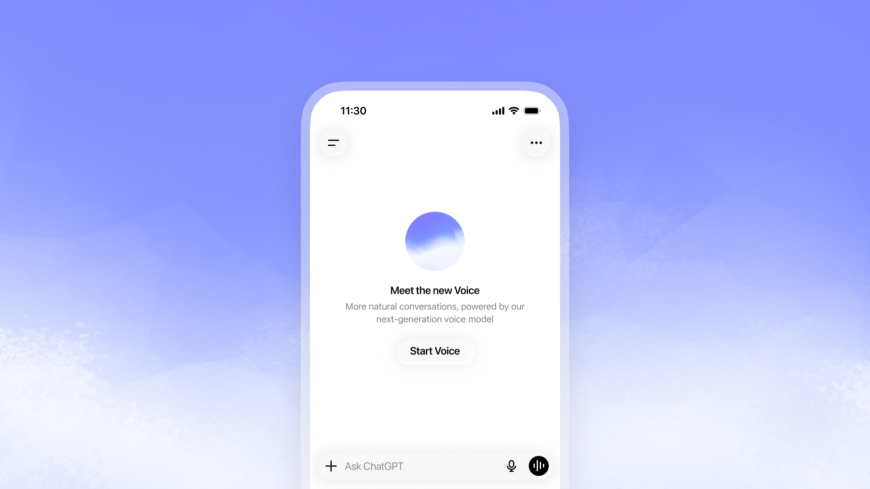
OpenAI has introduced a new generation of conversational voice models, GPT-Live-1 and GPT-Live-1 mini, which it says deliver more natural speech and significantly improve the flow of live conversations. The new models are built using full-duplex technology, allowing them to listen and speak simultaneously. This enables users to interrupt naturally during conversations while also supporting capabilities such as live language translation.
The company is also making GPT-Live-1 mini the default voice model for ChatGPT by replacing the existing Advanced Voice Mode. Subscribers on paid ChatGPT plans will have access to the larger GPT-Live-1 model. The previous voice system relied on separate speech-to-text, large language, and text-to-speech models that worked together by first transcribing spoken input, generating a response, and then converting the answer back into speech.
During a press briefing, OpenAI explained that the new models address several limitations found in earlier versions, including interrupting users while they were still speaking and lacking sufficient intelligence to respond effectively in more complex conversations. The company said the new voice models can seamlessly forward requests to its latest GPT-5.5 models for tasks involving search, reasoning, or agentic capabilities while continuing the conversation without interruption.
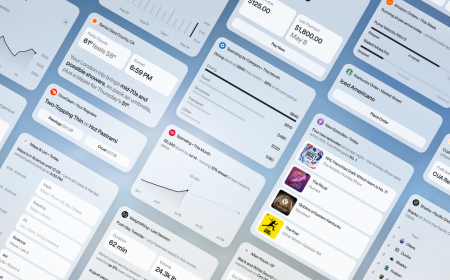
OpenAI also demonstrated the model’s ability to remain silent for extended periods while listening and gathering conversational context before responding when prompted. Because the updated voice mode is connected to newer GPT models, it can also display certain information visually during conversations. Other AI startups, including Monogram, which recently raised $40 million in seed funding from DST and Lux Capital, have also been incorporating visual responses into their assistants to create more interactive user experiences.
According to OpenAI, the updated ChatGPT voice mode has been designed to support much longer conversations. During the company’s presentation, ChatGPT Voice product lead Atty Eleti said he has personally held conversations lasting 30 to 40 minutes while walking, using the voice assistant.
The company believes voice interaction could eventually become the primary way people interact with computers when performing more advanced tasks. Reports suggest that OpenAI may introduce AI-powered earbuds later this year, although the company did not share any information about future hardware products during the announcement.
Speaking during the briefing, Eleti said OpenAI believes voice has the potential to become the main interface for computing over time, particularly for managing increasingly complex and long-running agentic tasks. He added that many of the sophisticated workflows users currently complete with Codex and ChatGPT could eventually be handled through voice-based interactions.
OpenAI has continued to invest in voice technology over the past several years to make ChatGPT’s spoken conversations sound increasingly natural. According to the company, more than 150 million people already communicate with ChatGPT using features such as Voice and Dictation.
Competition in conversational AI is also intensifying as rival companies work to improve their digital assistants.
Both Apple and Amazon have recently upgraded their assistants with stronger contextual understanding and more natural conversation capabilities. At the same time, startups such as Sesame, founded by Oculus co-founder Brendan Iribe and Ankit Kumar, have introduced AI assistants capable of maintaining more human-like conversations while simultaneously performing tasks in the background.
OpenAI is pursuing a similar direction by enabling users to interact with ChatGPT through extended hands-free conversations. Although the company says the new voice mode sounds considerably more natural, it stressed that its goal is not to position ChatGPT as an AI companion. Instead, OpenAI said the new models include built-in safeguards designed to provide age-appropriate responses for teenagers and offer helpful resources if conversations involve sensitive subjects such as self-harm.
Despite the improvements, OpenAI acknowledged that the updated voice mode still has room for refinement. During the demonstration, the company showcased its live Hindi translation feature. Still, the assistant spoke with a strong American accent and used Hindi that sounded somewhat unnatural with a noticeably formal, textbook-like style. OpenAI said the new models have been optimised for the most widely spoken languages, although it did not specify exactly which languages are included.
What's Your Reaction?
 Like
0
Like
0
 Dislike
0
Dislike
0
 Love
0
Love
0
 Funny
0
Funny
0
 Angry
0
Angry
0
 Sad
0
Sad
0
 Wow
0
Wow
0