




































a16z Says International AI Founders Have a Growing Advantage
Andreessen Horowitz says international AI founders increasingly benefit from global customers, local talent networks and closer ties to Silicon Valley.
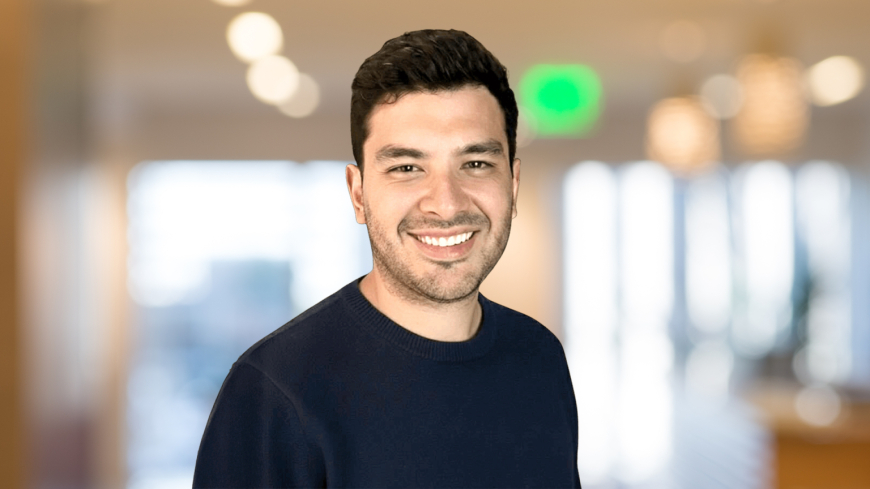
Andreessen Horowitz has spent years promoting its “American dynamism” investment thesis, but the venture firm increasingly sees international founders as an important source of AI startups. Gabriel Vasquez, an a16z partner focused on AI applications and global investing, said 44% of the firm’s investments across Apps Fund One and Two have at least one international founder.
Vasquez and general partner Angela Strange are behind a16z’s Borderless Founder initiative, which supports immigrant and international entrepreneurs. Strange described the firm’s expanding global strategy on LinkedIn, while the pair argued in a16z’s Borderless Founder essay that AI has changed the advantages available to founders outside the United States.
Their central argument is that entrepreneurs can now benefit from maintaining strong ties to their home markets while also building relationships in Silicon Valley. Rather than expecting every promising startup team to relocate entirely to the U.S., a16z has increasingly travelled abroad to find companies earlier.
Global enterprise buyers are moving faster
One reason is a change in how companies outside the U.S. buy technology. Vasquez said international enterprise customers have historically moved more slowly and been less willing to pay for startup software, making it harder for young companies outside Silicon Valley to build significant local revenue.
That pattern has shifted over the past three to five years. A16z began seeing seed-stage international startups winning major companies as customers much earlier than expected, turning what initially looked like isolated successes into a broader trend.
AI has helped accelerate that change. Large companies increasingly believe they need third-party AI products to remain competitive rather than waiting to build everything internally. That creates opportunities for local founders who understand their domestic markets, business practices and customer relationships.
The shift can be especially important in regions where traditional software adoption was slower. Vasquez pointed to Latin America, where inexpensive human labour historically made some software products less compelling. AI agents that can operate continuously and handle increasingly complex work are changing that calculation, particularly in functions such as customer service.
Local founders can reach markets U.S. startups may overlook
Vasquez argues that global demand for AI is expanding faster than U.S. startups can serve it. American companies naturally prioritise their largest domestic opportunities, leaving room for founders in other countries to build AI products for local enterprises from the beginning.
That can give international founders a dual advantage. They can maintain customer and talent networks in their home countries while spending enough time in Silicon Valley to build investor relationships, recruit specialised expertise and stay connected to the broader AI ecosystem.
The traditional idea of a single corporate headquarters is becoming more flexible as a result. Startups can distribute leadership, engineering and commercial operations across multiple countries without necessarily weakening their access to U.S. capital.
ElevenLabs shows how the model can work.
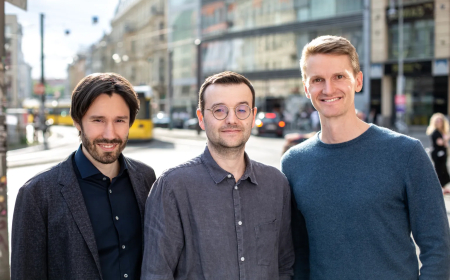
ElevenLabs is one example cited in this broader trend. Poland recently invested in the voice AI company, even though ElevenLabs is not headquartered there. Its Polish roots remain significant through co-founders Piotr Dąbkowski and Mateusz Staniszewski, and the company serves Polish customers including InPost and LOT Polish Airlines.
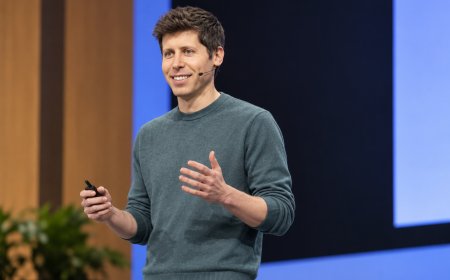
Poland has also become a notable source of AI research talent. OpenAI CEO Sam Altman has publicly highlighted contributions from Polish researchers to important advances behind the company’s AI systems.
For a16z, access to talent is becoming one of the strongest arguments for investing internationally. Recruiting in Silicon Valley has become increasingly difficult as well-capitalised companies such as OpenAI and Anthropic compete aggressively for experienced AI researchers and engineers.
International founders can often tap talent clusters that are less accessible to U.S.-based startups. That has pushed Vasquez and other investors to spend more time in markets such as Stockholm and other European technology hubs searching for academic spinouts and emerging AI companies.
AI is changing where venture firms look for startups.
European universities and research institutions have produced a growing number of AI companies, making international talent increasingly important to U.S. venture firms as well. Dealroom founder Yoram Wijngaarde has similarly argued that European talent remains a major advantage for the U.S. startup ecosystem because American companies and investors continue benefiting from founders and researchers trained abroad.
A16z’s strategy does not suggest Silicon Valley is becoming less important. Instead, the firm increasingly sees value in founders who can operate across both worlds: raising capital and building networks in the United States while retaining access to customers, talent and commercial opportunities in their home markets.
For AI startups, that cross-border structure may now be an advantage rather than a compromise. As enterprise demand for AI spreads globally and talent competition intensifies in Silicon Valley, founders with strong international networks can reach opportunities that purely U.S.-focused companies may not be able to pursue as quickly.
What's Your Reaction?
 Like
0
Like
0
 Dislike
0
Dislike
0
 Love
0
Love
0
 Funny
0
Funny
0
 Angry
0
Angry
0
 Sad
0
Sad
0
 Wow
0
Wow
0