






































SpaceX Orbital Data Centers Could Create a New Kind of E-Waste
SpaceX wants up to one million orbital data-centre satellites, raising questions about hardware lifespans, atmospheric reentry, space debris and electronic waste.
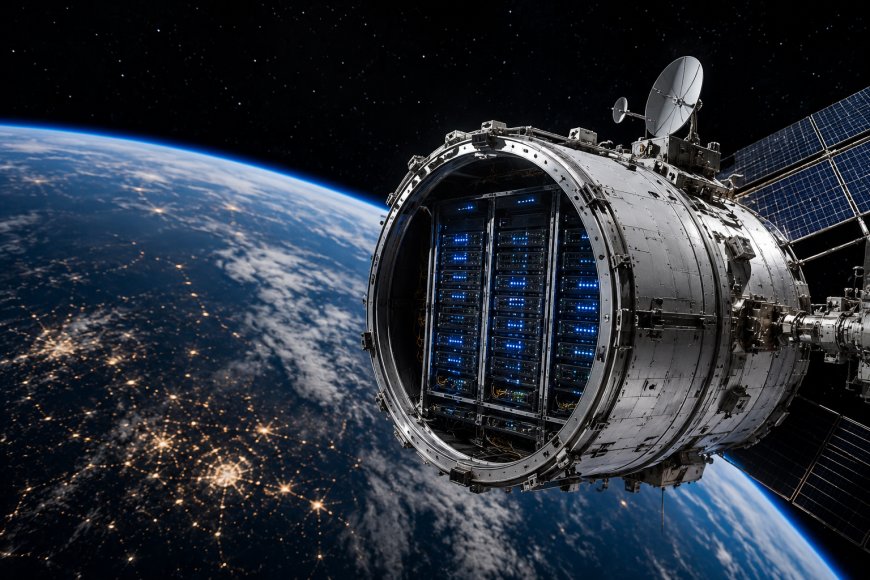
SpaceX wants to move a significant share of future artificial intelligence computing into orbit. Still, the plan could create an environmental problem that conventional data centres do not have: large quantities of ageing computer hardware that cannot be repaired, upgraded or recycled in the usual way.
The company has asked the Federal Communications Commission for permission to operate an orbital data-centre network of up to one million satellites. The proposed spacecraft would carry high-performance computing hardware and communicate through optical links, potentially connecting with SpaceX’s existing Starlink network.
The million-satellite figure is the maximum size requested in SpaceX’s application. It does not mean the FCC has approved the deployment or that SpaceX has committed to launching one million satellites.
The FCC accepted the application for filing in February and opened it for regulatory review. Read the FCC’s official SpaceX orbital data-centre filing.SpaceX’s own regulatory filings say it expects to begin deploying orbital AI compute satellites as early as 2028.
The scale of the proposal has renewed questions about orbital congestion, atmospheric reentry and what happens when thousands of expensive AI processors reach the end of their useful lives.
SpaceX Wants to Put AI Computing Into Orbit
The concept behind an orbital data centre is relatively straightforward.
Instead of operating thousands of GPUs inside enormous buildings on Earth, SpaceX wants to put computing hardware aboard satellites powered primarily by solar energy.
SpaceX argues that orbit could eventually offer significant advantages over terrestrial data centres. Solar energy can be available for long periods without depending on electrical grids, and orbital facilities would not compete with communities for land or conventional cooling water.
SpaceX says the satellites would form a network of distributed AI computing capacity rather than resemble one enormous building floating in space.
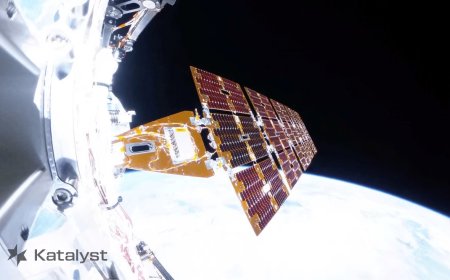
Its SEC filings describe AI compute satellites equipped with substantially larger solar arrays and radiators than communications satellites. Inter-satellite lasers would connect the individual spacecraft into larger computing clusters.
SpaceX says early versions are expected to generate roughly 100 kilowatts of compute power, with later designs scaling upward.
Read SpaceX’s orbital AI plans in its official SEC filing
The company argues that its experience building Starlink satellites, operating large constellations and launching reusable rockets gives it an advantage in developing such infrastructure.
Those are SpaceX’s projections. Large-scale orbital AI computing has not yet been commercially demonstrated.
The FCC Application Covers Up to One Million Satellites
SpaceX filed its application for the Orbital Data Centre system on Jan. 30.
The original proposal sought authority for satellites operating at altitudes between roughly 500 and 2,000 kilometres, using several orbital inclinations and high-bandwidth optical connections.
SpaceX later provided the FCC with a more detailed configuration covering six groups of orbital shells.
The configuration still caps the total at 1 million satellites, although SpaceX has asked for flexibility in how the constellation would ultimately be deployed.
The company told the FCC that it would begin with orbital shells below 600 kilometres.
See SpaceX’s updated orbital configuration filed with the FCC
This is important when discussing the environmental impact.
A network containing several thousand computing satellites would pose a very different lifecycle problem from a constellation approaching hundreds of thousands or one million spacecraft.
The final scale remains uncertain.
The Computers Are Not Expected to Be Repaired in Space
One of the biggest differences between a terrestrial data centre and SpaceX’s proposed architecture involves maintenance.
On Earth, a failed GPU, storage device, power supply or networking component can be removed and replaced. An entire server can be upgraded without replacing the building around it.
That becomes much more difficult once the hardware is orbiting hundreds of kilometres above Earth.
SpaceX acknowledges this directly.
In its SEC disclosures, the company says it plans extensive testing before launch to reduce early hardware failures because it does not anticipate servicing or repairing processors in space.
If a processor fails, SpaceX plans to use its constellation-management software to redirect computing workloads to other satellites rather than physically repair the failed hardware.
Read SpaceX’s official SEC disclosure on orbital processor maintenance
That architecture may make the overall computing network resilient, but it does not repair the underlying electronics.
A failed processor remains attached to a satellite until the spacecraft reaches the end of its operational life.
AI Hardware Can Become Obsolete Before It Fails
Physical failure is only part of the lifecycle problem.
AI computing hardware evolves unusually quickly.
New generations of accelerators can deliver significantly more computing performance for the same amount of electricity. A processor can therefore remain functional even as it becomes less economically attractive than newer hardware.
SpaceX says it plans to address this by moving older orbital hardware to less demanding workloads as new processor generations become available.
Eventually, systems that are no longer useful would be retired.
That creates a fundamentally different type of electronic waste problem from the one associated with a terrestrial data centre.
Old servers on Earth can be refurbished, resold, stripped for parts, or sent through electronics recycling systems.
Hardware permanently integrated into an orbital satellite cannot easily enter that recycling chain.
Its end-of-life options are much more limited.
The U.S. Government Has Already Raised the Lifecycle Issue
The potential problem is not limited to outside criticism of SpaceX.
The U.S. Government Accountability Office highlighted lifecycle concerns in an April assessment of space-based data centres.
The GAO noted that radiation can corrupt data and progressively damage computing hardware in orbit. It also said that servicing data-centre satellites could theoretically extend their useful lives, but commercial in-space servicing remains underdeveloped.
That could mean space-based data centres need to be decommissioned more frequently than conventional satellites.
The GAO specifically warned that more frequent decommissioning could increase orbital debris or atmospheric-reentry risks.
Read the GAO’s official Data Centres in Space assessment.
The agency also identified cooling, economic viability, communications and crowded orbits as major challenges facing orbital data centres.
Space Does Not Provide Free Cooling
One common misconception is that computer hardware should be easy to cool in space because space is cold.
The problem is that space is also a vacuum.
Terrestrial data centres can transfer heat via moving air and circulating liquids before rejecting it into the surrounding environment.
In orbit, heat ultimately has to leave the spacecraft through radiation.
That requires substantial radiator surfaces.
SpaceX says its AI compute satellites will use radiators, vapour chambers, active cooling loops and specialised coatings to manage heat generated by AI processors.
Its design would orient solar arrays toward the Sun while radiator surfaces face colder regions of space.
The GAO says large-scale versions of these cooling systems remain unproven.
See theGAO’ss explanation of orbital data-centre cooling challenges
Heat matters to the e-waste question because prolonged thermal stress can shorten the lifespan of electronics.
Researchers studying high-density orbital AI clusters have warned that poor thermal management could accelerate component degradation, creating what they describe as premature space e-waste.
That risk is still theoretical because computing constellations at the scale SpaceX proposes do not yet exist.
What Happens When a SpaceX Data-Center Satellite Is Retired?
SpaceX has outlined several possible end-of-life strategies.
In information supplied to the FCC, the company said satellites operating below 600 kilometres would be disposed of through controlled atmospheric reentry.
SpaceX says it would reserve propulsion capability specifically for disposal and collision avoidance during deorbiting.
Read SpaceX’s official FCC response on satellite disposal
The situation becomes more complicated for satellites operating at higher altitudes.
For spacecraft between 600 and 2,000 kilometres, SpaceX wants flexibility to select an end-of-life method based on the satellite’s particular orbit and mission.
Possible strategies could include atmospheric reentry or the transfer of retired spacecraft to other disposal orbits.
In separate SEC disclosures, SpaceX says older systems could be retired through controlled end-of-life procedures, including movement to graveyard orbits where appropriate.
See SpaceX’s SEC disclosure on orbital AI lifecycle management
That means “space e-waste” does not necessarily mean broken computers will accumulate indefinitely in the same operating orbit.
SpaceX intends to manage disposal actively.
The environmental question is what happens when that disposal must occur at potentially unprecedented scale.
Reentry Does Not Recycle the Hardware
Atmospheric reentry solves one important problem by removing an old satellite from an operational orbit.
It does not work like conventional electronics recycling.
A satellite deliberately brought into the atmosphere encounters extreme heating and is expected to break apart and largely burn up.
SpaceX told the FCC that satellites designed for atmospheric disposal would meet applicable casualty-risk requirements. The company says its designs are intended to prevent components from reaching the ground with dangerous levels of impact energy.
That addresses one part of the safety problem.
It does not recover the processors, metals and other materials for reuse.
A server recycled on Earth can potentially return valuable materials to the manufacturing supply chain. A spacecraft destroyed during reentry generally cannot.
If orbital AI hardware is replaced rapidly to keep pace with advances in processors, that difference could become increasingly important.
Orbital Debris Is a Separate Risk
Electronic waste and orbital debris are related, but they are not identical.
A properly controlled satellite that successfully reenters the atmosphere is no longer orbital debris.
The greater danger comes when a spacecraft fails before it can perform its planned disposal manoeuvre.
At the scale proposed by SpaceX, even a very low individual failure rate becomes important because of the enormous number of satellites involved.
More spacecraft also mean more conjunctions between objects and more collision-avoidance operations.
SpaceX argues that it already manages these challenges throughStarlink’ss autonomous collision-avoidance system.
The GAO, however, warns that placing significantly more satellites into orbit could increase the risk of collisions and make orbital management more difficult.
Read the U.S. government’s assessment of orbital congestion risks
SpaceX Says Rapid Hardware Replacement Is an Advantage
There is another side to the argument.
SpaceX views its ability to manufacture satellites quickly and launch new hardware frequently as a competitive advantage.
Instead of designing a computing platform that must remain technologically competitive for a decade, the company could deploy newer generations of AI chips as they improve.
SpaceX says this could allow it to adopt newer processors rapidly while assigning older satellites to less intensive workloads.
From a computing perspective, that flexibility is attractive.
From a lifecycle perspective, it also means the system could depend on a steady supply of newly manufactured satellites to replace ageing or obsolete ones.
At sufficiently large scale, the environmental impact would therefore need to account for more than the electricity consumed during operation.
Satellite manufacturing, semiconductor production, launch activity, replacement frequency and end-of-life disposal would all become part of the calculation.
The Million-Satellite Network Is Still a Proposal
The most important context is that SpaceX has not deployed this system.
The FCC filing is an application for authority covering a network of up to one million satellites. Regulatory review is still part of the process, and SpaceX has provided additional technical and orbital debris information since its initial filing.
SpaceX’s SEC filings say deployment of its first orbital AI compute satellites could begin as early as 2028.
The actual constellation could be much smaller than the maximum requested from the FCC, particularly during its early stages.
What SpaceX is proposing nevertheless forces an unusual environmental question into the AI infrastructure debate.
Terrestrial data centres generate conventional electronic waste that can, at least in theory, be collected, repaired and recycled.
An orbital data centre places that same rapidly evolving computing hardware somewhere technicians cannot easily reach and recyclers cannot economically recover.
SpaceX believes mass manufacturing, workload reallocation and controlled spacecraft disposal can make that model workable.
Whether it can do so at the enormous scale envisioned in its filings without creating a new orbital and atmospheric waste problem is one of the questions regulators and researchers will have to answer before orbital AI becomes routine infrastructure.
What's Your Reaction?
 Like
0
Like
0
 Dislike
0
Dislike
0
 Love
0
Love
0
 Funny
0
Funny
0
 Angry
0
Angry
0
 Sad
0
Sad
0
 Wow
0
Wow
0