






























NASA’s Telescope-Servicing Mission Hits Setback After Katalyst Spacecraft Loses Control
NASA’s mission to extend the life of the Swift Observatory faces uncertainty after Katalyst Space’s LINK spacecraft began tumbling following multiple technical failures.
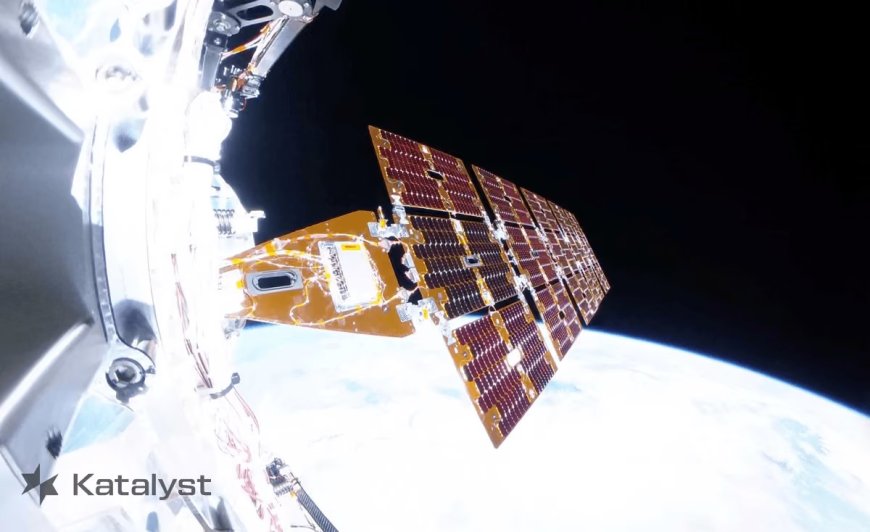
A pioneering mission to extend the life of one of NASA's space telescopes has encountered a major setback after a spacecraft built by Katalyst Space began tumbling uncontrollably during its journey, forcing engineers into recovery mode before the mission can proceed.
NASA and Katalyst Space confirmed that the company's LINK spacecraft suffered multiple technical failures while undergoing post-launch commissioning. Mission teams are now attempting to stabilise the vehicle using backup systems before determining whether it can continue to stabilise and rendezvous with NASA's Neil Gehrels Swift Observatory.
The mission represents the first time NASA has hired a commercial company to raise one of its operational space telescopes into a higher orbit, a strategy intended to extend the observatory's scientific life instead of replacing it with a new spacecraft.
Launched in 2004, NASA’s Swift Observatory was designed to rapidly detect and study short-lived cosmic events such as gamma-ray bursts. After more than two decades in orbit, atmospheric drag has gradually lowered the telescope's altitude, making an orbital boost necessary for continued operations.
Technitelescope triggered uncontrolled spin
Katalyst's LINK spacecraft launched on July 3 aboard a Northrop Grumman Pegasus rocket. After Katalyst’s launch, engineers began the normal commissioning process, activating onboard systems and preparing the spacecraft for its eventual docking operation with Swift.
During those preparations, however, the spacecraft experienced problems with its attitude control system and began spinning over the weekend.
NASA said the uncontrolled rotation has resulted in only sporadic communication with the spacecraft because its antenna repeatedly turns away from Earth as it tumbles.
According to the agency, two of the spacecraft's three reaction wheels, which help control orientation in space, have failed. The agency has also identified problems affecting one of the vehicle's thruster systems, further limiting its ability to stabilise itself.
Backup systems being used
Mission controllers are attempting to stabilise the spacecraft’s rotation by relying on an alternate set of thrusters that remains operational.
NASA said recovery efforts are already underway and that the initial series of thruster burns has produced the intended effect. Katalyst likewise emphasised that the mission remains active and that the company still intends to continue its planned rendezvous with the Swift Observatory if the spacecraft can be successfully recovered.
Whether the servicing mission proceeds will ultimately depend on the spacecraft's condition once engineers regain stable control.
Mission carried significant spacecraft risk
Before launch, Katalyst officials acknowledged that the project carried substantial risk because of its accelerated development schedule.
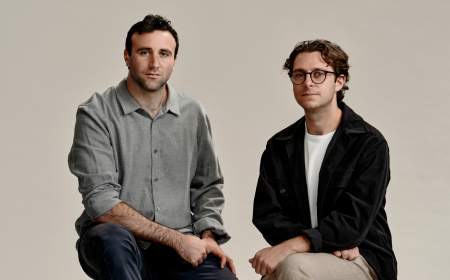
Kieran Wilson, the mission's principal investigator, said the spacecraft had been developed in an unusually short period because Swift required an orbital boost within the next several months to remain operational.
Wilson noted that even spacecraft developed over many years with significantly larger budgets can fail for relatively ordinary technical reasons, highlighting the complexity of orbital servicing missions.
Katalyst raised $12 million in funding in June to support the mission, with backing from Fortitude Ventures and Geodesic Capital. Beyond NASA's telescope-servicing effort, the company has also secured funding from the U.S. military, which is interested in spacecraft capable of servicing satellites and monitoring other vehicles in orbit.
For NASA, the mission is an important test of commercial satellite servicing, an approach that could eventually help extend the operational lives of ageing spacecraft. This approach could avoid them going through costly new launches.
What's Your Reaction?
 Like
0
Like
0
 Dislike
0
Dislike
0
 Love
0
Love
0
 Funny
0
Funny
0
 Angry
0
Angry
0
 Sad
0
Sad
0
 Wow
0
Wow
0