



































Roost App Brings Back Slow Messaging With Carrier Pigeon-Style Deliveries
Discover how the Roost app is reinventing social messaging by delivering messages at the speed of real birds. Learn why the slow social app is gaining popularity among users looking for a more intentional way to communicate.
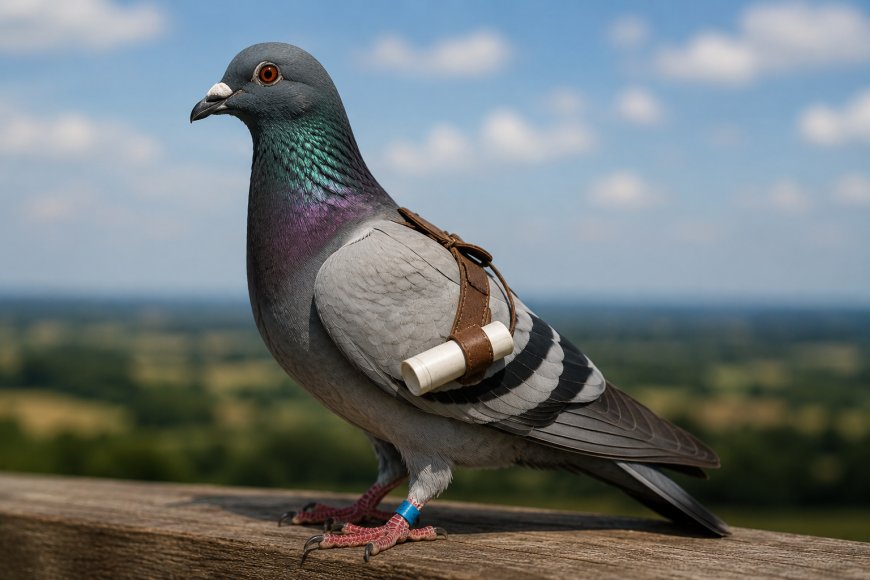
Somewhere high above the Great Plains, a virtual woodpecker is flying toward Alaska with a message for my anonymous pen pal. At the same time, a zebra finch named Tucker is making its way to Manhattan, carrying a rough sketch of the familiar Cool S to one of my friends.
Those messages will not arrive instantly. Instead, they may take several hours—or even days—depending on the distance each bird has to travel. That deliberate delay is exactly what Roost is designed around. The viral “slow-cial” app embraces carrier pigeon-style messaging at a time when many people are looking for ways to disconnect from fast-moving social platforms and to reduce the constant stream of notifications competing for their attention.
Roost creator Logan Mendelsohn believes modern smartphones have conditioned users to expect everything immediately. He said nearly every action on a phone results in an instant notification or response. In contrast, Roost intentionally creates a pause that allows people to step away from that constant sense of urgency. According to him, many users appreciate not feeling pressured to react or respond right away.
When joining Roost, users choose four birds to populate their personal rookery, allowing them to send messages to friends who also use the app.
Each bird travels according to its real-world speed. A falcon can deliver a message much faster than a hummingbird, while different species add an element of collection and discovery as users compare the birds their friends own. For those who want communication to move even more slowly, the app also allows messages to be carried by snails or turtles.
Outside of Roost, Mendelsohn works as a senior product manager specialising in trust and safety at Ticketmaster. He created the app as a side project for his own group of friends, but after they enjoyed using it so much, they encouraged him to publish it on the App Store.
That decision quickly proved worthwhile. Roost initially attracted only a relatively small community of users before experiencing rapid growth after a mother shared a Threads post describing how her daughter and her friends were communicating in Elizabethan English using an app where messages travelled at the speed of real birds.
Within just three days of that post, Roost expanded from around 10,000 users to approximately 100,000. Roughly five weeks later, the platform is approaching 300,000 users.
According to Mendelsohn, much of the app’s appeal comes from the community itself. He said users frequently describe the experience as wholesome, whimsical, and more intentional than traditional messaging platforms. Because messages are not delivered immediately, many people feel less pressure when composing replies, encouraging more thoughtful conversations.
Drawing on his professional background in trust and safety, Mendelsohn is also aware that even an app built around friendly bird messaging can be vulnerable to misuse. For that reason, Roost shares only a user’s city with friends by default. Users who wish to reveal more precise location information can manually enable a “close friends” feature for selected contacts.
Mendelsohn believes safety should be a priority for any platform designed to connect people. Starting with those protections from the beginning, he said, makes it much easier to build a safer product than trying to add safeguards after the platform has already grown.
Privacy considerations also shaped the development of Roost’s “Pen Pals” feature, which allows users to exchange messages anonymously with people in their own age group. Before using the feature, participants receive clear warnings advising them not to share personal contact details or other sensitive information. Roost also intentionally avoids supporting photo sharing for now, as Mendelsohn wants to develop more advanced content moderation systems before introducing that capability.
Given the size and complexity of the application—which even includes several mini-games—it is not surprising that Mendelsohn relied on Claude Code during development. At the same time, many Roost users are drawn to the platform precisely because they feel overwhelmed by today’s technology industry and seek a slower, less demanding social media experience.
As the app became more popular, however, Mendelsohn began receiving criticism from users after they discovered that many of the bird illustrations had been generated using artificial intelligence.
He said he understood the feedback and acknowledged that the online reaction was difficult to watch. Rather than dismissing users’ concerns, he concluded that responding to community feedback would be more productive than ignoring it. At the same time, he explained that replacing artwork throughout an application of Roost’s size could not happen instantly because doing so requires time, planning, and financial resources.
Mendelsohn continues to develop Roost largely during his spare time and without outside investment. The app currently generates revenue primarily through in-app purchases, including optional purchases of additional birds. In response to concerns about AI-generated artwork, he has launched an art competition inviting human artists to contribute illustrations for the platform. While that initiative has eased many complaints, the episode also highlights the growing debate over the use of AI-generated content in consumer applications. Although many users oppose AI artwork in support of human artists, Roost’s experience demonstrates that the issue can be more complex than it first appears.
As a solo founder, Mendelsohn believes it would have been extremely difficult to build and maintain an application of Roost’s scale without AI-assisted software development. Nevertheless, he emphasised that every major product decision and the overall direction of the platform continue to come from him and the community that has grown around the app.
What's Your Reaction?
 Like
0
Like
0
 Dislike
0
Dislike
0
 Love
0
Love
0
 Funny
0
Funny
0
 Angry
0
Angry
0
 Sad
0
Sad
0
 Wow
0
Wow
0