




























Netflix May Be Moving Beyond the Binge-Watching Era
Netflix, the company that popularised binge-watching, is exploring new content strategies to boost audience engagement, extend viewing cycles, and compete in the evolving streaming market.
A recent Bloomberg report, citing internal Netflix viewing data, suggests that many subscribers are increasingly walking away from popular series before reaching their second seasons. The reasons behind that trend are relatively easy to understand. Netflix has developed a reputation for cancelling shows after only one season; long production gaps often separate new instalments, and critics have argued that much of theplatform’ss programming is designed to satisfy recommendation algorithms rather than creative storytelling.
However, the data may also point toward a much broader transformation in entertainment habits. The binge-watching model that helped define Netflix’s success was created during a period when streaming services were competing directly against traditional television. Today, the company’s biggest rivals are no longer cable channels or broadcast networks—they are platforms such as TikTok, YouTube, Instagram Reels, and the rapidly growing world of microdrama apps. In that environment, Netflix’s signature approach of releasing an entire season at once may no longer be as well suited to changing viewing habits.
Binge-watching helped Netflix overtake traditional television.
When Netflix released every episode of House of Cards simultaneously in February 2013, it fundamentally changed how audiences consumed television. Without advertisements or weekly broadcast schedules, viewers were free to watch an entire season at their own pace. Instead of waiting months for a story to unfold one episode at a time, audiences could spend hours immersed in a series, forming stronger connections with characters in a much shorter period.
Streaming also removed another limitation of conventional television. Viewers no longer needed to tune in to a network’s predetermined schedule. Instead, shows became available whenever subscribers wanted to watch them.
That approach made perfect sense during a period when Netflix’s primary competitors were broadcast television, cable providers, and satellite services. Ultimately, Netflix won that battle. In June 2025, Nielsen reported a historic milestone: for the first time, streaming services collectively attracted more television viewing than broadcast and cable combined. The achievement demonstrated that the streaming era had largely overtaken the traditional television model.
Now, however, Netflix faces a different competitive landscape. Rather than competing with old television, it is competing against today’s dominant form of entertainment—video platforms.
TikTok and YouTube have become Netflix’s biggest competitors
The explosive popularity of TikTok, Instagram Reels, YouTube Shorts, and similar services has dramatically changed how people spend their free time. Instead of opening Netflix whenever they have an hour or two available, many consumers now turn to an endless stream of free short-form videos that require little commitment and provide constant entertainment.
Research from eMarketer illustrates how closely those platforms now compete. In 2024, adults in the United States spent an average of 62.1 minutes per day watching Netflix, compared with 58.4 minutes per day on TikTok.
Globally, engagement has become even stronger. According to a Financial Times report published in 2024, TikTok users worldwide spent an average of 95 minutes per day on the platform, making it one of the most highly engaged social network.s
YouTube presents an even greater challenge because it combines both long-form programming and short-form content within a single platform. According to research published this year by Digital i, YouTube overtook Netflix for average daily viewing time in 2025, recording approximately 99.1 minutes per day compared withNetflix’ss 93.4 minutes.
Although these studies use different research methods and target different audiences, they all point to the same broader trend: Netflix’s real competition today is no longer traditional television but digital video platforms like YouTube and TikTok.
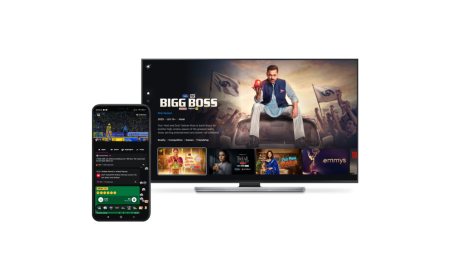
Netflix itself appears to recognise this changing landscape. In April, the company introduced a redesigned interface featuring a TikTok-style vertical feed built around clips from Netflix programming.
However, the redesign differs from TikTok in its purpose. Rather than becoming entertainment in its own right, Netflix’s feed primarily serves as a discovery tool that encourages users to begin watching longer shows.
That approach makes sense given Netflix’s existing library, but it may not fully align with evolving consumer preferences. Increasingly, many viewers with shrinking attention spans are turning instead to microdrama applications that deliver serialised stories in just a few minutes.
According to data from the app intelligence company Appfigures, one of the leading microdrama platforms, ReelShort, generated approximately $1.2 billion in consumer spending in 2025, representing 119% growth over the previous year. Another major competitor, DramaBox, produced roughly $276 million in consumer spending during the same period, more than doubling its 2024 performance.
The format’s growing popularity has become significant enough that TikTok itself launched a microdrama application to test consumer demand for short-form serialised storytelling.
What could Netflix do next?
The question now facing Netflix is how its original binge-release strategy should evolve.
That does not necessarily mean abandoning long-form television altogether in favour of short-form content. Instead, Netflix may need to reconsider how audiences prefer to consume streaming entertainment today.
Many viewers appear less willing to invest dozens of hours over multiple seasons in a single series. Instead, they increasingly gravitate toward content that feels achievable to complete, similar to finishing a YouTube documentary or following acreator’ss multi-part TikTok series.
One relatively straightforward solution could involve placing greater emphasis on standalone limited series or miniseries. Finished stories allow subscribers to begin and complete an entire narrative without worrying about unresolved cliffhangers or uncertain renewals.
Netflix might also experiment with dividing programming into shorter viewing segments, revisiting a strategy similar to the one Quibi once pursued.
Backed by Jeffrey Katzenberg, Quibi was built around the belief that audiences would eventually prefer professionally produced television designed specifically for brief viewing sessions. Unfortunately for the company, the COVID-19 pandemic dramatically changed viewing habits, giving people more free time for traditional long-form entertainment and contributing to Quibi’s collapse.
Many existing Netflix programmes could adapt well to shorter episodes, particularly competition and reality series such as Nailed It!, Is It Cake?, and Squid Game: The Challenge.
Likewise, Netflix arguably possesses the production expertise to create higher-quality microdramas than many currently available, which are often criticised for weak performances and exaggerated storylines.
Another option would be to expand the use of weekly episode releases for selected series. Netflix has already demonstrated that this strategy can be successful in certain cases.
Its dating reality programme Love Is Blind, for example, releases episodes in weekly batches, creating ongoing discussion and encouraging audiences to watch together rather than completing an entire season in one sitting.
Alternative release schedules may also prove effective. NBCUniversal’s Peacock has found success with Love Island USA, which keeps viewers engaged by releasing new episodes almost every day.
Instead of broadly experimenting with combinations of shorter entertainment formats, limited series, and staggered episode releases, Netflix has recently invested in several other content categories.
Among its newer initiatives are podcasts, which reports suggest have attracted relatively little audience interest, as well as expanded investments in live programming. The results have been mixed. Live sports broadcasts have generally performed well, while the company’s reality competition programme Star Search, despite featuring an innovative live voting system, has already been cancelled.
Bloomberg framed the issue primarily as Netflix struggling to convince viewers to return for second seasons. Yet the broader challenge may be considerably larger.
Rather than simply finding ways to retain audiences across multiple seasons, Netflix may ultimately need to reconsider whether to continue building programming around the traditional television model or focus on projects with tighter storytelling, fewer unnecessary episodes, and narratives that conclude more quickly.
As entertainment habits continue shifting away from cable television while audiences simultaneously seek alternatives to endless short-form scrolling, Netflix may once again find itself in the position of redefining what television looks like for the next generation.
What's Your Reaction?
 Like
0
Like
0
 Dislike
0
Dislike
0
 Love
0
Love
0
 Funny
0
Funny
0
 Angry
0
Angry
0
 Sad
0
Sad
0
 Wow
0
Wow
0