







































Why Wall Street Believes Micron Could Become the Next Nvidia Stock Winner
Wall Street analysts see strong growth potential for Micron as AI-driven demand for high-bandwidth memory boosts revenue, earnings, and investor confidence. Learn why Micron stock is gaining momentum.
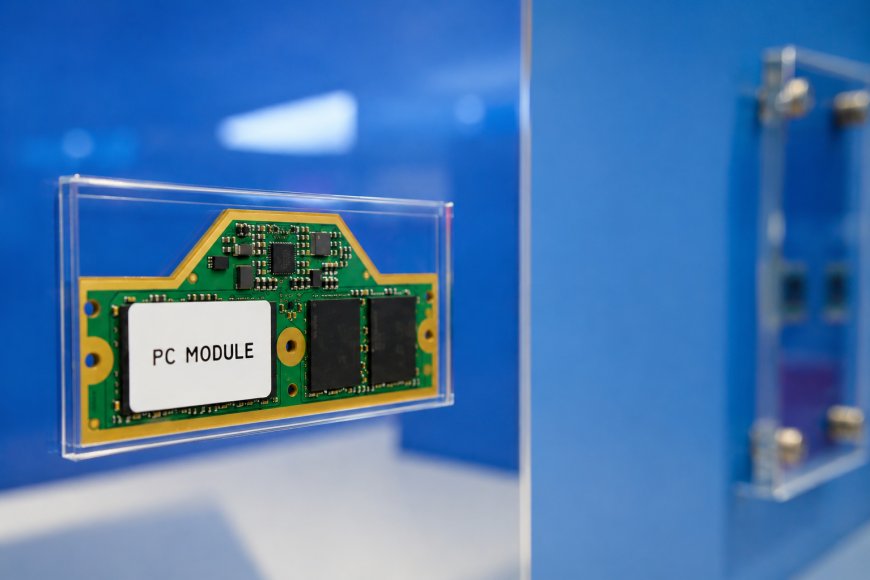
Micron, the memory chip manufacturer based in Boise, Idaho, has quickly become one of Wall Street’s favourite AI-related stocks. However, whether that enthusiasm continues will largely depend on how long the AI-fuelled shortage of memory chips persists.
The company believes it has strengthened its long-term position by securing its supply chain and customer relationships, giving it greater resilience against a sudden decline in demand or an eventual oversupply of memory chips. Investors appear to be buying into that strategy. On Thursday, Micron briefly surpassed both Meta and Tesla in market value for the first time, before easing slightly by Friday to trade at a valuation close to those of the technology giants.
By the close of trading on Friday, Micron’s market capitalisation stood at roughly $1.27 trillion, compared with approximately $1.39 trillion for Meta and $1.42 trillion for Tesla. The company’s stock has surged more than 236% in just the past month, finishing Friday’s session at $1,132 per share. Until the middle of 2025, Micron had spent years trading below $100.
The remarkable rise marks a dramatic transformation for a company that many consumers once associated primarily with memory cards that expanded storage capacity in personal computers, smartphones, and other electronic devices.
Today, investors are paying far less attention to that legacy business. Instead, Micron has become one of the biggest beneficiaries of the rapid expansion of AI data centres, which has created a global shortage of memory chips. The company manufactures both DRAM and NAND memory, including the increasingly important High-Bandwidth Memory (HBM) chips that power modern AI systems. A single AI server requires many times more memory than a typical laptop computer.
Demand from AI infrastructure providers continues to accelerate. Companies such as Nvidia, along with hyperscale cloud providers including Microsoft, Amazon Web Services, Google, Meta, and Oracle, are purchasing enormous volumes of memory chips for AI deployments. The resulting supply constraints have also encouraged other hardware manufacturers—including PC makers such as Dell and HP, as well as numerous electronics companies—to secure memory supplies before shortages worsen.
The continuing imbalance between supply and demand, often referred to as “RAMageddon,” is expected to continue through 2027. The shortage has already contributed to rising prices for consumer products, including Apple devices and Xbox gaming consoles.
Against this backdrop of strong industry demand, Micron reported exceptionally strong third-quarter financial results last week. Revenue increased fourfold compared with the same period a year earlier, reaching $41.45 billion, while net profit jumped from $1.88 billion to $28.2 billion. The company also issued an optimistic forecast for the fourth quarter, projecting revenue between $49 billion and $51 billion.
The earnings report further strengthened Wall Street’s confidence in the company. Investors who have been searching for another publicly traded AI success story comparable to Nvidia’s have become increasingly optimistic about Micron’s prospects.
Historically, however, memory manufacturers such as Micron and Samsung have faced recurring boom-and-bust cycles. Expanding semiconductor manufacturing capacity requires massive investments and years of construction, often resulting in new production coming online just as demand begins to weaken, leading to oversupply and falling prices.
Micron attempted to address those concerns by highlighting several long-term supply agreements with major customers, including Nvidia and AI company Anthropic. According to the company, these agreements should provide greater stability even if AI demand eventually slows. During its earnings presentation, Micron said it has signed 16 strategic customer agreements covering data centre, consumer, and automotive markets, which it believes will fundamentally reshape its long-term business model.
Those assurances appear to have strengthened confidence among analysts who now view the company as a more sustainable long-term investment.
In a research note, William Blair technology analyst Sebastien Naji said demand for memory chips continues to outpace manufacturers’ ability to expand production capacity by bringing additional cleanroom facilities online.
“Given the strong likelihood of continued ASP growth in the coming quarters and improving revenue visibility thanks to a rapidly expanding set of long-term agreements (SCAs) with key customers, we see potential for more durable earnings growth and reiterate our Outperform rating,” Naji wrote.
Whether Micron can permanently avoid the boom-and-bust cycles that have historically characterised the memory industry remains uncertain. Nevertheless, for a brief period on Thursday, the U.S. semiconductor company achieved a valuation that placed it ahead of some of the world’s largest technology businesses.
What's Your Reaction?
 Like
0
Like
0
 Dislike
0
Dislike
0
 Love
0
Love
0
 Funny
0
Funny
0
 Angry
0
Angry
0
 Sad
0
Sad
0
 Wow
0
Wow
0