






































Engineering Jobs Show Strong Staying Power Despite AI Growth, New Data Reveals
Engineering jobs remain among the most resilient careers despite rapid AI adoption. Discover what new workforce data reveals about software engineering, hiring trends, and the future of tech jobs.

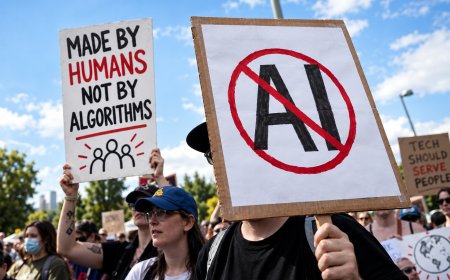
AI was expected to replace engineering jobs, but new hiring data points to a different reality.
Whether artificial intelligence is already taking over human jobs remains one of the most hotly debated topics in the technology industry.
Technology companies recorded their highest monthly layoff total in years in May, with AI emerging as the most frequently cited reason for the job cuts, according to data from outplacement firm Challenger, Grey & Christmas.
Software engineering has long been viewed as one of the professions most at risk of automation because of the rapid rise of AI-assisted coding tools. However, researchers at venture capital firm SignalFire say their latest hiring analysis paints a very different picture.
“The explanation given for many layoffs is consistently AI, particularly AI’s impact on software development,” said Asher Bantock, SignalFire’s head of research. “Companies often argue that one engineer can now accomplish the work that previously required several engineers. But the hiring data we’re seeing doesn’t fully support that narrative.”
SignalFire based its findings on career data covering millions of employees working across more than 80 million companies. Rather than relying on layoff announcements, which can lag because employees frequently delay updating their job status, the firm focused on hiring activity as a more reliable measure of current workforce trends.
According to SignalFire’s latest “State of Talent Report,” overall hiring among large technology companies was down 25% compared with 2019 levels. Engineering positions, however, experienced a much smaller decline of only 11%, making them the strongest-performing job category.
Engineers also accounted for 55% of all new hires during 2025 across the 12 companies SignalFire categorises as “Tech Majors,” including Alphabet, Meta, Apple, Amazon, Microsoft, Netflix, Nvidia, Tesla, Uber, Airbnb, Block, and Stripe. That represents a notable increase over 2019, when engineering roles accounted for 46% of all new hires, according to the report.
The demand for engineering talent was even stronger among early-stage startups. SignalFire’s research found that these younger companies hired 7% more engineers in 2025 than they did in 2019, despite the broader slowdown in technology hiring.
Bantock argued that if AI were truly replacing software engineers, engineering recruitment should have been among the first areas to experience major declines during the industry’s hiring slowdown. Instead, SignalFire’s findings indicate that engineering teams continue expanding faster than most other departments across the technology sector.
Although Anthropic CEO Dario Amodei warned last year that AI could eliminate half of all entry-level white-collar jobs and potentially drive unemployment to 20% within the next five years, Anthropic’s own head of economics, Peter McCrory, said there is still little evidence that AI has significantly affected employment trends.
Speaking at the time, McCrory said, “There’s at least no larger material difference in unemployment rates” between people using Claude to automate the primary tasks of their jobs—including technical writers, data entry clerks, and software engineers—and employees working in occupations that are less exposed to AI because they depend on physical interaction and manual skills.
Nvidia CEO Jensen Huang has gone even further by dismissing the argument that AI will eliminate software engineering jobs. During an interview at the Stanford Graduate School of Business in April, Huang rejected the idea outright, saying predictions that AI would wipe out engineering roles were misguided. Instead, he argued that engineers at Nvidia are now more productive than ever because every engineer is using agentic AI, adding that “software engineers are busier than ever.”
Huang also noted that while AI agents can now produce code almost instantly, they continually encourage engineers to think beyond coding by generating the next generation of ideas and innovations.
At least for the time being, engineering appears to be demonstrating the Jevons paradox in action—the economic principle suggesting that efficiency improvements often increase demand rather than reduce it because greater productivity creates even more opportunities for work. As Bantock summarised the current situation for engineering professionals, “They’re suddenly a lot more productive, and there’s endless work for them to do.”
What's Your Reaction?
 Like
0
Like
0
 Dislike
0
Dislike
0
 Love
0
Love
0
 Funny
0
Funny
0
 Angry
0
Angry
0
 Sad
0
Sad
0
 Wow
0
Wow
0