






































Inertia Enterprises Speeds Up Fusion Fuel Pellet Production
Inertia Enterprises says it cut fusion fuel pellet production from days to hours, advancing plans to mass-manufacture targets for commercial fusion power.
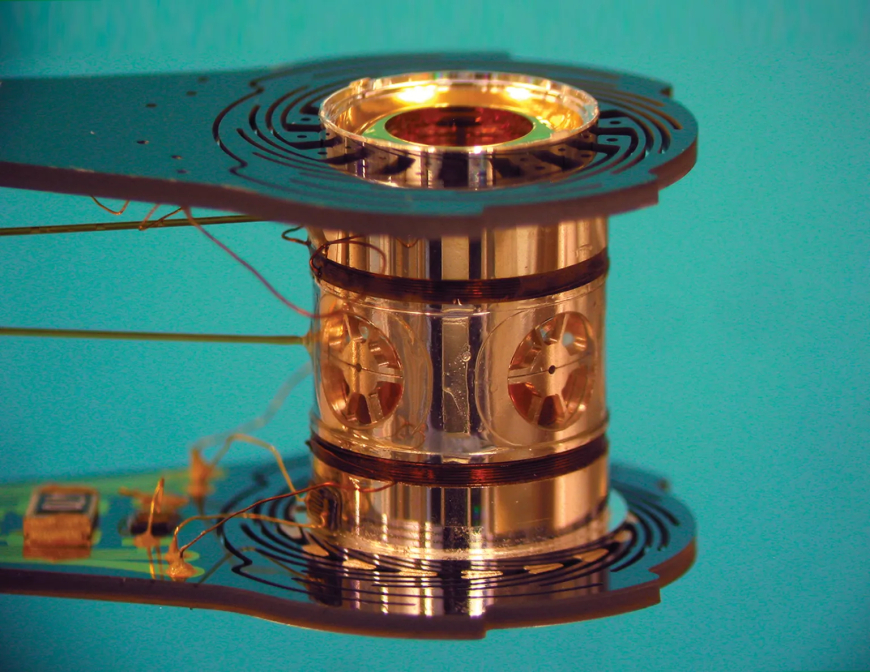
Fusion startup Inertia Enterprises says it has dramatically shortened one of the most time-consuming steps in producing the fuel targets needed for inertial fusion, bringing a process that can take days at the National Ignition Facility down to minutes.
The advance addresses one of the manufacturing challenges Inertia must solve if it hopes to turn technology developed at the National Ignition Facility, or NIF, into a commercial power plant. The company says the crystal-growth step can now be completed in about 30 minutes, while an entire fuel target can be produced in roughly two to three hours.
That is a significant shift from NIF, where individual targets are fabricated as highly specialised experimental components and can take a week or more to prepare. Inertia, instead, needs a process capable of producing targets continuously at an industrial scale.
Turning a scientific prototype into a factory product
Inertia has raised $450 million to commercialise the inertial confinement fusion approach demonstrated at NIF. CEO and co-founder Jeff Lawson said the team began by treating NIF’s existing fuel targets as prototypes rather than finished commercial products.
The distinction matters because NIF performs only a limited number of fusion experiments. A commercial power plant, by comparison, would require an enormous volume of inexpensive, repeatable targets. Inertia says a full-scale plant could eventually consume 10 targets every second.
The company has recruited industrial engineers, including people with experience at companies such as Apple, to develop manufacturing processes capable of producing the targets at factory scale.
Inertia has identified fuel-target manufacturing as one of several engineering barriers on its Phase 1 commercial roadmap. Reducing production time moves the company closer to demonstrating that the underlying NIF physics can be adapted to the speed and economics required for electricity generation.
The fuel pellet has little room for error.
The challenge is not simply making the targets quickly. NIF-style fusion targets contain a spherical diamond shell with deuterium and tritium, two hydrogen isotopes used as fusion fuel. A thin frozen layer forms inside the shell, surrounding additional gaseous fuel.
The target is placed inside a casing known as a hohlraum. Powerful lasers strike the hohlraum, generating X-rays that compress the fuel capsule. Under the correct conditions, the compression causes atomic nuclei to fuse and release energy.
Small imperfections can interfere with that process. The frozen fuel layer must be extremely uniform because irregularities in the target can disrupt compression and reduce the likelihood of achieving the conditions needed for ignition. Inertia’s manufacturing challenge has therefore been to speed up production without moving so far away from the proven NIF design that the underlying fusion physics ceases to work.
A larger laser gives Inertia more manufacturing tolerance
The startup has one important advantage over NIF. Inertia plans to build a roughly 10-megajoule laser system, about four times the energy of the NIF driver.
That additional power gives the commercial system more tolerance for imperfections in mass-produced targets. Rather than requiring every target to meet the extremely demanding standards of a scientific experiment, Inertia intends to use a more powerful laser to provide additional operating margin.
Co-founder and chief scientist Annie Kritcher brings direct experience from NIF. She designed the first NIF fusion experiment that produced more fusion energy than the laser energy delivered to the target, a milestone achieved at Lawrence Livermore National Laboratory.
Inertia is continuing to develop the technology through a public-private partnership with the laboratory. The company says its commercial approach builds on NIF’s demonstrated fusion results while redesigning components and manufacturing processes for repetitive operation.
Faster production also reduces the tritium problem
Shortening target-production time has another benefit: Inertia does not need to keep as much tritium tied up in partially completed fuel targets.
Tritium is radioactive, expensive and scarce. A Science report on fusion’s tritium challenge has highlighted concerns about the limited global supply available to start future fusion reactors.
The supplied source estimates tritium currently costs about $30,000 per gram and says only about 25 kilograms are stockpiled globally. Like several other fusion developers, Inertia ultimately plans to produce its own tritium through fusion reactions, but it will still require an initial inventory to begin operating.
Reducing the amount of time each target spends in production means less fuel must remain in the manufacturing pipeline at any given moment. That can reduce inventory requirements while also shrinking the target production facility.
For Inertia, solving fusion physics is only part of the commercial challenge. A power plant firing targets 10 times per second also needs a manufacturing system capable of producing hundreds of thousands of consistent fuel targets every day. Cutting a process that once took days down to hours is one step toward proving that NIF’s carefully manufactured experimental targets can become a high-volume industrial product.
What's Your Reaction?
 Like
0
Like
0
 Dislike
0
Dislike
0
 Love
0
Love
0
 Funny
0
Funny
0
 Angry
0
Angry
0
 Sad
0
Sad
0
 Wow
0
Wow
0