


































Savi Security Launches AI Scam Protection App to Stop Deepfake Ransom and Voice Fraud
Savi Security has introduced an AI-powered scam protection app that helps detect deepfake voice calls, fake kidnapping scams, phishing messages, and other AI-driven fraud in real time for individuals and families.
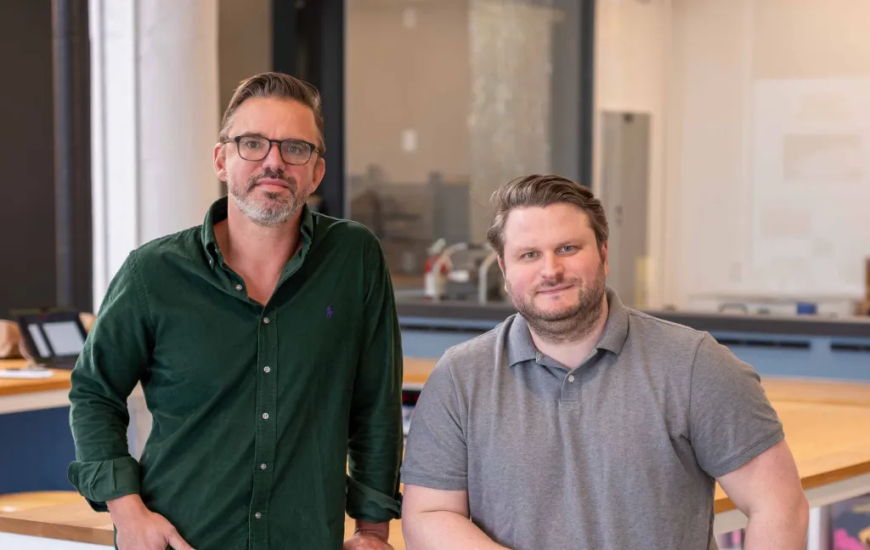
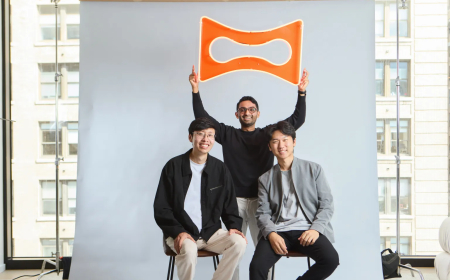
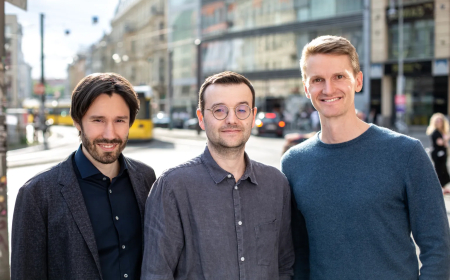
Brothers Patrick and Ryan Coughlin, both of whom have built careers at some of the technology industry's biggest companies, have launched a new cybersecurity startup focused on protecting ordinary consumers from a growing wave of AI-powered scams delivered through phone calls, text messages, and emails.
Patrick Coughlin previously worked in U.S. national cyber defence before holding security leadership roles at Splunk and Cisco, while Ryan Coughlin built consumer product experience at Apple and Spotify. Together, they founded Savi Security, a company aimed at helping people identify sophisticated fraud attempts that have become far more convincing with the rise of generative AI.
The startup also announced that it has secured $7 million in seed funding ahead of the launch of its consumer application for both iPhone and Android devices. The financing round was led by Acrew Capital, with additional participation from Magnify Ventures, TTCER, and Resolute Ventures.
The idea for Savi Security was born from a deeply unsettling experience involving the founders’ own family.
Roughly two years ago, Patrick Coughlin received a distressed call from his mother after she had spoken with someone claiming to have kidnapped his sister. At the time, Patrick was serving as Senior Vice President of Security Products at Cisco, having previously founded cloud security company TruSTAR, which Splunk acquired in May 2021 in a deal reportedly worth $82 million. Cisco acquired Splunk in 2024.
According to Coughlin, the fraudulent call appeared to come directly from his sister’s mobile phone number.
During the conversation, his mother believed she heard her daughter’s voice pleading for help.
“Mom, they’ve got me.”
Coughlin recalled that the voice was followed by what sounded like a horrifying scream before the caller continued.
“You’ve got to do what they tell you.”
A man then took over the call and threatened that unless $1,200 was paid immediately, his sister would be killed in the parking lot of a local Walmart.
The scammers had not only spoofed his sister’s phone number but had also convincingly replicated her voice using artificial intelligence. They even referenced the Walmart location she regularly visited, making the call appear frighteningly authentic.
Fortunately, Patrick’s mother remained calm enough to contact her daughter independently, confirming that she was completely safe. The kidnapping had never occurred. The entire incident had been orchestrated using AI-generated deception.
The experience left Patrick Coughlin deeply shaken.
After reassuring his mother, he began to question what had fundamentally changed in the cybercrime ecosystem.
“What I was thinking, after calming my mom down, is: What has fundamentally changed in the underlying cybercriminal economy that we are now able to leverage the same kind of sophistication that I had seen pointed at government agencies, and then later at Fortune 500 companies? And nowwe’ree deploying that sophistication at the consumer?”
His conclusion was straightforward: the rapid advancement of inexpensive and powerful large language models and other generative AI technologies has dramatically lowered the barriers to conducting highly sophisticated scams.
Before generative AI became widely available, attacks of this complexity required extensive research, specialised technology for voice cloning, and considerable time to prepare. As a result, criminals typically reserved such operations for governments or large corporations with significant financial resources.
Today, Coughlin argues, those economics have changed entirely.
“There’s something that’s happening right now to consumers with AI in the hands of cyber criminals,” he said.
The cost of carrying out sophisticated scams has fallen dramatically, while the information needed to personalise attacks has become readily accessible through publicly available online content.
“You can clone a voice from three seconds of audio, from a publicly available social media post. “We’veall got these traces of stuff that’s out there in the ether — like where we’re talking or narrating; commenting on a kid’s football game while videotaping it, and putting it on Facebook.”
The scale of the problem continues to grow. Last month, the U.S. Federal Trade Commission reported that consumers collectively lost $3.5 billion to imposter scams during 2025, roughly three times the amount recorded in 2020.
Although older adults remain the largest group reporting these crimes, younger people are also increasingly affected. Research published by cybersecurity company Malwarebytes in 2025 found that Generation Z receives more fraudulent text-message scams than any other age group and falls victim to approximately one-quarter of them.
Rather than simply warning users after scams occur, the Coughlin brothers wanted to create technology capable of intervening while fraudulent activity is happening.
To test both the concept and their AI detection models, they launched a free online service called Scamwise. The website allows users to anonymously upload suspicious emails, text messages, or images without creating an account. Scamwise then analyses the content and estimates whether it is likely to be fraudulent.
“We launched that about four months ago. We had 50,000 submissions, and it grows now every week by about 10,000 submissions or more,” Coughlin said, adding that submissions reached approximately 100,000 by Tuesday.
Those real-world submissions have also helped improve Savi’s own scam-detection models by providing valuable training data.
The company currently relies primarily on Google’s Gemini AI models while using an AI gateway architecture that allows additional specialised models—such as those focused on voice analysis—to be incorporated whenever appropriate.
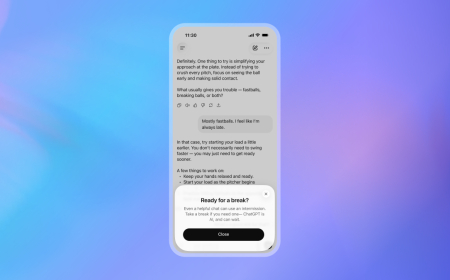
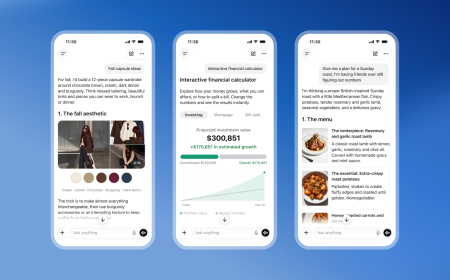
On Tuesday, Savi officially launched its commercial product, making its consumer application available for both iOS and Android users. The app can screen incoming calls, voicemail messages, and text messages for potential scams.
While similar protection exists in several cybersecurity products, including offerings from Malwarebytes, Savi believes its most distinctive capability is live phone call monitoring.
During suspicious conversations, users can invite Savi’s AI assistant to join the call silently. The software monitors the discussion in real time, looking for behavioural indicators commonly associated with fraud while the conversation is still underway.
The company’s pricing model also differs from many subscription services. Savi charges $8 per month or $ 63 annually with a discounted yearly plan, and allows a single subscription to cover an unlimited number of family members.
That means one account can protect spouses, children, parents, grandparents, or any other relatives the primary subscriber chooses to manage.
According to Patrick Coughlin, artificial intelligence has fundamentally altered how easy it is to become a fraudster.
AI, he argues, is“““creating fraudsters” by dramatically lowering the barriers to successfully deceiving people.
As organised criminals continue to embrace technologies, he believes more ordinary individuals may also be tempted to participate in fraudulent schemes.
Savi Security’s response is to build what Coughlin describes as the next generation of consumer cybersecurity software—an AI-powered defence system capable of monitoring threats in real time, even as cybercriminals increasingly rely on AI to target potential victims.
What's Your Reaction?
 Like
0
Like
0
 Dislike
0
Dislike
0
 Love
0
Love
0
 Funny
0
Funny
0
 Angry
0
Angry
0
 Sad
0
Sad
0
 Wow
0
Wow
0